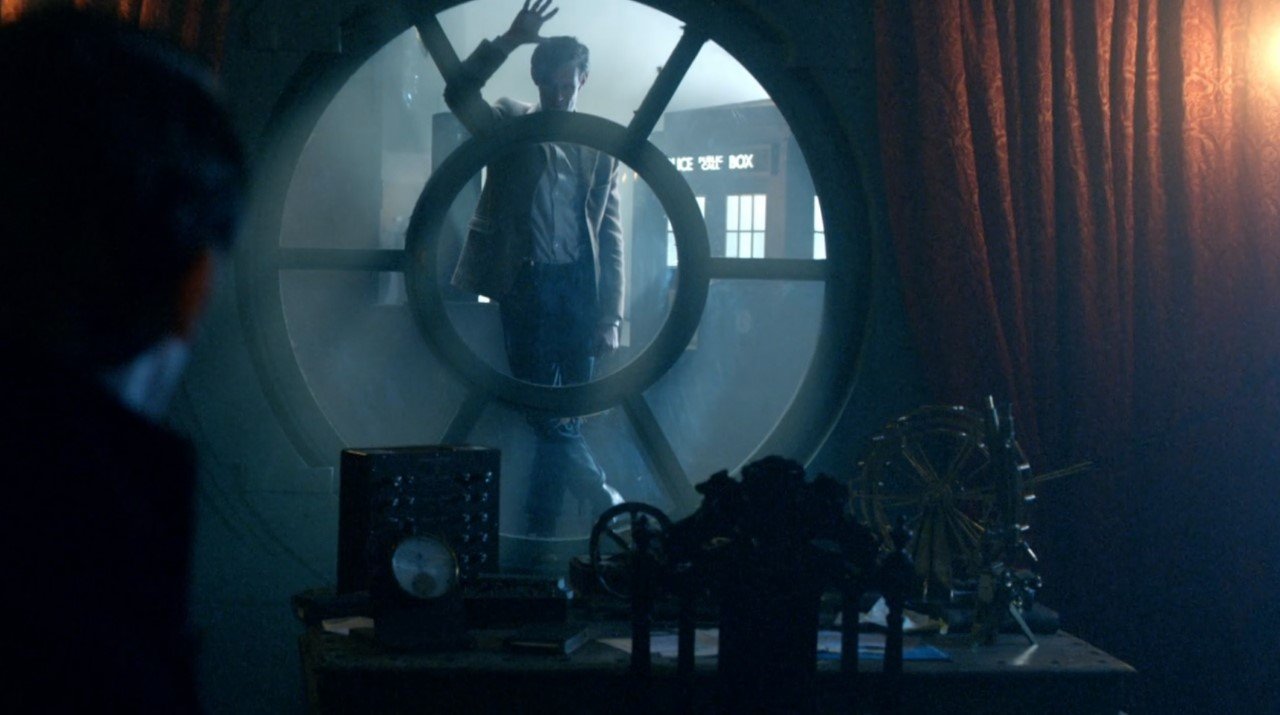
Timecheck: December 24th, 1988…
The thunderstorms had abated, and a low band of cloud hung over London. It was one of those evenings where the rain couldn’t quite get started, dissolving in a slovenly, lacklustre mist that soaked and chilled the hurrying commuters marching across Leicester Square. Traffic and street lights gleamed and buzzed over the heads of well-heeled shoppers in headscarves and fur as they made their way to Marks & Spencer, looking for last-minute bargains; tourists sat hunched over sloppy fries and milkshakes in the harsh strip lights of Burger King; over at the entrance of the Hampshire, the doorman stamped his feet.
Bustling past the queues at the Empire – and turning a few heads – were a man and a woman who appeared to be late for a costume party. The man looked to be in his early forties, wearing a pompous (if determined) expression and a tremendous, multi-coloured frock coat that looked like something you might get if you fed a scarlet macaw into a 3D printer. The woman had her curly red hair pulled up in an elaborate French braid that was in danger of losing its integrity in the breeze and the drizzle; she held a complimentary newspaper over her head, its pages flapping in a light south-westerly.
“I still don’t understand why we couldn’t have parked a little closer,” she grumbled as they hurried over Charing Cross Road, the buses rumbling and honking past ticket touts and buskers. “It must be half a mile! It would have been quicker to take the Piccadilly!”
“You know the TARDIS,” replied her friend. “She’s not always good at short hops. Ask her to land on the skin of a volcano on the other side of the galaxy, she can manage it in a double heartbeat. Try and get her from Hounslow to Central London, and — well.” He shrugged. “You might as well don a blindfold and put a pin in a map.”
“So you say,” replied Mel. “Sometimes I think you don’t know how to fly her.”
“Melanie! I am officially affronted.” The Doctor had stopped and puffed out his chest, but it was clearly an act. “I’ll have you know that I —”
“Is there any chance you could have me know in the warm, please? This dress is chiffon and it’s not exactly helping my circulation.”
“Come along, then.” The Doctor offered her his arm. “And do try and enjoy the atmosphere. It’s Christmas Eve!”
“Yes, well.” She sighed. “At least you got the date right.”
***
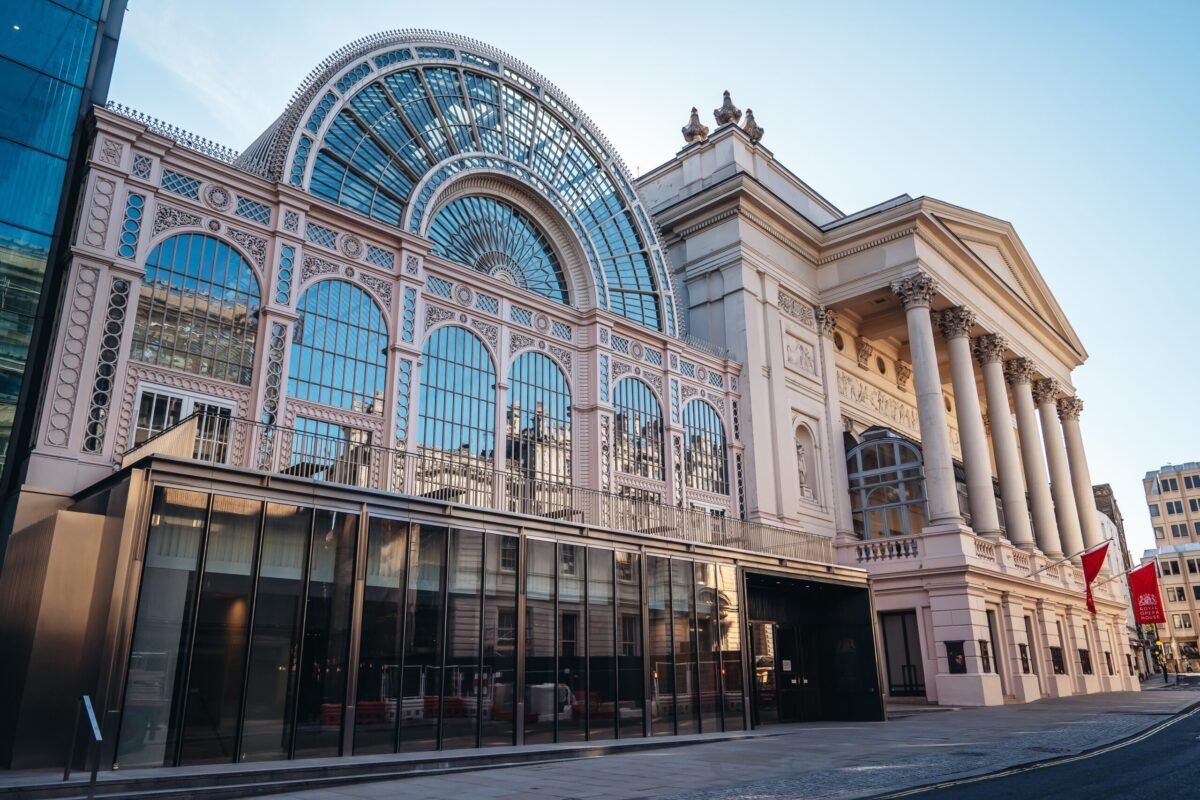
The Georgian exterior of The Royal Opera House towered above them as they walked along Floral Street. Elegant multi-floored terraces gave way to shabbier buildings with crumbling brickwork, seemingly at odds with the elegant Grecian facade that lay on the corner, all columns and sculptures and balustrades. A foundation stone denoted a visit by the Prince of Wales; at their left were restaurants, offices, and the nondescript entrance to the Royal Ballet School, in which young men and women toiled for years, enduring pain and humiliation in order to earn the right to do their limbering and stretching on the other side of the road.
All of a sudden, the Doctor stopped. He had detected movement coming out of a nearby alley: a flicker of movement, and then a rustling.
“Just a second, Mel,” he said. “There’s something – or someone – in there.”
Mel glanced at the alley, then at the bright lights of the theatre building. “Do we really have time?”
“Yes, if we’re quick. Come on, it won’t take a moment.”
“Hmm. I’ve heard that before.”
They walked into the alley, which was dark and soaked with rain. Behind a dirt-smeared Grundon stood a man who was either half-rat, or a rat who had evolved into something not quite human. Straggly hair dangled from his face, straddling a set of bad teeth. His combover was greasy and lice-ridden. His jeans were ripped, tucked into cracked leather boots; beneath a thin denim jacket, he wore a vest that might once have been white.
He smiled. “Evening sir. Madame.” He greeted Mel with a theatrical bow.
The Doctor frowned. He had approached the alley in the belief that someone might need his help, but he was starting to wonder whether it had been a bad idea.
“You look like people with an eye for a bargain,” the stranger went on. “Interested in adding a little sparkle to your evening?”
The Doctor put his hands on his hips. “Now look, young man, if you’re asking us if we wish to dabble in recreational narcotics — ”
“No! No, nothing like that!” The rat-faced man shook his head with vehement force; the Doctor saw something small and black fall out and scuttle away. “I meant — well, look. Let me show you.”
He pulled out a large black trunk from behind the bin, and undid the catch. The box opened to reveal a stack of colourful tubes, of assorted sizes but all decorated with patterns and logos, with pointed ends and strings dangling from the bottom.
Mel peered down at the display. “Fireworks?”
“Best in London.” The rat-faced man looked quite proud of his collection. “All category 3 and 4. Got your candles, got your fan slices, got your SIBs. Guaranteed to make any party go with a bang, geddit?”
The Doctor looked at him suspiciously. “Are those strictly legal?”
“Sir!” The rat-faced man put a hand to his heart and his eyes went wide. “I would inform you that these are the finest and safest recreational fireworks this side of Northwood — ”
“Yes,” said Mel, “and I suppose that’s why you’re selling them out of a suitcase in the middle of a dark alley.”
It was the rat-faced man’s turn to look suspicious.
“Hold on,” he said. “You’re not with the law, are you? Crikey, that’d be just my luck, Christmas Eve of all nights.”
“No, we’re not,” snapped the Doctor. “But nor are we interested in your under-the-counter shenanigans. I came down here in the mistaken belief that someone might be in need of assistance, not because I was looking for illegal entertainment courtesy of the great unwashed!”
The rat-faced man looked as if he might be about to cry.
“Come on, have a heart,” he said. “It’s tough enough making a living in Maggie’s England without folks giving you a hard time about it. I’m just a bloke tryin’ to feed his kids, ain’t I?”
He dabbed at a moistened eye with a grubby hand. The Doctor looked away, whistling under his breath.
Mel sighed, and opened her purse. “Here,” she said. “We’ll take a five metre fountain and a double heart set piece.”
She handed over a wad of cash: the rat-faced man’s mouth dropped to sea level.
“Strewth,” he said. “Thanks very much.”
“Just one condition,” said Mel. “Find an honest job.” And she tucked the fireworks into her handbag and strode into the light.
“I suppose,” the Doctor remarked, a little huffily, “there will come a point where you’ll tell me about the money, and just how you got it.”
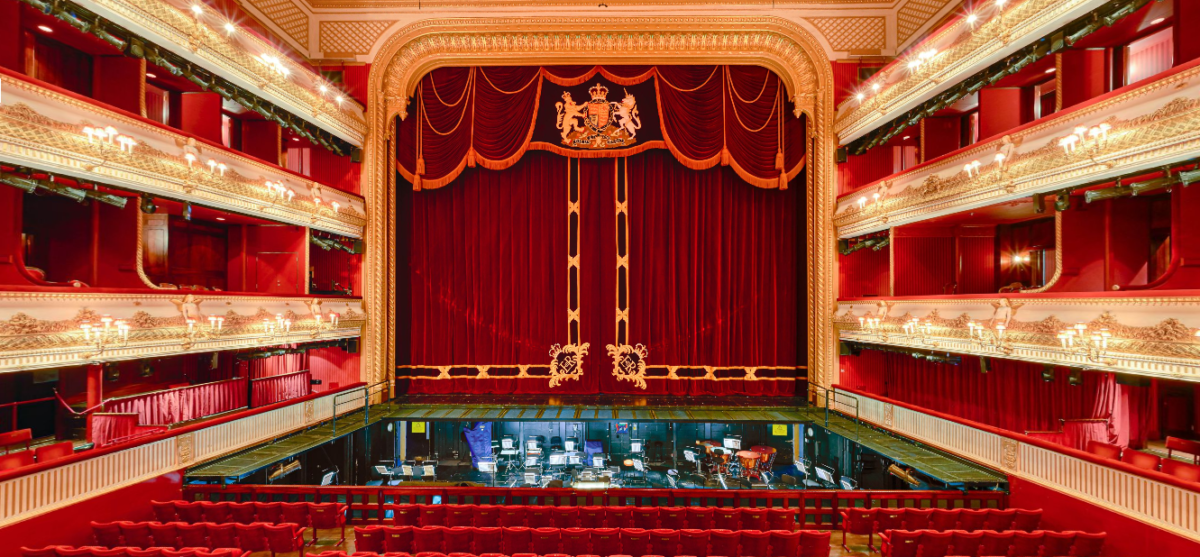
They were strolling through the plush interior of the Royal Opera House, high ceilings and grand, sweeping stairs, Berlioz wafting over the speakers, a snake of people waiting at the cloakroom hatch. There was a buzz in the air, but it carried a strain of boredom, of anticipation tarnished with mute expectancy. It was as if people knew exactly what was about to happen and how it should take place.
When no reply was forthcoming, the Doctor probed a little further. “Well? Anything?”
Melanie had her eye on a display dedicated to Natalia Makarova, but now she turned her attention back to the Doctor. “Do you remember that drug dealer we encountered in Stoke?”
The Doctor’s brow furrowed. “No.”
“The one who was part mongoose? With the Sontaran security detail?”
He shook his head. “No, I can’t say it rings a bell.”
“Oh, you remember. The hallucinogenic ice creams. And the windmill made of rubber. You know. We met Robbie, the teenager who you said was going to be a pop star. And Prius the drug baron tied me to that sail. With the flames.”
“Hmm…”
“Come on! We beat him with cress.” Mel stopped to think. “Or was it chess? You know. There was that clueless detective who had a limp. And the local W.I. Do you really not remember any of this?” She looked at him, exasperated. “You were wearing your blue coat.”
“Oh,” said the Doctor. “That one.”
Mel threw up her hands. “Finally! Anyway, he left his safe open. So I emptied it.”
“What on earth for??!?”
“It’s just you never know when you’re going to need money. Particularly in a tight spot. And if there’s one thing I’ve learned about travelling with you, Doctor, it’s that you don’t usually have it.”
“I got us these tickets, didn’t I?”
“And I’m very grateful.” Melanie’s voice softened, and she touched the Doctor’s forearm. “The Nutcracker on Christmas Eve, at the Royal Ballet. It’s a real treat.”
“I’m sure it will be splendid,” said the Doctor. “There really is no time like Christmas to enjoy a bit of Tchaikovsky. Even if the second act is always a bit dull.”
“Dull? It’s got all the memorable dances!”
“And no story.”
“Oh, don’t be such a stick-in-the-mud.” They had reached a tired-looking bathroom, the signs scratched and in need of retouching. “Would you mind waiting here for me? Just for a minute. I have to use the ladies’ room.”
She disappeared behind a cream door, leaving the Time Lord to his own devices. He gazed around the crowded corridor, scanning it for signs of trouble. Not that he was necessarily anticipating trouble, but… well, it did have a knack for following him round. And then there was the Other Thing, the thing he hadn’t told her. With a bit of luck, his suspicions would be unfounded, but while the Doctor had hoped for a quiet, incident-free night out, a little culture and class to see in the festive season, he also knew that his reputation preceded him.
Still. At the moment, everything seemed as normal as it could get. Ushers stood in low-arched doorways, examining printed tickets and showing people to their seats, selling programmes, politely requesting the extinguishing of cigars. The queue at the bar snaked along one side of the corridor as people ordered Martinis and Babycham and white wine. Two young women wandered past a sizeable wall poster advertising the production, giggling at its inset photo of the muscled young man playing the prince. Above his vested torso were a set of words: A BRAND NEW VISION FOR A CLASSIC SHOW.
The Doctor examined the promotional poster. And frowned.
The frown was on the verge of forming into a full-blown thought, but the Doctor knew he would need to pace a little to give it the momentum it needed. He turned away from the display and inadvertently collided with a stocky, well-dressed gentleman in evening dress, with nut-brown hair and a fierce expression.
“Oh!” said the Doctor, with a glimmer of recognition. “Excuse me — ”
The other man glowered, looked as if he were about to say something, and then stomped away up the corridor.
“Someone you know?” said Mel, who had just emerged from the bathroom.
“Mm-hmm.” The Doctor looked thoughtful. “I think I’ve run into him once or twice before. Important man at the BBC. Michael something.”
“Oh,” observed Melanie. “He doesn’t seem to like you very much.”
“Yes, well. I daresay he has his reasons.”
***
The bell had rung, and the patrons were taking their seats, shuffling with coats and stowing handbags, balancing full glasses and fumbling with tickets. In the pit, the orchestra tuned, scratching out its discordant wailing while reeds were swapped and trombone valves unclogged: over at the back, the percussionist idly thumbed through a pornographic magazine. The Doctor glanced around him, looking from stage to wings to fire door. Over in row F, he could hear the clamouring of raised voices: an argument over seat allocation had broken out.
“You’re jumpy as a jackrabbit,” tutted Mel. “What on earth is the matter?”
“There’s something not right,” said the Doctor. “Something off.”
She put down her programme. “What do you mean?”
He took the programme from her and leafed through it. “This. This, right here. Have you seen it?”
Mel peered over to look. “What, this? About the robots?”
“Precisely! Just listen. ‘Thanks to groundbreaking new innovations we are pleased to introduce a brand new feature to this year’s production – a fully automated robotic ensemble, allowing the tin soldiers to move as you’ve never seen them move before. Spins, marches, and stomps – thrill as the timeless music of Tchaikovsky is matched with the marvels of modern technology.’”
“Well, what’s wrong with that?”
“For one thing, it’s a dreadful cliché. For another, I really don’t think any good will come of using robots in The Nutcracker.”
“Why not?” Mel shrugged. “If it makes it more fun to watch, where’s the harm?”
“Let’s just say I travelled with a robot once,” muttered the Doctor. “And it didn’t end well. It never does.”
Melanie opened her mouth to say something, but was silenced by the dimming of the lights.
The orchestra struck up the cheerful B flat allegro of The Nutcracker’s overture, the strings caressing the melody – the second viola, the Doctor noted, was a trifle flat – and then the curtains opened on an elaborate set, a bright and cheerful Christmas tree stage right, laden with gifts, glistening in the spotlight, while a window opened on a painted snowscape. And then here came the dancers, elegantly pointed feet thudding over boards, disengaging and crossing and pivoting in battements and soubresauts.
Goodness, they were loud. It was funny, the Doctor mused inwardly. One always thought of ballet as an elegant and silent thing. Elegant this might have been, but silent it was certainly not.
As Clara and Fritz made their entrance, the Doctor turned his attention back to the viola player. He appeared to have tightened his E string. Thank Heavens.
***
It was all going splendidly until the end of the first act.
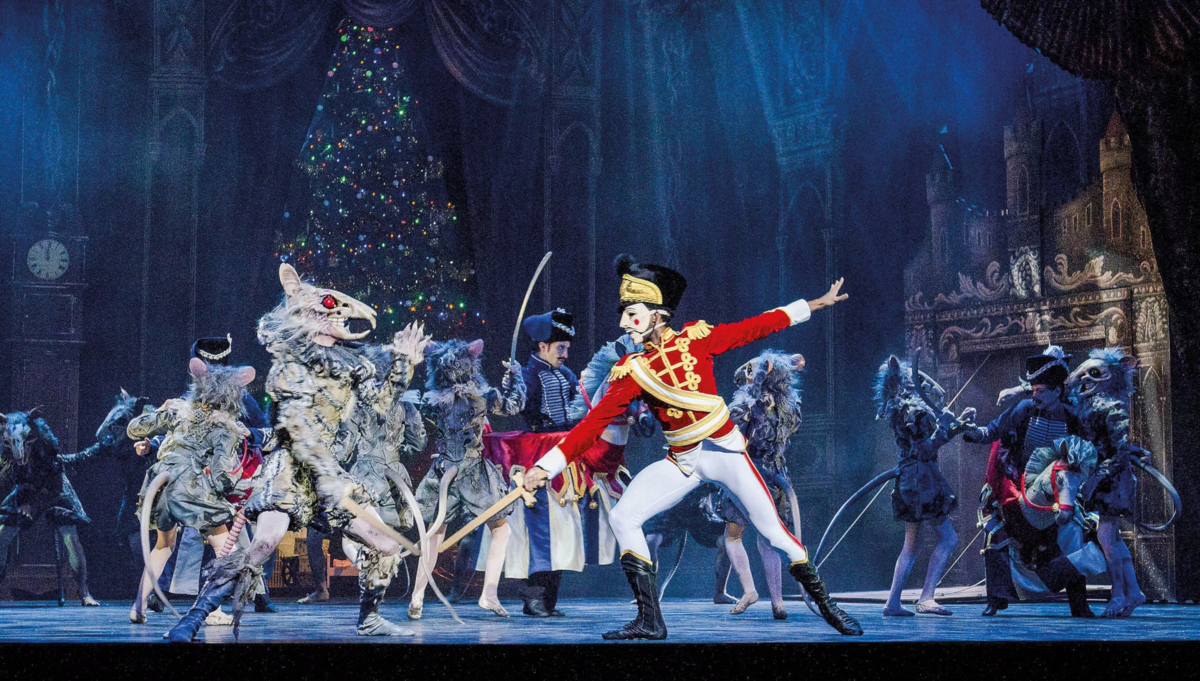
They had watched the opening scenes – the dressing of the tree, the dancers swooping and whirling with tinsel and baubles in a manner that was visually impressive but which would undoubtedly broach a hundred health and safety rules; then the arrival of the children, the lifelike human dolls and their stiff-jointed bows; the argument over the nutcracker, and then the chimes of midnight – or not quite, as Drosselmeyer lingered at the top of the clock, holding its peal at bay for just long enough for the tree to rise up out of the stage to reveal new greenery and freshly-painted baubles that appeared to be giant-sized. It was an effective bit of stagecraft, if a little primitive.
The young woman playing Clara dashed and darted among the stage, taking in the spectacle. It really was difficult, he decided, to effectively communicate something like this through the medium of dance. How is one supposed to act out the sensation of being shrunk without emoting it verbally? The Doctor recalled a time he had faced off against an oversized cat, after an accident with the TARDIS rendered his crew the size of insects. At least they’d still been able to speak.
Clara. Why was that name somehow familiar…?
He put it out of his mind. Ah: here came the tin soldiers, waddling across the floor to join their prince, while the mouse king lingered stage left, battuing with the occasional petit saut, his rapier firmly in hand.
The Doctor had a good look at them through a pair of opera glasses he’d acquired in the lobby. They looked harmless enough. Each stood at a firm six foot five (the hats, he noted, added several inches), in full regimental dress uniform. The eyes were black and opaque, like polished onyx, and the mouths were horizontal slits prised open like the jaws of enormous nutcrackers.
They waddled onto the stage, looking more amusing than formidable, eliciting a laugh from the audience. Then they gathered in formation behind the nutcracker prince, forming a tight line. The Doctor was still peering through the opera glasses, examining the metalwork for familiar insignias or signs of trouble.
But he was coming up empty. The robot men bobbed and swayed in the manner of curtseying policemen, which got another laugh. And they really were robots: he could see that from the stiffness of their gait and the absolute synchronisation of their movements. Either that or the ballet company had hired some incredibly talented human performers and dressed them up as robots, which meant they were guilty of false advertising.
“It’s uncanny,” the Doctor muttered. “They really are entirely automated.”
“Well, why’s that a bad thing?” whispered Mel, fiercely. “Perhaps it’s just someone who’s really good with electronics.”
“Yes, but — ”
“Shhh!” came a curt rebuke from just behind, and the Doctor shut up.
The Mouse King sauteed across the stage. He had abandoned his rapier, for the sake of the dance: presumably he would engage the prince in hand-to-hand combat. Behind him, the mouse army lingered: a baker’s dozen in furry costumes and masks, ready for the battle.
The Mouse King was twenty feet away when the soldiers all turned, as one, and blasted a dozen beams of energy in his direction.
He only just ducked in time. Fortunate, too, were the mouse dancers, who were upstage, thus evading the force of impact by a literal whisker.
The prince looked startled. This clearly wasn’t a flashy pyrotechnic. The Mouse King, too, was down on his knees, and then scrabbling out of the way in a manner that was almost ironically mouselike, as the robots wheeled round for another blast. Their quarry’s movements had placed him at the front of the stage, which was coincidentally where the prince happened to be.
The robots had their arms up. Both men were directly in their line of fire, with nowhere to go, frozen like rabbits.
Or mice.
There was a pause.
That was when the Doctor shouted “You blithering idiots! Jump!”
The robots’ blast seared harmlessly over the heads of the prince and the Mouse King, who had dived off the stage and into the orchestra pit. There was a crash and the sound of splintered wood, along with some light cursing and an agonised groan.
Mel winced. “That sounded career-ending.”
The stage was suddenly empty of humans. The mice had scattered to the wings, joined by Clara – who had hidden behind an oversized gift the moment the fracas had begun. Only the robots remained, and having no one left on set to fire upon, they made a forty-five degree right turn, so they were facing the audience.
Every single eye glowed a bright, brilliant green.
“Oh dear,” said Mel.
***
It would have been reasonable to assume, at this point, that the audience were in a state of panic and disarray, falling over each other in a futile attempt to make a swift and orderly exit. There would have been pushing and stumbling and the squashing of handbags. Instead, every person in the theatre sat, rooted to the spot. Some were too terrified to move. Others were convinced that this was all a part of the performance, a new level of immersion. Still others sensed they were at risk of death or maiming, but they weren’t about to rise out of their seats. They’d paid through the nose for these tickets, dammit.
The arms of the robots went up.
“Doctor — ” began Mel.
But the Doctor already had his hand in the air. It was aimed at a small, red, glass-mounted panel on the wall, some yards away. With a high-pitched whine, the glass shattered, and the wailing klaxon of the fire alarm spread through the building.
That did it. More or less. It did for most people, who clambered out of their seats faster than you could say ‘1812’ and made for the nearest exit, although not without stopping to collect their coats, hats, and personal belongings in the manner most unbecoming of sensible people responding to a fire alarm. There was a scrambling and a jostling and more than a few people fell over, splayed on the floor of the opera house looking undignified and cross. Still, the Doctor’s ruse had worked: the exeunt had the net result of confusing the robots, who suddenly didn’t know where to shoot.
Until they worked out that they should probably be shooting at him.

The Doctor threw himself to the floor and began to crawl along row F toward the aisle, as energy beams blasted the seats above his head. The upholstery was scorched and blackened and riddled with holes, but mercifully it did not burst into flames. As he was crawling the Doctor considered what sort of beam would do that sort of damage, in the hope that it might
<shuffle, shuffle>
help him narrow down his options a little. If a plan was to be formulated, he really needed to know precisely what sort of enemy he was actually facing.
Somehow he reached the end of the row, and made a mad dash along the theatre’s edge, ducking and diving and weaving and ignoring (or trying to ignore) the pulses that threatened to obliterate him, and then ran out through the door, and then headed for the sound booth.
When he got there, a terrified looking man was cowering against the far wall, trying to make himself as inconspicuous as possible whilst being too terrified to actually leave. His whole body quivered like a Scooby Doo character confronting a ghost. The hands oscillated rapidly, nails chewed to ribbons.
On seeing the Doctor, he momentarily panicked, and then regained a small amount of composure when he realised he wasn’t one of the robots.
“A simple job! That’s what they told me! Just turn ‘em on and let them go!”
The Doctor surveyed him. “Who are you?”
“Name’s Gerald. I’m running tech. Was, anyway. ‘Til this!”
“Where’s everyone else?”
“They legged it. Me, I’m not taking my chances. Not when those… things are out there!”
“I take it you were in charge of the robots?”
“I plugged ‘em in. That’s all! They came pre-packaged.”
“From where?”
“No idea. It was the producer’s thing. He got ‘em off… some bloke he knew, offered him a deal, think there might have been a brown envelope, promise of a new video recorder. Someone might have slept with someone’s wife. I dunno. All sorts of stories doing the ro—”
“You’re waffling,” snapped the Doctor.
“Right, yeah. Anyways, they were all set up, programmed to come out and do a bit of marching, back, forth, leave the stage. The dancers were supposed to do the rest. It was a gimmick, a bit of publicity for the tech company.” Gerald clutched at his hands. “They worked fine in rehearsal!”
Instinctively, the Doctor trusted him. People who were hiding things didn’t usually sweat quite this much. He peered out at the stage. The robot nutcrackers were alone on the stage, aiming their guns around the empty theatre.
“Are they still out there?” enquired Gerald, presumably too terrified to look for himself.
“Yes,” said the Doctor. “I think we’re safe in here, just as long as we — ”
He ducked as a bolt of energy flew over his head, smacking into the glass behind.
“They’re coming,” he said. “Stay out of sight. We’ve got a minute at most.”
Gerald’s eyes were wide with fright. “What are you gonna do?!?”
“I just need…” the Doctor was fiddling with the mixing desk, throwing switches up and down. “If I can work out their frequency and then isolate the feedback loop at 250 Hertz, then it might — just might — ”
They could hear the shudder of clanking metal as the robots made their way across the floor in their direction. Gerald had flattened himself against the far wall, behind a cupboard.
The Doctor cranked up faders three and four and then made a micro-adjustment to the gain. “Just… about…” He flinched again as another bolt seared in their direction, vapourising a pot plant.
“Here!” The Doctor switched from input to output and a high, pulsing noise reverberated across the theatre. Gerald plugged his ears. The Doctor shook his head, as if dislodging a fly.
There was the sound of a fizz from outside. Cautiously, the Doctor peered out of the doorway and beheld two of the robots, downed and still, having caught the brunt of the sonic blast. The others were heading away, lurching and swaying and licking their wounds.
He’d deal with them later. Right now, he had other fish to fry.
The Doctor went to a telephone at the nearby desk, dialled a set of numbers he’d memorised, gave a password and some instructions, and hung up. Then he made his way over to one of the downed robots and ran his hands over the metal, searching for pulse emitters, power generators, or any signs of off-world technology. He found nothing obvious. This equipment, it seemed, had been made on Earth.
But why? And for what purpose, other than to terrify a crowd of theatregoers?
The Doctor pulled open a shoulder panel, examining the circuit boards. Processor, visual optic link — ah. There. That was it.
He was just piecing together the last bits of the puzzle when he was joined by Melanie, who came trotting across the stage, heels clacking on its wooden surface.
“Everybody’s out,” she said. “Well, except me, of course. Are you all right?”
“Yes, yes, I’m fine. Unharmed,” the Doctor said. “And more to the point, I think I’ve worked out what’s going on with these rogue nutcrackers.”
“Great,” said Mel. “But there’s another problem.”
“Oh dear,” said the Doctor. “Which is?”
“We managed to get the audience out through the main entrance and onto Bow Street. But the robots haven’t gone that way.”
“Isn’t that a good thing?”
“No,” said Mel. “They crashed through the stage door and went south. They’re headed straight for Covent Garden.”
The mayhem looked to be a couple of hundred yards ahead, around a corner. Specifically, it sounded, rather than looked. They could hear screaming, and the occasional crash.
“So they’re not aliens?” said Mel, as they jogged.
“Not at all,” said the Doctor. “I had assumed we were dealing with a nest of Autons. Some primitive Cyber-variant. Even a Quark. But no, these were manufactured on Earth. I couldn’t be sure until I found the Awareness Chip.”
“The what?”
“It’s an algorithmic learning machine,” he explained. “It responds to user-generated feedback and is able to adapt its responses accordingly. Basically, it uses human input as a kind of fertiliser, from which it’s able to grow other things.”
“So it creates new content from the user?”
“Precisely. The technology won’t really take off until about thirty years from now, but there were some primitive prototypes knocking around in this time period. The robots must have been fitted with one of those.”
“But I thought they were just carrying out a series of commands.”
“No, they were programmed to watch what was happening and then react. To respond to the narrative. At some point they must have decided they didn’t like the story.”
“Isn’t that a little dangerous? Self-programming robots in a live show?”
“Well, theoretically, once you have a sequence you’re happy with, you lock it in. As far as I can see, they managed to find an override.” The Doctor sighed, which was a feat when you were keeping up a steady jog and indulging in a juicy helping of technobabble. “Artificial intelligence. Sooner or later, it always seems to find a way to see humanity as redundant.”
“But they’ve got lasers!”
“Yes, and they should be harmless. Designed for decorative purposes, like a cat toy. Only they’ve found a way to concentrate the beam.”
“How on earth did they do that?”
“I’ll ex—”
“Don’t tell me. You’ll explain later. So it was all a mistake? Rather than a nefarious plot?”
“Precisely,” the Doctor confirmed. “Although I think you’ll find that I’m the only one allowed to use words like ‘nefarious’ in this partnership. In any case, once all this is over, assuming we survive, you and I are going to pay a visit to that startup company and ask them exactly what they think they’re playing at.”
“At least it’s different,” said Mel. “I thought you were going to tear off the tech operator’s false beard and find out he was the Master.”
“I’m glad I didn’t,” said the Doctor. “That really would have been mind-numbingly predictable.”
***
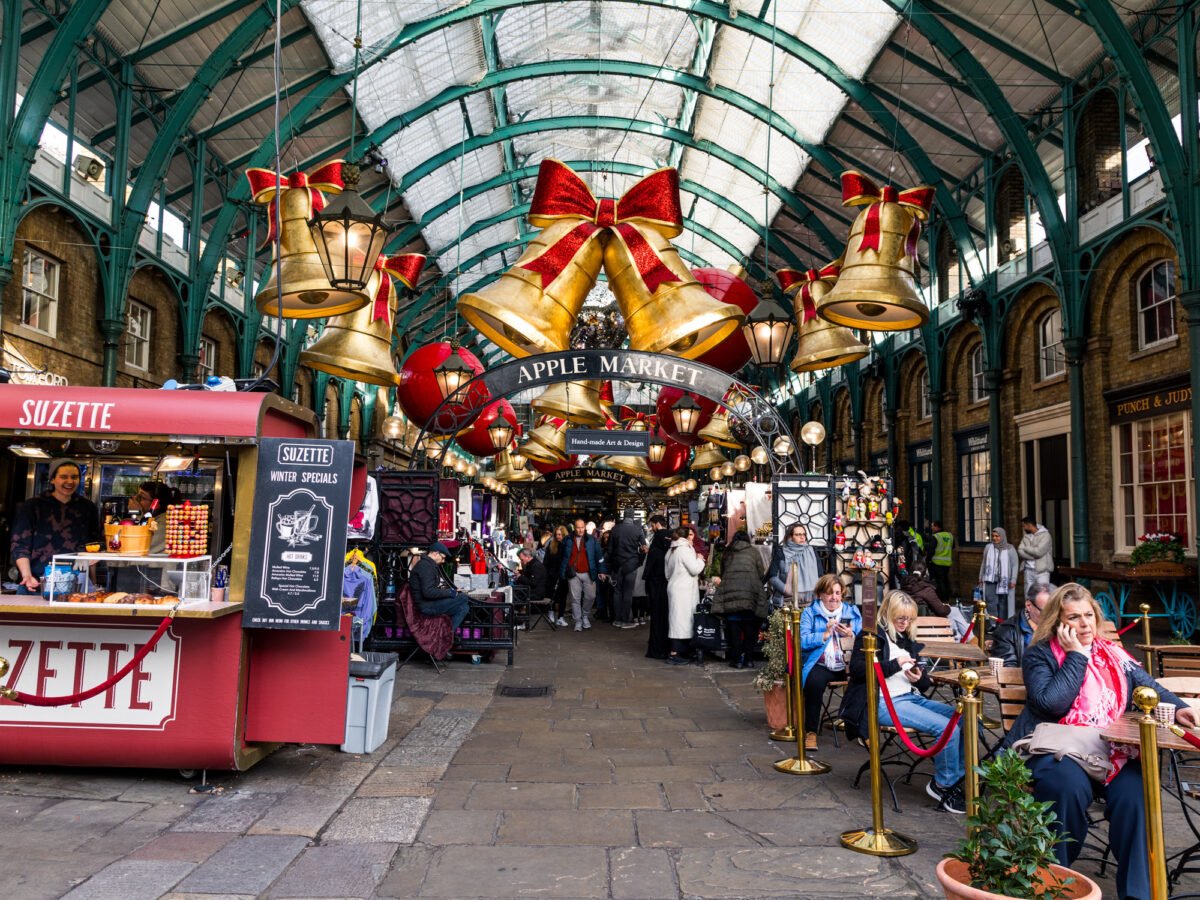
Covent Garden was resplendent: the open-air market was serving overpriced mulled cider and hot pies, dangling icicle displays hung from the canopies, multicoloured rope lights swayed between lamp posts in the evening wind, and the tree outside the pavement cafe shone with baubles, glistening through a mile of tinsel. A violinist played Christmas carols by the jewellers, street peddlers were flogging discount Santa hats and illuminated candy canes, and the Seventh-day Adventists were thrusting pamphlets into the gloved hands of passers-by before trying to engage them in conversation about the reason for the season, and would they consider making a donation to help repair the leaky church roof?
At least, that had been the scene five minutes ago. Now the tree had been upended, the market had hastily rammed down its shutters, the lights were in flames, and the Seventh-say Adventists had mercifully done a runner.
The robots were marking time in the square when the Doctor and Mel arrived. A crowd of people were in the process of a hurried and untidy exit, as the metal monstrosities crunched and stomped across the concrete, aiming their lasers and letting off the occasional beam. One met its target, and a middle-aged woman in a fur hat was instantly vapourised.
“What are we going to do?” cried Mel. “They’re going to kill everybody!”
“Not if we stop them first.”
“You know, if I had access to a computer with a modem and an ethernet cable, I bet I could reprogramme them from that junction box.”
“I’m sure you could, but we don’t,” said the Doctor. He was taking in the environment, performing an on-the-spot SWOT analysis: scanning it for threats, weaknesses, and opportunities; middle management without the annoying flowcharts. His eyes moved from the market stalls to the phone box to the drains and back again.
“You know,” he said, turning to Mel. “I do have an idea. But we need to get them all onto that platform. The one near the gratin dauphinois stall.”
“I think I could do that,” she replied.
“How?”
She beamed. “By adding another chapter to the story.”
A light dawned in the Doctor’s eyes as he understood. “All right. But be careful! And be ready for my instructions.”
As Melanie advanced in the direction of the robots, the Doctor made his way over to La Grande Bouffe – a substantial marquee selling sizzling sausages and fried potatoes that were cooked in enormous pans – and then nipped round the back. The staff were long gone, their wares still sizzling hot and making for a likely fire hazard, but he couldn’t worry about that now. The radio blared jaunty Irish-tinted Christmas music from a nearby speaker:
“You’re a bum, you’re a punk, you’re an old slut on junk,
Lying there almost dead on that drip in that bed,
You scumbag, you maggot, you cheap lousy f—”
There was abrupt silence as the Doctor yanked out the generator cable.
He looked out from behind the stall. Where was Mel?
***
She hadn’t been idle. As soon as the Doctor had dashed up to the platform, she’d headed in the direction of the robots, who were using the square as a literal stomping ground: lurching like a group of drunken squaddies on their night out. The enormous jaws clamped open and shut and the arms reached out and grabbed at fistfuls of apples, or chunks of masonry. Then the jaws clamped shut again and great metal teeth reduced the masonry to smithereens.
It would have almost been comedic, had it not been so deadly. And it was only a matter of time before they managed to get their hands on a human appendage.
Mel reached a spot where there were no people. Then she turned to the robots and waved.
“Coo-ee!” she called out. “Fancy a bit of a dance?”
A few of the nutcracker soldiers pivoted in her direction: a perfect ninety degree turn. Mel countered it with one of her own. Before they knew what was happening, she was re-enacting act 1 of The Nutcracker, making up the steps as she went along.
Before her travels with the Doctor, Mel had carved out a respectable (if not exactly distinguished) career as a computer programmer. However, in her girlhood, she had harboured secret unresolved dreams of becoming a ballet dancer, the same way that many children do; she’d had lessons and done local shows and even entered the odd competition. Her parents had indulged her, because while it was statistically unlikely that she would become a star, they were happy to lend their support until she realised it for herself. Melanie, it would turn out, would have a career in cyber: she just didn’t know it yet.
Still, the knowledge remained. As did the technique. To use a well-worn cliché, it was like riding a bike.
She chasséd and sissonned. Third position. Then fourth. Back to second. And tournant.
Astoundingly, it was working. The robots ceased their directionless rampage and turned their collective attention to the dancer in the middle of the square, tracking her movements and assessing her as a clear and present danger, to be dealt with as a priority. And then they set off in her direction, jaws creaking, arms blasting out the occasional bolts.
Melanie avoided them all. And now she was adjusting her trajectory, moving up the access ramp – built to accommodate buggies and wheelchairs – that led to a central platform, near the abandoned potato stall and a smaller marquee selling wooden figurines.
There were several nutcrackers among them. As she careered around the space in an elaborate pas de bourrée, she tried not to think about the irony.
The robots were up on the stand now, and were surrounding her. They had decided to abandon their laser arms, out of tactical concern for hitting each other: instead the jaws were open, the arms outstretched, and they were looming in towards her. There was a gap between the nearest two: she prayed it would be wide enough.
Any second –
“Melanie!” cried a familiar voice. “Jump!”
She threw herself into the air and over the edge, landing in a perfect soubresaut on the ground three feet below. The robots turned in her direction, and that was when the Doctor rammed the sparking generator cable onto the floor.
A floor which happened to be made of aluminium.
Several thousand volts of electricity passed along the cable and into every robot there. The Doctor, who knew what he was doing, was unharmed.
The robots were juddering and swaying and sparking; the tops of hats blew off and the eyes changed from yellow to green to red and then colourless and blank. Fur singed. The jaws dropped, slackened, and wavering on their hinges.
Then every robot fell to the ground, incapacitated and silent.
The Doctor climbed down the scaffold on which he’d been perched, and made his way across, extending an arm to help his companion to her feet.
“Well done, Mel,” he said. “Are you all right?”
“Yes, I’m fine.” Mel was dusting herself off: her gown had accumulated a little grime from the street. “There’s a stretch in one or two of the seams, but all things considered, it could have been much worse.”
“Such a strange turn of phrase, that,” the Doctor mused, largely to himself. “‘All things considered’. How exactly does one consider all things? It’s impossible!”
He turned his attention back to Mel. “I must say, my dear, I’m impressed that you managed to perform those aerobatic feats while wearing that.”
“I did think about ripping it off to reveal some skintight lycra,” she said. “But I thought it was a bit of a cliché. Not to mention it’s rather objectifying.”
“Yes. Didn’t you do that on the Pink Windmill?” said the Doctor, and Melanie gave him a look.
There was a scuffle from nearby, and a well-dressed couple emerged from behind a toy duck sideshow, looking a little like a pair of guilty teenagers caught in the act. The man was in his forties and wore a dark suit and tie; the woman was some ten years younger, a heap of dark curls perched on top of a bright red, off-the-shoulder jersey.
Mel gave a start. “I love your hair,” she remarked.
“Thanks,” the woman beamed. “I love yours.”
“What on earth were you two doing back there?” the Doctor asked. “I thought everyone had gone.”
“We were… having a bit of a row,” the man explained. “We didn’t even hear the commotion until it was too late, and so we just hid.”
The Doctor was stroking his chin, filing through the photo catalogue in his head, trying to place them. “Hang on a minute,” he said. “Aren’t you — ”
There was a violent SMASH! as the duck stand lost one of its corners.
A single robot was lumbering through. The Doctor whipped his head to the left and counted. Of course. They were one short. How could he have been so –
“Doctor!” said Mel. “Got a plan?”
“We can’t use the cable again,” said the Doctor. They were backing away, slowly; the Doctor had manoeuvred the terrified arguing couple so that he was blocking their path, but he knew he’d be defenceless against that mouth, and the arms looked strong enough to lift two hundred pounds without breaking a sweat.
Well, metaphorically at least. The Doctor looked at Mel, ten feet away, then at the robot, which seemed to be advancing on her. Frantically, she looked over at the Doctor – and then she looked down at her handbag, which he was carrying.
There was a moment of mutual realisation. The Doctor reached in his pockets and fumbled. Yo-yo. Jelly babies. Romanian passport.
“Doctor! Hurry up!”
There it was. He grabbed at the book of matches and threw it to her. Then opened the bag and withdrew a large cylindrical object.
“Catch!”
Mel did. The robot was very close, but she already had a flame going. She used it to light the tail of the firework, and then threw it into the robot’s glistening mouth.
“Here,” she said. “Crack that.”
Instinctively the metal jaws clamped shut, and then there was a violent explosion somewhere within its circuitry.
The lights went out, steam came out of its ears, and one arm dropped off. The robot juddered three times. Then it crashed to the floor.
***
When she was sure it was safe, Mel came out from behind the balloon stand. She was joined by the Doctor.
“That was a little too close for comfort,” he said. “It’s lucky we had that firework.”
Melanie nodded, and then surveyed the devastation around her. “So what happens next?”
“Well, I took the liberty of putting in a quick call when I was in the control room. The cavalry should be here right about… Ah, here they are.”
A military truck had rolled into the square, and armed soldiers were disembarking, controlling and dispersing the crowd, sending medical staff to check the wounded. Mel recognised one or two of them.
“UNIT?” she said.
“In the flesh,” confirmed the Doctor. “The funny thing is, when I checked the records, it turns out there never was a Nutcracker performance here in December 1988.”
“What was on the programme for Christmas Eve?”
“Nothing. At least, nothing I could find. But this particular production has been expunged from the records. It doesn’t exist.”
“And you think UNIT has something to do with that?”
“Let’s just say they’re good at covering things up,” said the Doctor. “Except their supposedly hidden location. That’s the worst kept secret in British intelligence.”
“You knew about this, didn’t you?” said Mel, with the sort of hard stare that would have impressed Paddington Bear. “That’s why you got the tickets. You knew something was up.”
He shrugged. “Let’s just say I had a hunch.”
She pulled on her gloves. “Then I shall start calling you Quasimodo.”
There was a cough from nearby. The couple they’d saved were still there, mercifully unharmed.
“That’s twice you’ve saved our lives,” said the man. “We’re very grateful, although I rather hope you don’t have to do it again.”
“The feeling is mutual,” said the Doctor. “By the way, I’m the Doctor, and this is Melanie. We never did get your names.”
They looked almost amused. “I’m Sarah,” said the woman. “And this is my husband, Andrew. He composes.”
“I see. Anyway, it’s time we were heading off,” said the Doctor. “I left the TARDIS in a decent enough area, but it’s Christmas Eve, and I’m very anxious to get back before the revellers descend from the pub.”
“Surely they can’t do that much damage?” said Mel. “Old thing like that.”
“Yes, well. Just as long as it hasn’t been spray painted…”
They walked away. Sarah let out a long breath – one she hadn’t even realised she’d been holding – and then turned to her husband. “My God, Andrew. That outfit!”
“It was a bit of a disaster, wasn’t it?” he remarked. “Like something Malevich might have produced if he’d picked up a needle instead of a paintbrush.”
“Mm-hmm.”
“Mind you.” Andrew brushed down his overcoat. “It’s got me wondering. Joseph really is due for a revival, don’t you think?”
“Definitely.”
“I should make some calls.”
“At least leave it until January, won’t you?”
“Fine.”
They walked away, two souls in a sea of millions, as peace and serenity descended. Or as close as you ever got to it round here. This was London, after all.