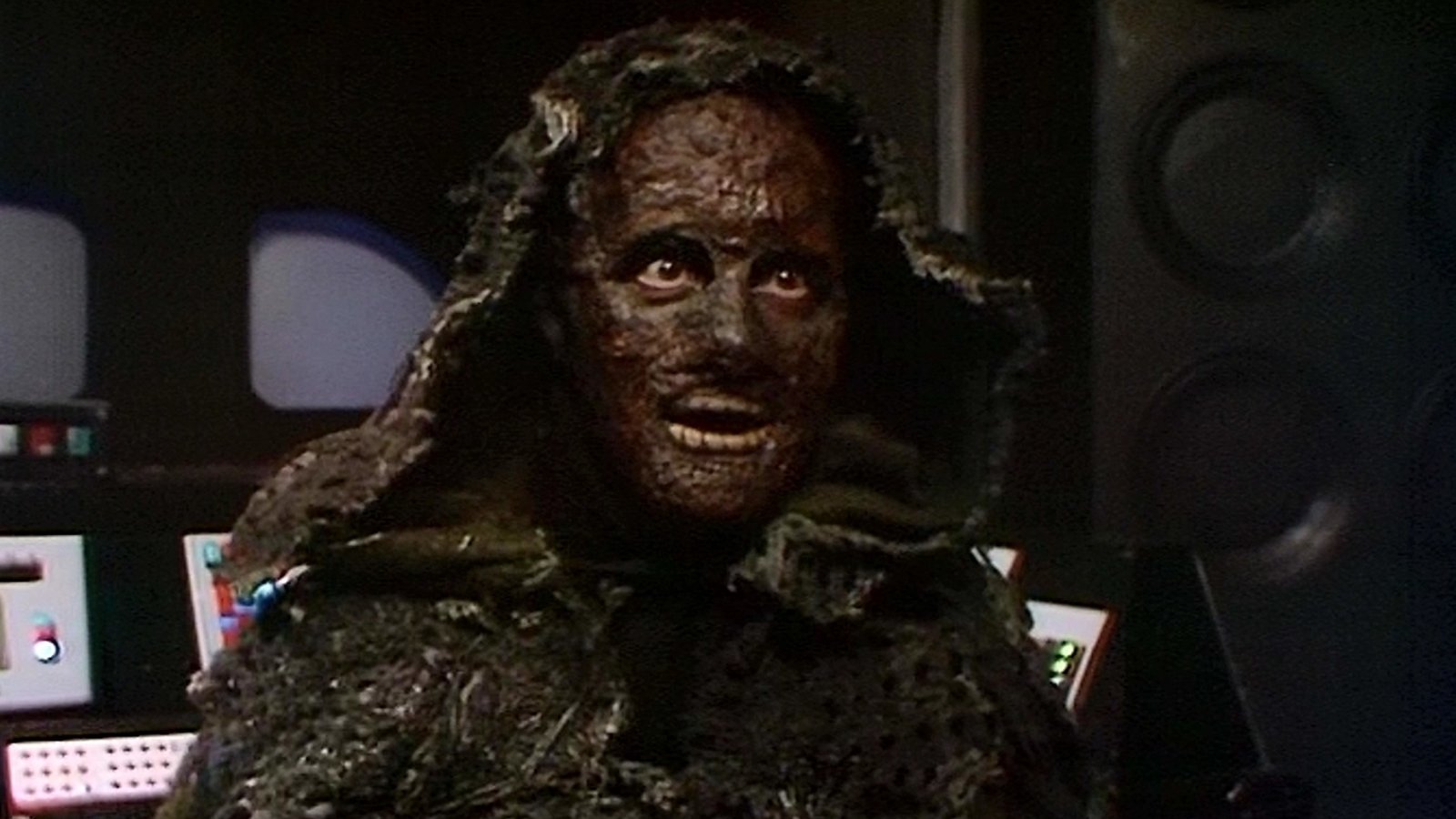
One Man In His Time: The Life of a Working Actor is a self-penned memoir of a jobbing actor comparatively few people will have heard of, but with a career on the stage that spans five decades now. This is the story of Geoffrey Beevers.
To Doctor Who fans he was, and is, a Master. And yet while this book is released from Fantom Publishing, known for Who books, the Doctor Who content within is almost negligible — Beevers’ most significant role in the series, in The Keeper of Traken (1981), is mentioned only in name and Beevers makes no comment on it. His more modern-day Big Finish work does get more of a mention, but again, only in terms of just one more job. There is a nice anecdote about how David Tennant himself recognised Beevers from across the room while at some function — “You were the Master!” — which shows off Tennant’s bubbly enthusiasm and good nature. But, no, this isn’t a memoir for Doctor Who enthusiasts; this is a memoir for Geoffrey Beevers, and anyone who might be interested in both him, and his life and times…
It’s quite a brisk read. Recently, I read another autobiography: Trouble at Mill & Other Places, by Frank Whitehead, dated 1993, and this is a self-penned reflection on Whitehead’s life, and his experiences as owner of a textile mill through the Sixties and Seventies. In a scrappy sort of way, Frank Whitehead takes us through his formative years, what life was like in the 1940s and ’50s, and how he came to be in the army, walking through the oppressive unending jungles and heat of Burma, then after demobilisation, a stint in the police force. It’s all very eventful on paper, and some of Whitehead’s recollections are indeed vivid, but brief. And then, he is flitting off onto some other, far less interesting, subject altogether… It’s almost a stream of consciousness, the author putting scraps down onto the page as they come.
Geoffrey Beevers’ book brought to mind Whitehead’s biography as both share similarities — not surprising as both are of a similar generation — but while Beevers’ prose and focus is more disciplined, Whitehead’s life was somewhat better rendered in prose, scrappy though the recollections were.
They’re similar books: what I would call middle-of-the-road biographies; and it says something that, while I finished Beevers’ book a good few weeks ago, I just can’t quite put down a firm view of its worth or quality. This isn’t as vivid a recollection of a time gone by as Bernard Wilkie’s A Peculiar Effect at the BBC was; neither is it as stark and brutally honest as Derrick Sherwin’s soul-searching biography. Instead, we have a run-through of Beevers’ childhood, the story of his unfaithful father, how he came to find himself at one of Britain’s most exclusive boys’ schools, how this experience shaped his views on both people and life in general, and his struggles to get himself established as an actor.

It’s all quite readable, but also uneventful, dispassionate even. I struggle to get any firm sense of Beevers’ emotions, which comes into sharper view as he comes to more recent years; these then very unexpectedly shift to becoming surprisingly detailed and open when sharing the first health scare of his wife, Caroline John (Dr Liz Shaw in Doctor Who), in 2003, and her battle and then slow deterioration in the years after.
That section, towards the final chapters of this book, is raw. The most difficult to read through. And yet Beevers’ own emotion is left almost completely out of events — I can’t quite make an honest assessment of this book because of this distance he has in his prose, and the sheer discomfort in reading his description of Carrie’s final months. It isn’t graphic, but it doesn’t shy away from the reality of what she was enduring either. But Beevers’ own struggle with this? I have no idea really. Throughout this book, he simply doesn’t ever discuss his own responses or emotions. And it is therefore a quite mechanical and cold autobiography.
Caroline John’s passing is not the end of the story, however: for Beevers tends to his children, deals with his son’s own health battles, and immerses himself in stage-work. He meets a new partner, Jill, and moves forward, as we all must. The final pages, though, are almost an appendix, as Beevers leaves us with insight into his views on various areas of science and philosophy — interesting to read and think on, and yet an unusual way for a biographer to sign off on when writing such a memoir.
Can I recommend it? Did I like it? That’s the difficult question that I have been wrestling with.
This is a competent enough reflection from Beevers; it flows well enough, and yet it lacks… spark. Reading first-hand accounts of what life was like in the 1940s and ’50s is always interesting, but beyond that aspect, there isn’t a lot that truly engaged me. Beevers takes us through his adolescence, then continues with a functional recollection of how he went through private school then came into acting, his early struggles to get onto the ladder, and even his meeting Caroline John, yet the emotional distancing of his text is almost off-putting. As if he is recounting some other person’s life experience and career. The result is a frequently too-detached reading experience…
One Man In His Time: The Life of a Working Actor is available now from Fantom Publishing.