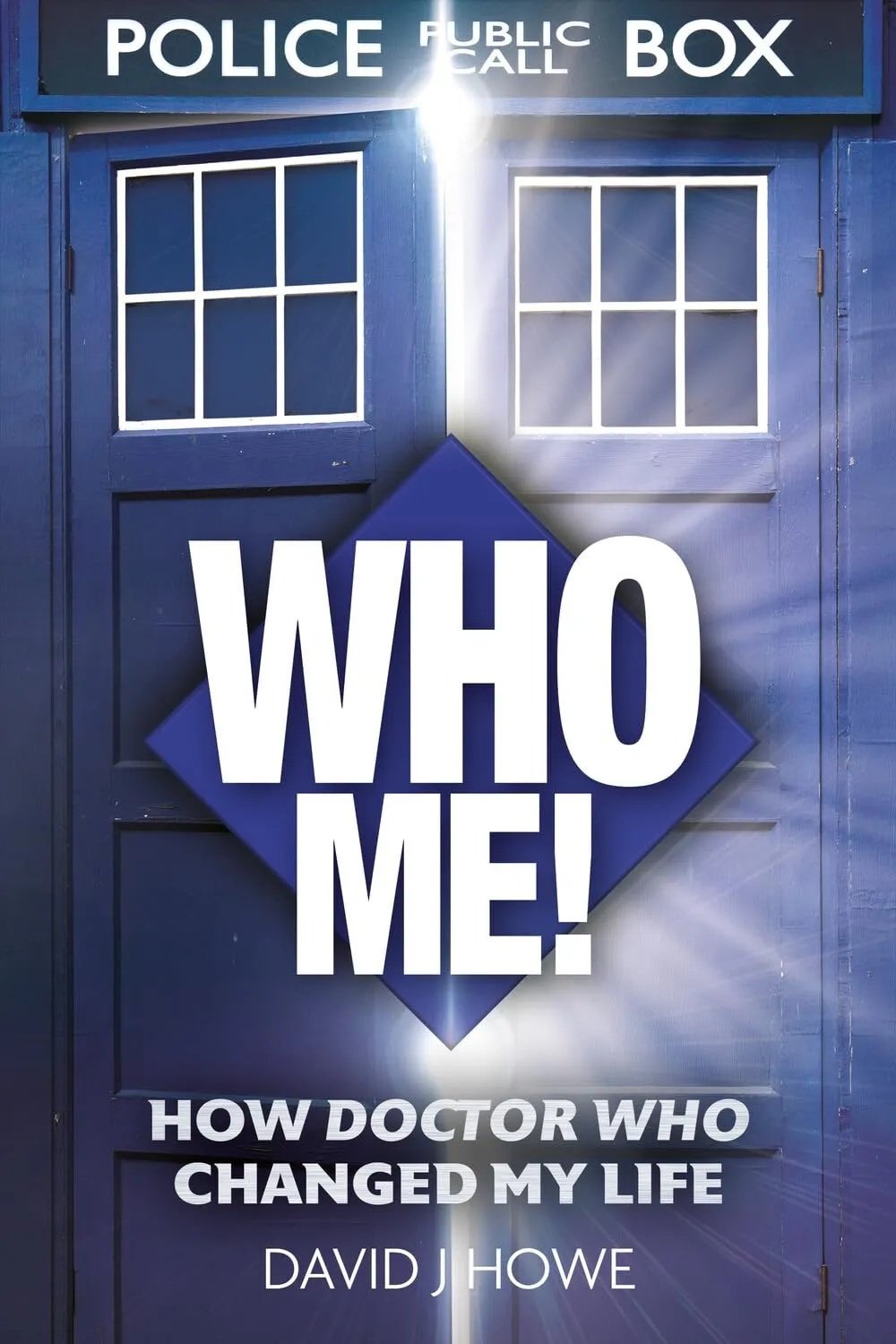
Of all the books I have read these last two years, this is the one that confounds expectations, and also stands as an example of how it is possible to badly pre-judge something, and yet come out the other end completely transformed and almost ashamed for advanced negativity.
I didn’t want this book. I have been a great fan of David Howe’s work over the years — his books in the 1990s were exceptional, and still are, but do we need a biography on the man?! That was my growing doubt. So I decided to pass on this book. And then Amazon informed me they were shipping… somehow, I had pre-ordered it, and so a book I didn’t want, and had no love for, was on its way.
But this is a memoir from David Howe that starts off as ‘one thing’, and very quickly becomes something altogether else. Something quite wonderful on the whole. I started writing as I began reading, just jotting down on-the-fly impressions. So let us proceed with me in a surly mood, and develop into a rapid thaw, and by page 50, having been thoroughly converted and absorbed by the genuine warmth and openness of Howe’s memoirs of being a very early fan of Doctor Who…
The most jarring thing about this hefty 275 page memoir of a (prominent) Doctor Who fan is that before the reader even gets to ‘Chapter One’, David Howe feels he had to put in a preface that, remarkably, pleads with the audience not to lynch him online if his memory is a little faulty on some details, or he forgets to name something where he should have — “Please don’t get upset if my memory differs from yours, or that google or Wikipedia or some other strange website have found has a different answer. I’m sorry. Just enjoy the book.” The book hasn’t even started, and you are first presented with that as a primer. It’s a completely misplaced and ill-judged means of introduction. And also a little disturbing: just what is it that even a name as well-regarded as David J Howe experiences today, via the internet, that makes even him so… fearful and apprehensive of speaking out?
It makes for harsh contrast as, when you sink into the opening chapters, Howe does quickly succeed in drawing me into his narrative. After that blunt preface, it’s a very commendable feat, and a mark of how capable a writer and personality Howe still is; I had such deep misgivings about this book going in that the loose, informal, and chatty nature of his writing was very off-putting in the initial opening chapter. The style isn’t one I am accustomed to in a memoir, and yet the informality of it quickly begins to solidify and take focus: what Howe is cleverly managing here is to ease the reader into his story, and then gradually, he fills in his early years with some wonderfully vivid, and very informative, observations and memories on what life was like in the 1960s, into the 1970s.

It’s the detail of days gone by that most often makes biographies a success for me. So just reading about how David came into the world, his first experiences of the shift to decimal currency in Britain in 1971, seeing colour televisions out in the shops for the first time — all of it is absorbing. Hearing him relate his mother’s story of how some television shops tried to use coloured sheets over black and white television sets to tempt in customers with the illusion of colour images is another neat bit of social history to contemplate. And as much as he is walking us through his early memories, and his experiences in trying to catch the television series each Saturday, it’s his memory and impressions of the world around him that are equally engaging, and actually educational in many parts.
It’s an unusually media-loving household Howe is born into; his father is adept in various fields and enjoys tinkering and recording onto audio, and Howe still has some of these recording today, one taken in late 1963, when he was just two years old! His father also has a Super-8 film camera, and, as we go on to learn, is quite adept and knowledgeable about electronics — managing to strip an obsolete television set to reveal its key transmission, and allowing David to listen to and record some of The Curse of Peladon… while he himself is in the lounge watching Gerry Anderson’s UFO on the actual family television! And a little later, we experience the exciting arrival of a colour television set into the household, midway through The Sea Devils!
It’s clear that it is his father, Ted Howe, who has had the most profound effect on David’s upbringing and aptitude for the creative field: between his knowledge and support on electronics and capturing media in those early 1970s days, to just being there as a dad, Ted Howe’s influence over his son is something you can see threaded through the narrative of these memoirs. It’s just one of the ‘spokes’ of this book that come together to form a warm and affectionate journey through David’s earliest memories, and what it was like to enjoy, and become devoted to, a weekly serialised programme that offered escape into other worlds.
One particularly well judged area is his on-the-spot recollections of his earliest memories of watching the series, which begins with the final episode of The Evil of the Daleks. What makes these commentaries sparkle is that Howe tries to recapture his original impressions of these stories as a young boy, and by association, he places us back into a long-gone era where the series was genuinely odd, genuinely scary, and so hard to watch at times. By the time he gets to The War Games in 1969, he is adding some very thoughtful context in the form of observations as to why it was that this teen-part story was probably such a turn-off for the audience of that time. We don’t realise today that The War Games was made and shown at a time when the Second World War was still in common memory, when war films were also commonplace, and so, with its very prominent war-film tropes and imagery, this is a story that would have caught the imagination of the casual audience in a different way than other Patrick Troughton stories could. There is also the basic fact that, back in those days, it simply wasn’t always possible to watch every Saturday, as events made access to a TV impossible on occasion. And yet here lay the value of Doctor Who being a serial: if you missed one episode, at least you didn’t necessarily miss the ‘story’ itself, as there was always next week’s episode to fill you in.

The significance of the arrival of The Making of Doctor Who is a key turning point in David Howe’s interest in the series, however, and for a man who is best known for writing and producing some of the best non-fiction studies of Doctor Who, it is this discovery of that particular book in 1972 at a WHSmith’s branch, and at such a young age, that really helps put everything about his long relationship and connection to Doctor Who into proper context — in a sense, it is Malcolm Hulke and Terrance Dicks’ work on this peculiar (for 1972) factual book that shapes Howe’s own future direction, and therefore quite possibly also shapes the rise and development of Doctor Who fandom as the Appreciation Society arrives by 1977, and begins to research and catalogue the history and making of the television series. That book was published in 1972, but was quickly followed by the equally unique and influential Radio Times special in late 1973. And the way in which its factual content influenced Howe at the time is something laid out by his friend David Butterworth’s ambitious attempt to make an actual Dalek! Inspired by the Radio Times, the gumption and make-do by which the two friends slowly pull together odds and ends to make this dream a reality can be seen in a photograph of the end-result: an impressive full-size prop, rough but very much recognisable, and even, up to a point, functional! It’s a success that you can see will give Howe confidence in his next steps… The Doctor Who Appreciation Society (DWAS) was on the horizon. And so too were memorable first meetings with first Terrance Dicks, and then Malcolm Hulke. Two figures who leave a lasting impression and influence.
Like his recent Telos publication of Keith Barnfarther’s career with Reeltime Pictures, it is likely Howe’s name and association with the Doctor Who world won’t mean a great deal to fans brought in with the 2005 revival of the series. Barnfarther and Howe’s names are linked to the 1990s era, so the connection and incentive to take note of this book sadly isn’t going to be very high with that demographic. And yet, like the Keith Barnfather book, I can and I will give this a very strong recommendation — I began by being very critical on whether a fan figure like this should indulge in a memoir, but then I remembered Steve Cambden’s wonderful self-published memoir, and accept that what actually matters is whether the memoir as published is enjoyable, informative, and leaves a good impression when finished. One of many surprises is learning that Howe actually knew Steve Cambden from an early age, well before Cambden managed to find an assistant’s job on the television series itself in 1977. And as it stands, Who Me! is a wonderfully presented 275-page great big hug, from David J Howe — a man of many talents, certainly, but a dyed-in-the-wool Doctor Who fan first and foremost.
At heart, he is just like us, and he wants you to know this. And that’s why this book is so rewarding: a well-timed release in these times of uncertainty for the Doctor Who fan, it has a little bit of something for everyone… There is a wealth of trivia and anecdotes for the long-time fan who was around in the ’70s and ’80s, a fine insight and understanding of what being a fan in those early days was like, and, as the story comes more up to date by the 2000s, an insight into the organised fandom worldwide, and what an old hand like Howe feels about it all today, as he reflects on where he has been, and where he is now. He is certainly living his best life today, thanks to his longstanding work in publishing and his association with the upper tier of fandom over the decades. That is something made very clear, but it’s that bond and affection he has for the television series that also comes through. Even now, after he first tried his hand in publishing back in the ’70s, he is still deeply committed to examining and writing about the television series, the fandom, and his love of the horror genre. Proving that he doesn’t need the BBC to give him permission or a commission to do it, he just does it himself. Very much as he did when he started out back in the early ’70s, encouraged by his father’s quiet encouragement and support.
Please do treat yourself to something thoroughly engaging and genuinely uplifting to read through. Just the tonic to see you through the New Year.