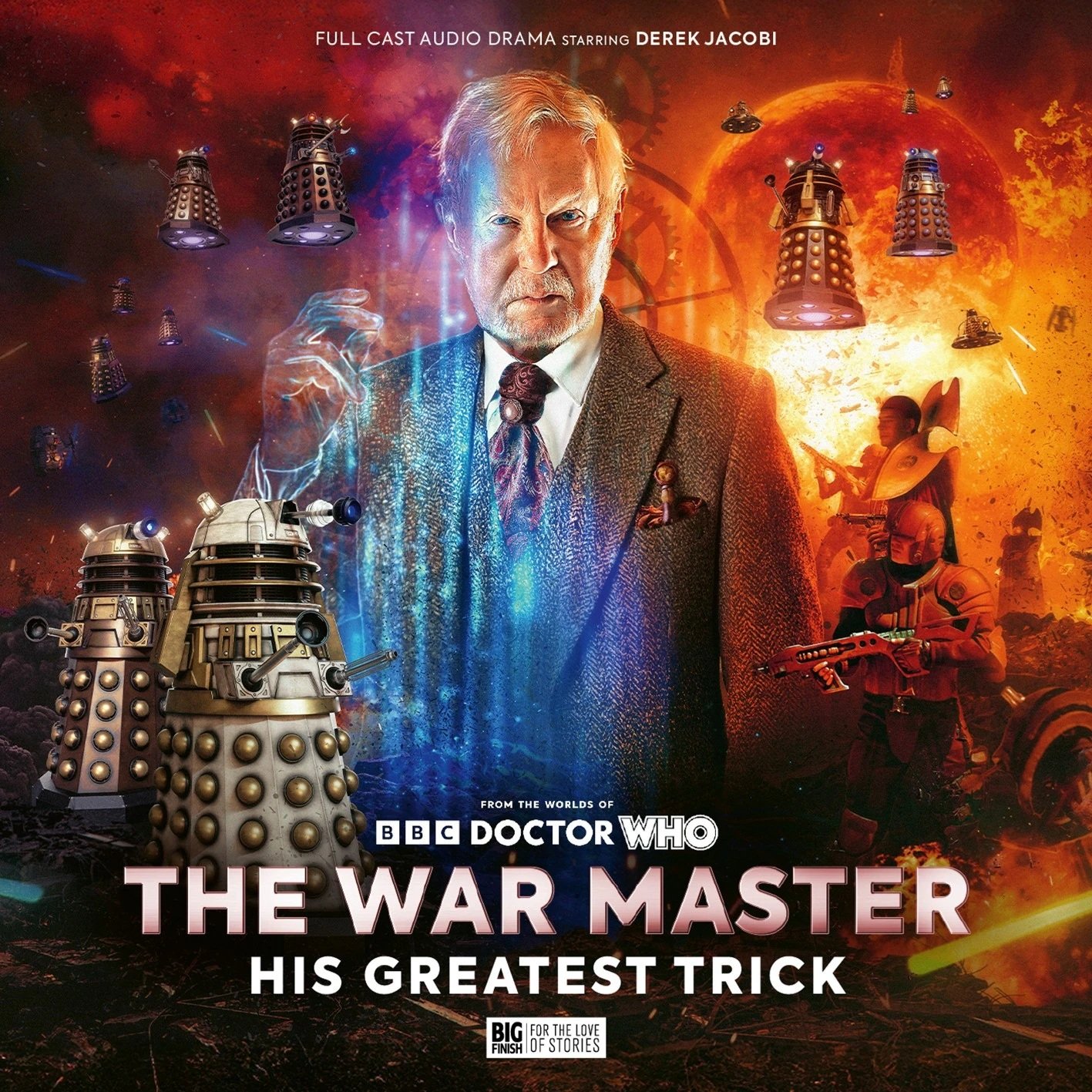
His Greatest Trick is an umbrella name for a set of four audio stories where the wonderful Derek Jacobi is your ally and friend… but the Master is most certainly not!
The Grievance Bureau by Lizzie Hopley
‘Like many a top-class criminal, the Master has been caught on a misdemeanour. Both the Time Lords and the Daleks intend to destroy him forever but they can’t do it alone. Can the two sides of the deadly Time War come together to eradicate a mutual enemy? But as the Master’s show trial commences, there’s a danger that his ‘misdemeanour’ may not be as minor as they thought…’
“You are still labouring under the belief that one side can win. I happen to know better!”
If you are now twelve volumes in on a niche series such as this, then you are clearly doing something right.
The War Master is very distinctive among Big Finish’s output in that it has adopted a strategy of making each new release a themed product and uses that as its selling point. So one is a set of stories featuring old companions of the Doctor, another sees the Master dropped into the Land of Fiction, and another is a series of stories based around a boarding school that he has settled in. It is a strategy that works incredibly well for this character, as — unlike River Song, for example — this Master is being motivated purely by self-preservation and ruthless gerrymandering to keep himself at least two steps ahead of pursuers like the Time Lords and the Daleks.
Caught in a universe that is now governed largely by the Time War raging between Time Lords and the Dalek Empire, the fleeing Master hops from one escape hole to the next, now embracing cruelty and chaos for the sake of it to a large extent, and honing a personal survival instinct like no other…
Lizzie Hopley’s story here is quite a huge bite for the new listener to be presented with and asked to swallow, as it opens by presenting a situation that is going to be hard to follow if you are: a) new to this series, and b) unfamiliar with the Time War and Big Finish’s developing of it in their Gallifrey series. This story is the opener in this new release, and a little more complicated than it actually needs to be.
At its core is the basic premise that the Master has been brought to a Dalek station to face trial by a court of Daleks, and a group of Time Lord council representatives who have negotiated this meeting to deal with the troublesome Master once and for all.
With its court-martial setting, taking place within an impenetrable time-bubble, this production is akin to radio theatre. If you have the stamina to cope with a minimal setting for these events, reams and reams and reams of dialogue, and can let the complexity of the backgrounds to all of these characters and the confined location wash over you… what you end up being rewarded with is a very smartly written psychological war. It’s being waged by the seemingly doddering ageing Master, against the Dalek Squad who are here to follow their express orders and execute him. Along with the Time Lords present, they are the ones with all the power on the face of it; the Master is, after all, a powerless lone prisoner. But as the dialogue flows, and the preliminaries take place, the facts of who actually has the power here slowly become chillingly apparent… subtly and skillfully playing on both the Daleks’ and the Time Lords’ anxieties and wartime paranoia, they are all one man’s victims: The Master’s.
And as we near the climax, Dalek death squads, Time Lord Emissaries, and acclaimed cloning experts alike all learn that this one, unarmed old man is nothing less than Satan incarnate. They stood no chance.
“I must say, it was most amusing to have my IQ tested by a Dalek!”
Last Girl Standing by Katharine Armitage
‘The Master has taken charge of an exclusive alien girls’ school, where he’s lying low in comfort. But when pushed by a suspicious colleague, he weaves a treacherous web around students and teachers alike.’
Intellect, charm, and personality come together with Derek Jacobi’s interpretation of the Master in a way which directly harks back to the Roger Delgado incarnation. One has to accept that the stresses and exhaustion of now being a fugitive has now exacerbated all of the worst character traits of this renegade Time Lord and his single-minded aim is to stay alive and stay free. This drive for self-preservation means he’s having to hide in various locales and polite societies, and these unsuspecting innocents are at his service… After all, he is the Master.
Katharine Armitage takes this methodology and, by tweaking it a little, creates a scenario wherein some of the most innocent and vulnerable of society are subjected to the corrosive effects of just being unfortunate enough to be trapped in the same vicinity as a man such as this – a supremely intelligent psychopathic manipulator, with absolutely no sense of empathy or human decency, and who, when even remotely threatened, exerts that intellect and personality in a way which is not just cruel and manipulative, but capable of corrupting these defenceless innocents by just using words, and perhaps some slight stimulus.
Triggered by a challenge from the head-teacher of the girls school he has hidden himself away in, the Head-Master sets a challenge to its students, a test of competitive survival instincts, as well as intelligence and intuition.
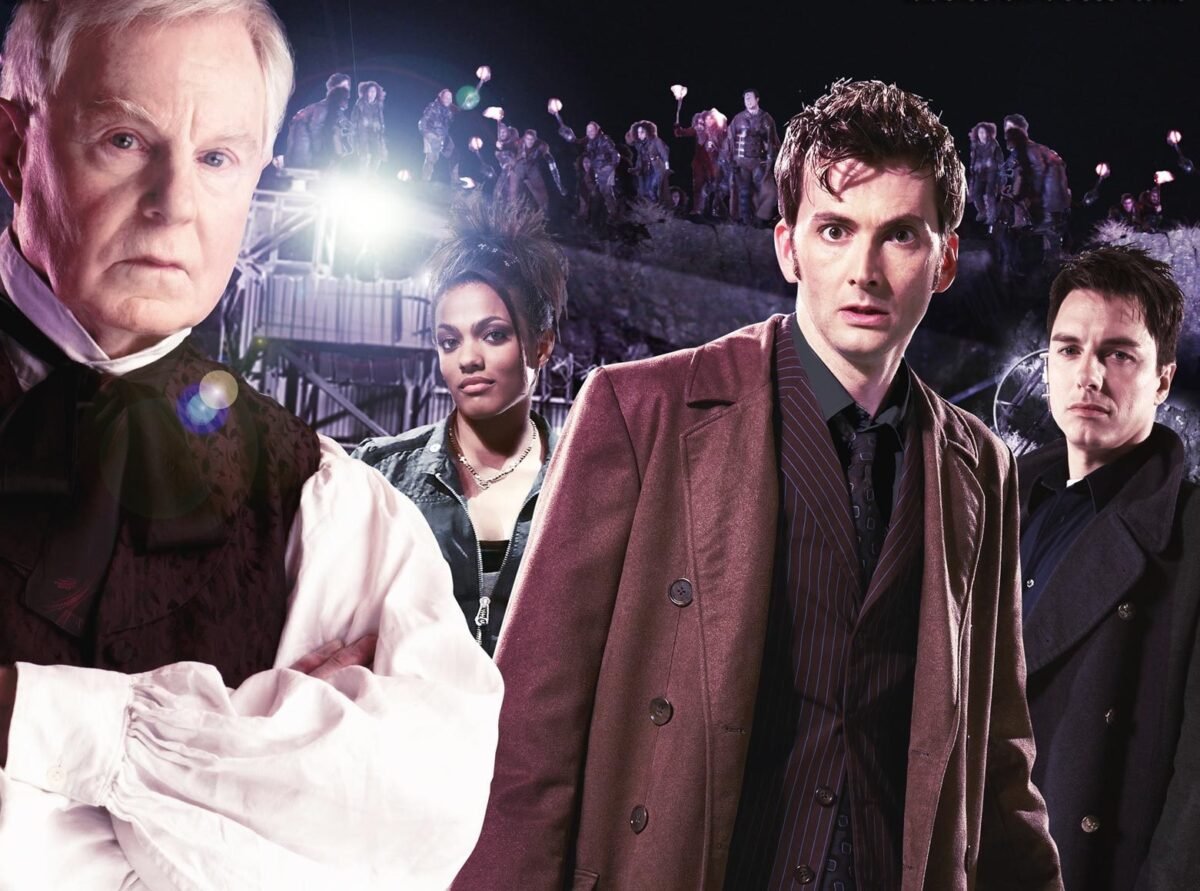
Nadia quickly stands out as the Master whittles away the chaff of rich spoiled girls: raised in a more down-market section of society than the rest, Nadia’s instincts and intelligence are sharper than the others — more feral. And this unique personality is what makes her stand out from her peers, and surely with the better chance of meeting the Head-Master’s challenge and winning.
Nothing is quite as you expect it to be, however. It seems on one hand to be a story with a commentary on social class standing in a contained environment like a school, but this isn’t where this direction travels with Armitage. This is the War Master she is writing for, and as such, the appeal for writers is to just be able to write dark material that breaks with convention, and allows them to work on characters and situations that are otherwise verboten in any licenced Doctor Who release. This is the Master’s world, unchecked by his moral and intellectual counter-point of the Doctor, and with no scruples or ethical concerns other than ensuring his own comfort and safety is catered for. Writers have collectively given themselves the freedom to break the usual storytelling assumptions, and just test themselves with how dark and nihilistic they can go with a character who has no concern at all, but himself.
It’s a story with a degree of contrivance involved in reaching its finale and the telling, but with the affable Derek Jacobi performing such an utterly callous but fascinating monster, what you are left with is another memorable Katharine Armitage story, and another example of what makes this Big Finish range so absorbing and yet so uncomfortable to sit through. By the time the final two minutes arrive, and a finely delivered last word from the departing Head-Master, he has used his challenge to them to utterly destroy every last person in this school. Mentally, emotionally, and physically.
All in a day.
The Worst of All Evils by Iain Winterton
‘Damaged by a Dalek time destructor, the Master’s TARDIS is spat from the vortex onto Horoka – the hub of Earth Empire’s transmat network, and the site of a refugee camp. Injured, the Master is taken to a hospital run by the ever-hopeful activist Carla Zheng.
Their situation is desperate, but to the Master there is one thing even worse than despair…’
The third story in the arrangement and we have an allegory at work here between Greek mythology and the incursion of the distant Time War bringing a ‘Chariot of the Gods’ to mortal lands… the Master has arrived.
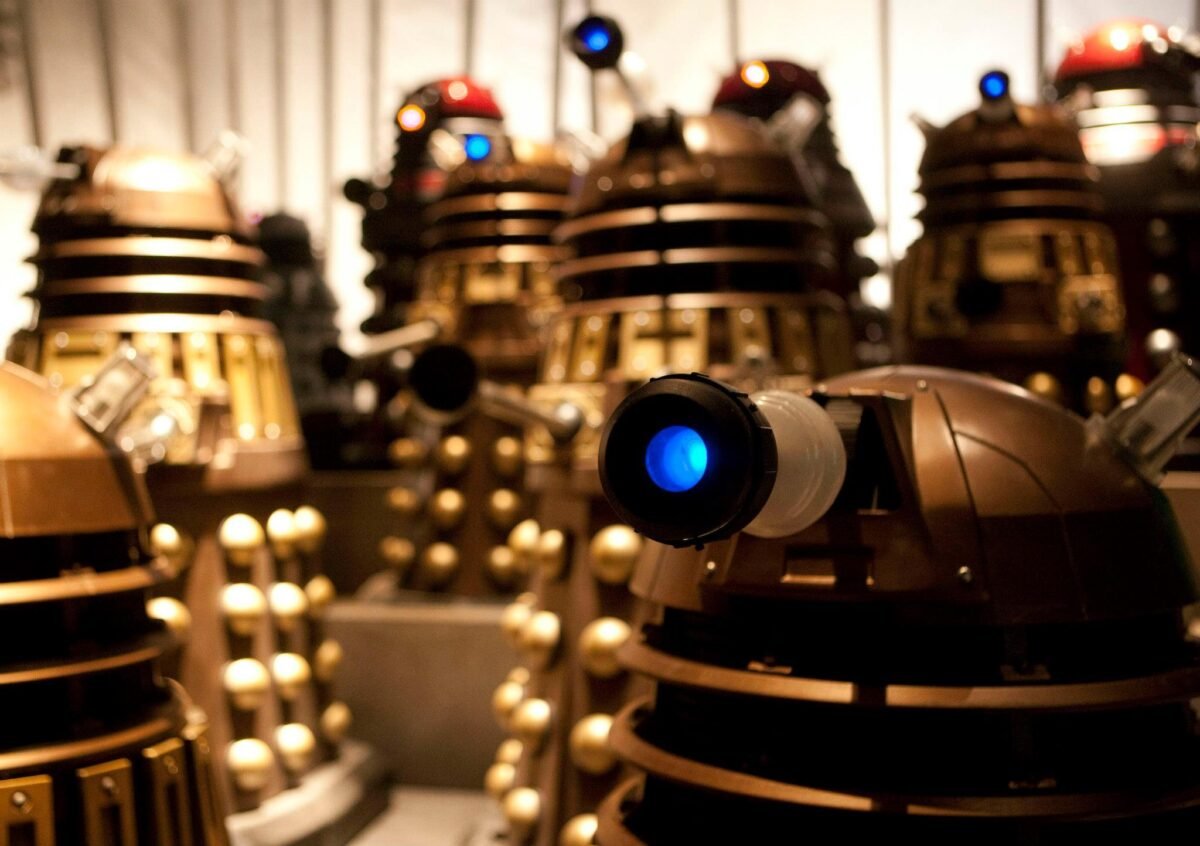
In a part of space-time that he believes he can be at ease from the effects of the war, the Master is violently reminded of his own vulnerability, as a Dalek assault ship appears unexpectedly and he is barely able to remove his TARDIS from its attack field. Materialising on a beleaguered Earth colony on the edges of the war, he is separated from his damaged ship and must make use of the people and chaotic situation around him.
Out of all four of these stories, this is the one that treads the same ground that the Doctor himself routinely visits – here is a colony of decent, ordinary people, a place where various species and races are holding out and struggling to survive each new day, in a crumbling system that is at odds with them. And into this soup of refugee cultures arrives a TARDIS, with a benevolent Time Lord willing to intervene and help out.
The Doctor is everything the Master is not, however, and so with The Worst of All Evils, we have a sobering look at what would likely happen if a Doctor Who story set on an embattled earth colony was instead helmed by the Master. And it goes about how you would expect it to…
The pacing does flag at the halfway point: as the Master and his newfound clique are trapped in deep underground bunkers and a Dalek invasion is supposedly taking place on the surface, it all becomes too monotonous, static, and there simply isn’t enough of interest going on to hold the attention. Poor vocal choices for the alien warrior exacerbate the problem as it becomes a chore to listen to the cod performance of this lizard-queen trapped in the underground echo chamber; it may be a lack of a director not giving this production his full attention, rather than the script, however.
It does all come together for the climax; character arcs are well handled, and as uneven as it is in the pacing, this is a solid enough story, which ends with a visit to Friedrich Nietzsche being promised to his new ‘friend’, and a typical betrayal from the Master that is both needless and utterly cruel. There is not an atom of charity in the man. He is without so much as a grain of sentiment.
But by this point, we are also seeing that the man is now going utterly mad, thanks to the stress, and his fear of the war inevitably sweeping over and swallowing him. There are no more plans for conquest, no mischievous gamesmanship with the Doctor to pass time: just the basic aim of day-to-day survival and staying free.
The Blue Shift Ritual by Adam Christopher
‘On the run from both the Daleks and the Time Lords, the Master stumbles across an out-of-control time capsule. The crew are on a mission from Ancient Gallifrey to the legendary planet of Arkheparas, where they hope to prevent the Cult of the Infinite from activating their great Engine – a device which the seers foresaw would end all of time. But with both factions of the Time War on his tail, the apocalypse is just what the Master needs…’
Somewhere out there, the Doctor has made the decision to enter into the Time War, on his own terms, skirting the edges to begin with, but is gradually being sucked into the centre of events and will be destined to be the man to end it all, eventually. The Master, resurrected by the High Council specifically to fight in the war, fled, very early on — self-preservation, cowardice, and fear, all driving him.

For the Master, the pursuit from Daleks and Time Lords is relentless. And it may be that a large part of this problem lies in his continued travelling through the time-vortex and in a TARDIS craft which both Daleks and Time Lords alike are now very actively scanning for, thanks to the nature of the war… and yet he refuses to stop travelling by this method. He is the author of his own torment. It’s almost mythical to consider.
And mythology again is one background colour to Adam Christopher’s story of an Ancient Gallifreyan craft – detected, intercepted, and swallowed by the Master and his TARDIS. As is now predictable with the format of this series, this plot will see the unsuspecting and gullible passengers on this primitive time capsule all become victims to the Master’s opportunism and callousness; with his superior knowledge of history coming into force, and his contempt for these naïve travellers from the past, the purpose to this story overall is to tend to the original premise to this release — by the conclusion, the Master will indeed have performed His Greatest Trick, and a reset of sorts will be reached for the series.
And yet… as I noted he still cannot let go of his TARDIS; he still cannot let go of travelling through the vortex; and so it all feels very temporary, and the cycle continues regardless. There surely has to come the point in time where this series has well and truly said all it has to say about this character and his situation, and it is time to let the series come to a very natural conclusion at last.
Derek Jacobi is the driving force behind anyone buying this range after 12 seasons now. His take on the character is really not all that different to Roger Delgado’s – examine his contempt and callousness to the Farrel family and British public in Terror of the Autons, his manipulation of Trenchard in The Sea Devils, and Jacobi’s interpretation is exhibiting all the same behaviour and methods. A thin veneer of charm and professor-ly deportment covers the true nature of this beast, and an unimaginable cruelty to anybody who isn’t himself, but the only differences between the two versions is that Jacobi’s Master is older, and fleeing the Time War. There is more of a bitterness here, perhaps, a life now spent running away from both sides in the war, in a universe that is shrinking and closing in around him.
Is the fugitive Master here lonely? Apparently not. He has opportunities in this latest release to take on a companion, and spits them out completely. Hence all there is is a loner, beyond any human need for companionship or emotional support, and yet with nowhere to ever settle safely. Even with Derek Jacobi’s obvious skills and charm, this is not a character with any actual depth to him: he is fairly one-dimensional, without any ability for a listener to actually care about, and yet the unique selling point of this range lies in its extreme nature to storytelling morality, and is the complete contrast to the heroic exploits of the Doctor, or the lighter worlds experienced in The Paternoster Gang and Jenny: The Doctor’s Daughter.
It is now a repetitive series, though. The character is inherently very limited in what he can be used for, and ultimately, it is all about Derek Jacobi’s performance and the depths to which Big Finish writers can indulge in their own ability to conjure intelligently done cruelty and emotional sadism on the page… for an appreciative audience to be thoroughly appalled over and entertained by.
The next release is October. Naturally, I will be there as usual, for research purposes…
(Interesting to note that Sonny McGann is co-producer on this release, along with old hand Robert Valentine. I hadn’t picked up on McGann’s background involvement in Big Finish until recently. Also noteworthy in the inner sleeve is a curious alternate Dome design for the white Dalek seen on the front cover, presumably.)
The War Master: His Greatest Trick is available now from Big Finish.