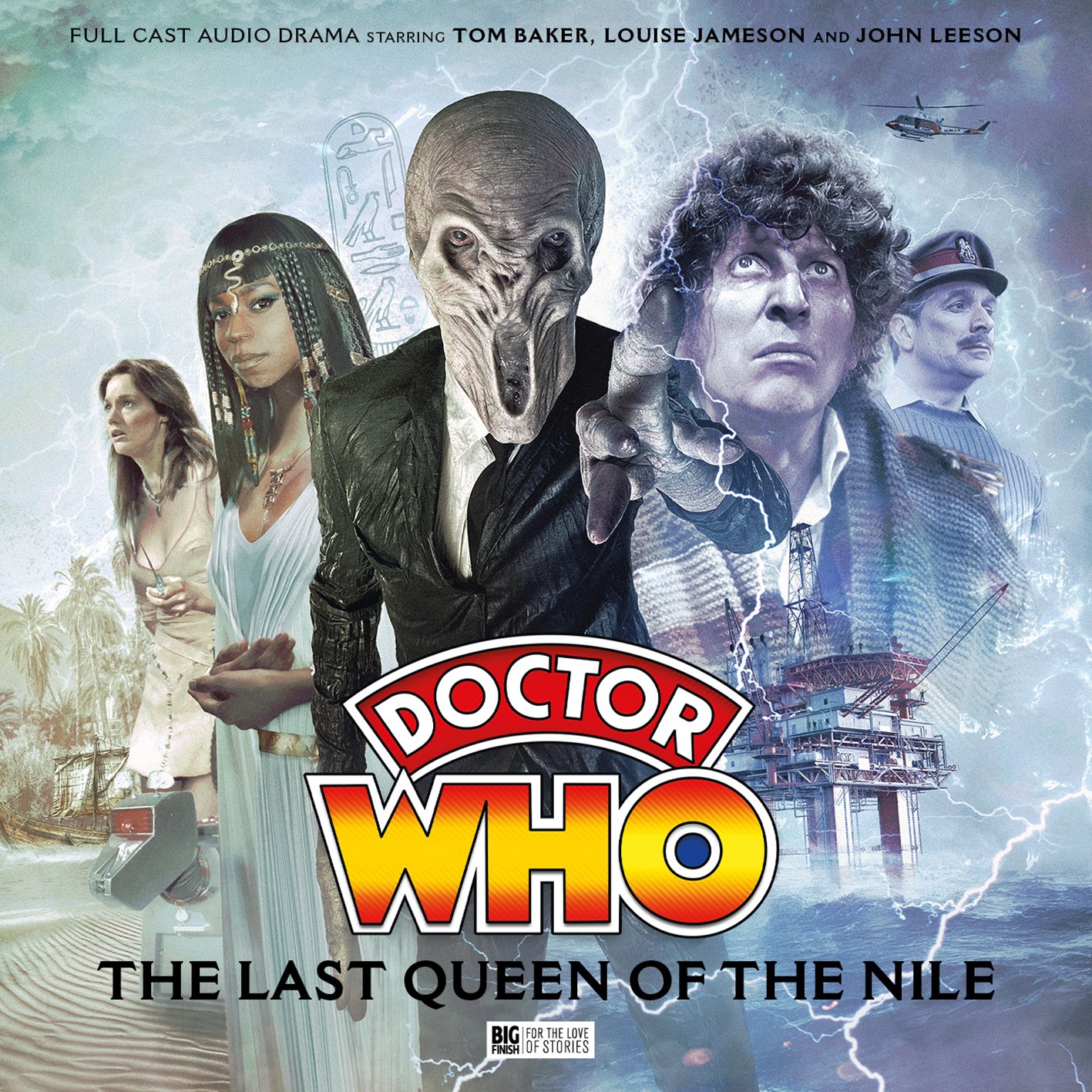
Despite it being supposedly a direct continuation of where The Ruins of Kaerula finished off in June’s Fourth Doctor release from Big Finish, the way in which Jonathan Morris’ opening story for this latest release, Last Queen of the Nile, doesn’t seem to link to where the Doctor and Lethbridge-Stewart left off at the end of that release makes me curious as to whether it was actually written and recorded at some earlier or later date to June’s release. Because The Last Queen of the Nile leaves the regular listener to this Doctor Who range with such a feeling of whiplash in terms of its style and quality that it stands out as something beyond what is normal for this Tom Baker strand of releases. Is it the two particular directors of these two tales that are marking the difference, or something in the commissioning and editing stages?
The contrast between this month’s release and last month’s — indeed, any Fourth Doctor release in recent years — is so stark in terms of overall quality and the sheer confidence of all involved in its making that Conspiracy of Silence, the opening story from Morris, doesn’t even waste any of its time with build-up. The Doctor, Leela (Louise Jameson), and K9 (John Leeson) arrive and are immediately briefed by the Brigadier (played here by Jon Culshaw) on a crisis at a North Sea Oil Rig, and they are off!
Morris’ inventiveness as a writer has been in high regard ever since he first came to prominence on the BBC Eighth Doctor novels in the late 1990s, and so it is that his latest entry for Big Finish is entirely worthy of something Steven Moffat himself would write. The entire 150-strong crew of an oil drilling platform at sea has disappeared. A UNIT squad sent in to investigate has also failed to return. And so the Brigadier has called on the Doctor. The result is an incredibly atmospheric and cleverly constructed two-part story that succeeds on every single production level. The sense that the Doctor is about to face something that is more than he can handle is made subtly palpable from the start — the TARDIS attempts to materialise on the oil platform, and, incredibly, is deflected by some force surrounding the isolated and now empty North Sea station. Resorting to a helicopter brings success, but Leela’s instincts tell her they are being watched as they arrive. The Doctor then goes on to discover the rig is situated in an area that has no oil or gas to drill for, which begs the question, what is this platform doing being placed here, just south of the Shetland Islands?
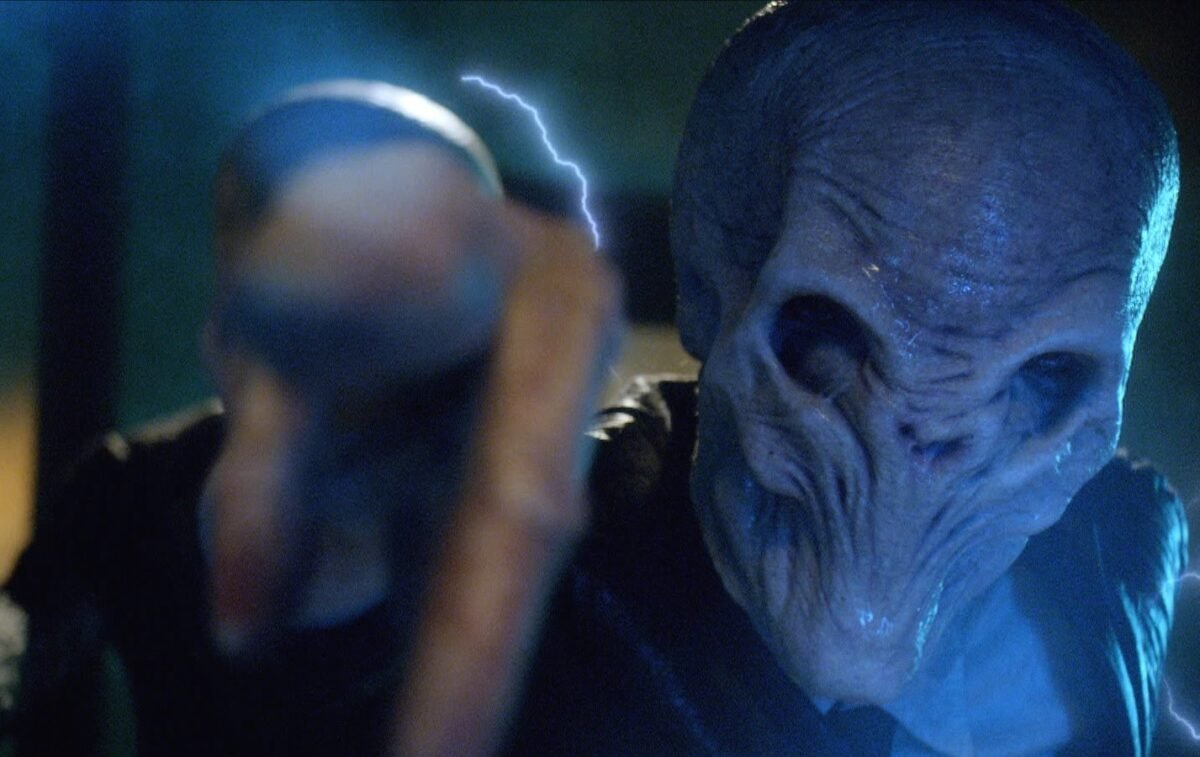
We know from the cover design and the synopsis that what they are about to face is the Silence, the formidable and eerie chronal agents seen in the Matt Smith era, but here we ‘see’ nothing. Neither does any of the cast either. And as we follow the Doctor and friends inside the platform, the menace really begins… and there is nowhere to run. And no means to escape.
While it is never actually explained what exactly became of the 150 crew members, everything about this two-parter is excellent. The way in which all the main cast of characters are utilised is appropriate to their nature and skills; the sound design skilfully underlines both the isolation of the location and delivers on the sense of dread and claustrophobia of the unfolding situation. And in the first part, where the Doctor faces a force that can counter his usually unstoppable TARDIS, and goes on to be undetected by him as he roams the confines of the oil platform, this stands as a very rare example of this Doctor being engulfed by a threat and an unseen foe that is possibly well out of his league. Truly formidable, and potentially invincible…
Completely different in setting and content is The Last Queen of the Nile by David K Barnes, and yet it’s an equally ambitious and memorable script for what is the actual main story of this release: a four-part historical that lands the Doctor, Leela, and K9 in one of ancient history’s most romanticised periods.
In line with Big Finish’s excellent David Bradley First Doctor range, this is a story which is very much intended as a character-piece; it isn’t necessarily historically accurate, but it is written with heart and all the main cast of characters are faced with the fact of human mortality, which is what nearly all of the historical stories were centered around in Doctor Who. But to see a First Doctor historical format be grafted into the Tom Baker era, and his particular characterisation of the Doctor, isn’t just a bold and daring gambit from Big Finish — it succeeds in exploring and enabling new sides of the Fourth Doctor to come forward. For all the static, often calcified, nature of this particular Big Finish range, this is a release that astonishes as it is one of the very very few in its now 13-year run to test brand new ground with this character, and push its main cast into fresh new areas.
And as you listen to this story in particular, it is very evident that Louise Jameson and Tom Baker are both responding to this offer from Big Finish. Both are on superb form. It’s offering them both something different, and even the now-veteran Tom Baker seems excited to explore some new facets to his Doctor — something he translates from this script superbly, and does so without at all compromising his well-established portrayal.
The TARDIS lands just outside of Alexandria, depositing the three travellers close to what they discover is the caravan of Mark Anthony (Mark Lumsden), on its way to meet with Queen Cleopatra (Pippa Bennett-Warner). Mark Anthony is portrayed as a slightly dotty figure, lovesick for the queen, and yet increasingly under pressure from Rome’s senate. Swept up in events, the Doctor and Leela become inextricably linked to the final months of Cleopatra’s reign, and in line with First Doctor historicals, struggle to break free of their dangerous situation and get back to the Ship.
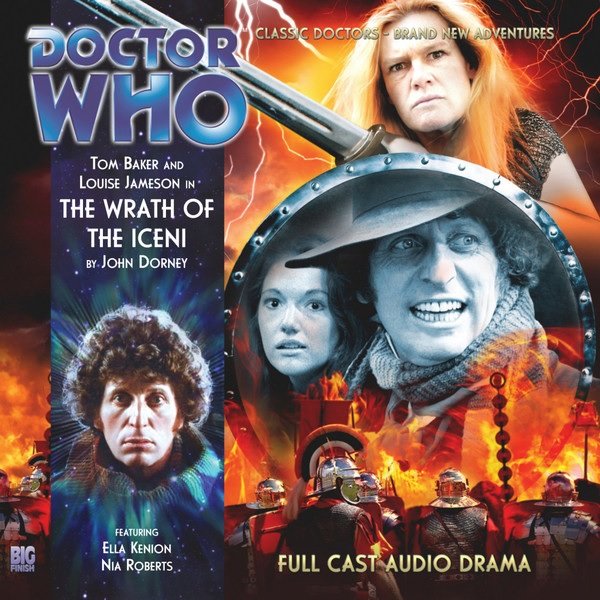
David K Barnes’ script is very strong on character, and it isn’t a coincidence that this story is harking back to one of the very first of the Tom Baker releases for Big Finish, The Wrath of the Iceni, back in 2013. Barnes does namecheck it within the story itself and so this is clearly intended as its sequel. Iceni was very much a Leela-based story that had her meet a well-regarded female historical figure, and learn and grow from the experience. That story was an unexpected gem at the time, as seeing this Doctor placed in a pure historical event, no other-worldly elements, shouldn’t have worked on paper, but in fact worked extremely well in the end: it added to both his character and Leela’s, and pushed new and surprising ground for this pairing. The Last Queen of the Nile isn’t without its flaws, however, as it treads a delicate line between humour and tragedy very nervously in some places, and Part Three of the story unexpectedly jumps forward in time several months, leaving the listener struggling to understand what they are witnessing and how it is that the Doctor is abruptly in chains, festering away in a dungeon somewhere… Part Four also marks time in places as it fills its 25 minutes to get to the final stages of Cleopatra and Mark Anthony’s lives.
And yet these flaws in the story don’t derail the overall quality and impact of the piece. As Pippa Bennett-Warner gives an excellent performance as Cleopatra, as romanticised as the portrayal from Barnes is, she plays it as drama, never loses the character’s dignity, and makes us feel for her in her final hours. Louise Jameson is also superb, a veteran stage actress who is giving this script 100%, and very pleased to be given such strong material. Tom Baker is his usual old self as the Doctor — flippant, yet wise under the apparent mockery. Philip Hinchliffe has remarked on the character’s “Olympian detachment”, his sense of scale and proportion to the events he experiences and involves himself in. And that is true here; yet the scripting and circumstances that Barnes presents to him offer Baker the opportunity to give his incarnation a contrasting facet, whereby the Doctor is not without sympathy for the events unfolding here, and not ignorant of Leela’s struggle with having to see out the queen’s inevitable fate – Leela bonded with Cleopatra, in a very believable process. And the Doctor’s subtle management of these events and their emotional impact on Leela is a credit to the fact that it is still possible to push this Doctor into some fresh areas. If Big Finish puts the effort in…
A story that mixes the tragic, the near farcical, and yet with very human stakes at the heart of it all. Look to Part Two especially for a very funny sequence where the Doctor has to entertain Mark Anthony’s men and saws Leela in half, but none of this fun undermines the overall serious aims in the story as a whole.
Why it is that this release is so radically superior in overall quality to most previous Tom Baker releases is a puzzle. But this is a release that demonstrates what is possible for this Doctor and this range: it is possible to be ambitious with Tom Baker’s Doctor, it is possible to push the character into fresh situations and test him in new areas. And when I listened to this release, the way in which he and Jameson were responding to the material, and the unusual demands on both their characters, was fully reflected in the quality of their performances — this is Louise Jameson’s hour, but it is also, in my view, Tom Baker’s finest performance for Big Finish for many years. I can see both these stories slotting in between televised stories, particularly Queen of the Nile…
A magnificent release.
The Last Queen of the Nile is available now from Big Finish.