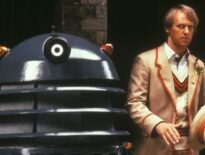
Have you ever sat down to do a piece of writing without a clear vision of where it’s going to end up? Of course you haven’t. You’re all proper writers with concentration and discipline. I much prefer the journey to the destination anyway. This time, I have excelled myself: I don’t know where to start! Oh yes, 1966. Beings of plastic and metal but with human hands. That can only mean one thing right? Oh, The Tenth Planet. No, not them. I am thinking Thunderbirds and specifically the gargantuan 60th anniversary Blu-ray release. I’m having great fun watching this. It is stacked to the gills with extras (like Professor Zaroff’s Fish People).
Okay, that’s two different Who stories mentioned. That ought to be enough to get this piece onto the Doctor Who Companion… unless Philip finally sees through me and rejects it. Or alters it into something coherent. To bolster my claim, I offer you: Kerensky/Charlie the Barman, Kellman, Ike Clanton, and script editor Dennis Spooner!
A criticism that is sometimes levelled at early Who — and pretty much all of Blake’s 7 — concerns wobbly sets and far-from-special effects. And then there are the strings and wires, clearly visible in such stories as The Tomb of the Cybermen… and, well, Thunderbirds, obviously. I expect some of you will be muttering about Thunderbirds being puppets. (Strictly speaking, they are marionettes) Yet others will make the reasonable assertion that the episodes were not intended for frequent repeats and close scrutiny. “Technology being what it was in the mid-sixties, the strings would not have been so evident.” Oh yes, they were and it would have been strange had they not been. Even on original broadcast, the audience knew they were watching puppets. Oops, I mean marionettes. To watch the puprionettes and see no strings would have caused superstitious mumbling and a resurrection of the use of the word “elecktrickery”. Maybe that’s where Catweazel got the term from. Blimey, it must have been obvious if it was even commented on by a time-travelling wizard from Plantagenet-ruled England!
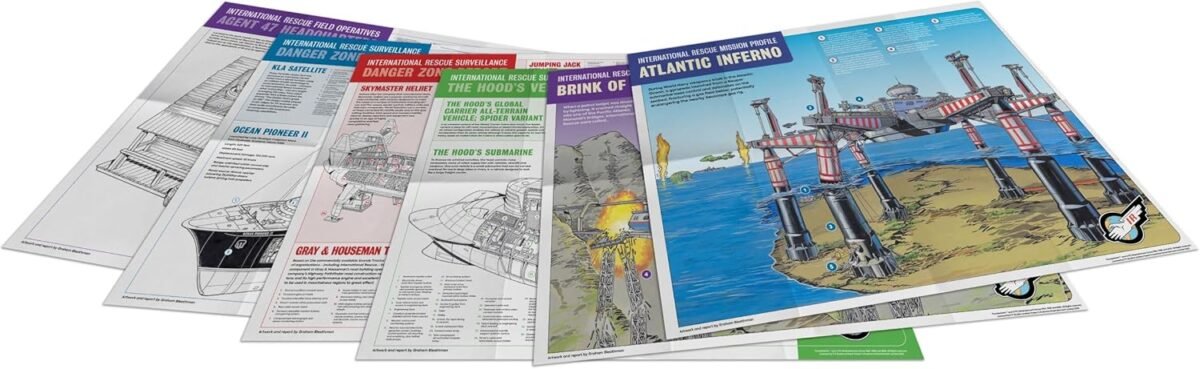
I make no apology for wobbly sets, cheap effects, and more strings than a tennis racquet: Thunderbirds was and remains an excellent programme made by a team that operated like a family. Indeed, the number of episodes set in Africa, South America, or Mexico makes one think that they spent their work days playing in the sand pit. For me (and I watch Thunderbirds a lot), I am not watching models on wires. I am not marvelling at balsa wood painted green. When the machines take off on a mission or arrive at the danger zone, they are magnificent, grandiose pieces of kit and the unfortunate victims can breathe a sigh of relief. (Except they can’t because they are made of plastic and metal and green-painted balsa wood.) I am 64 as I type this and no longer need to pretend to be grown-up (not that I have ever put much effort into the pretence). The sight, for example, of Thunderbird 2 landing in the snow-covered Himalayas stirs something in my heart. Just like watching a Dalek appear in an 1867 Canterbury house or a Police Box standing on the surface of the Moon. When Gerry Anderson was attempting to sell the concept, it wasn’t suitable as a TV series: it was a run of feature films. And they were made with that sense of scale. And the stories were so well written, with the regulars given well-defined characters. They argue and bicker. John addresses Alan as “boy” so Scott later does the same to John.
In the closing scene of Attack of the Alligators, Tintin has been on holiday and has brought Alan a birthday present. They go off to have a look, prompting Scott to ask “Hey, what do you think Tintin wants to show Alan in the bathroom?” (Incidentally, why not Google ‘Tintin” and see why certain Asiatic languages might have given the name a risqué tone.) In Move… And You’re Dead, Alan is trapped on a bridge with Grandma and a bomb. Tintin is genuinely upset and so relieved when it all ends happily. Alan gets jealous whenever a rival appears and this seems to be a common occurrence. In Day of Disaster, he observes Colonel Tim Casey’s plane arriving and muses that perhaps it is a few more of Tintin’s admirers. I completely buy into Tintin and Alan. They love each other. Yes, Tintin has admirers and she sometimes plays on that. She’s a bit of a madam, that one. But they are both desperately in love.
One thing I noticed just recently: people get killed in Thunderbirds. Usually the bad guys, but even so: deaths occur and are treated quite lightly. It made me a little uneasy to see it, but it does add to the realism and paved the way for the much darker Captain Scarlet and the Mysterons.
The new collection is expensive, at nearly £100, but I am thoroughly enjoying it and recommend it. After all, where else do you get creatures of plastic with detachable hands? Oh yes, there’s that.
The new Thunderbirds 60th Anniversary Collection is available now.