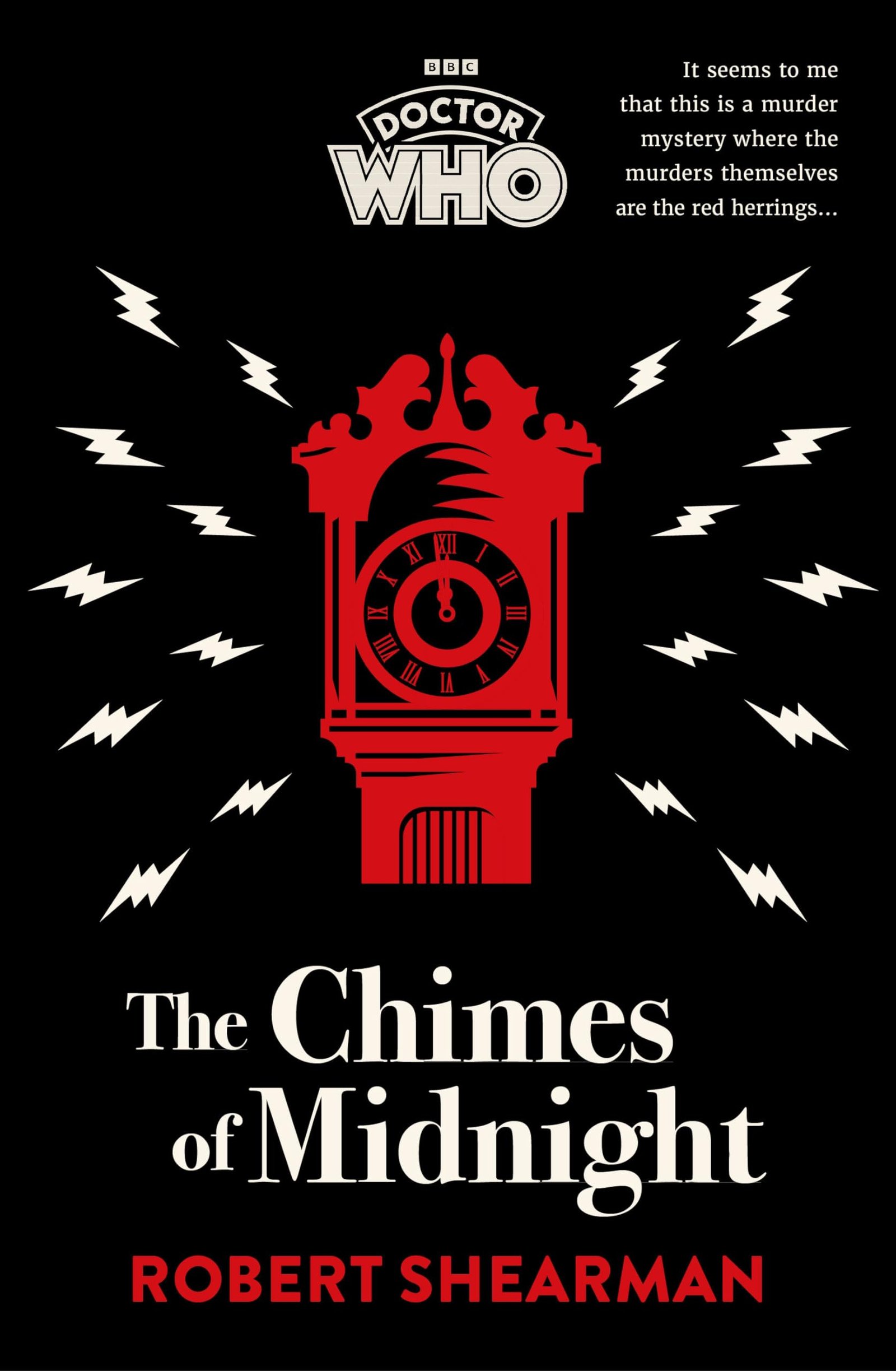
It’s Christmas Eve. A large London house at the turn of the 20th Century. The downstairs staff in the scullery and kitchen work into the late hours to prepare to serve the gentry upstairs. And the clock chimes down to midnight… and Christmas Day will come. Or will it?
The most remarkable thing about this hardcover novel is that it sits in the current BBC Books release catalogue as a product that belongs to a time gone by… The BBC does not release regular Doctor Who fiction today, but before the 2005 television revival, they published two Doctor Who novels per month, one being devoted to the Eighth Doctor, as played by Paul McGann. That line of novels came to a close in 2005, and several Doctors have come and gone since that time. And so the release of this new novel is very strange: it feels and reads like an anachronism, and the lack of any strong cover design and packaging supports the feeling that the BBC didn’t know what to do with it, even though they commissioned it. It’s a release that sits adrift in time — irony indeed, given the nature of the story that unfolds within it.
Written by Rob Shearman, the style of prose is not sophisticated, which is far from an insult: in fact, it reminds me of the lighter and very accessible style of Terrance Dicks, with 1997’s The Eight Doctors, and so this is a novel that would have fit in perfectly with those first two years of that Eighth Doctor launch. Today, BBC Books does tend to aim its product at a specific bracket of young readers, and this does feel and read as if Shearman was instructed to approach his text in that way — nothing too taxing to the teenage reader; simplified prose. And none of this is a bad thing, let me be clear. It’s more the problem that this is a very strange choice in Doctor and companion to thrust on the 2025 reader, and I am here trying to think of this book in its own terms, as standing separate from the source material, created for Big Finish audio over two decades ago…
I said Rob Shearman’s text is simple; that’s not quite true, as there are increasingly grotesque concepts and imagery being put on the page as the story progresses past the mid-point. His opening chapters are concerned with gently easing in the potentially new reader, and introducing the main concept in the preliminary chapter as someone, or something, coming into existence. Shearman conjures forth the wonder of sentience, the act of suddenly being ‘aware’ — it’s an intriguing means of trying to get the attention of the reader: what is this thing, or person, being described here? Where is it?
This opener tease then segues into the cosy safe interior of the TARDIS as Shearman introduces us to the Doctor, and new companion Charley Pollard. Fresh, bubbly, and hungry to explore, the combination is enough to engage the reader quickly. We are swiftly filled in with Charley’s backstory, having been plucked from a fated death on a 1930 ship by the Doctor, she has been given a second chance at life here aboard the TARDIS, but the Doctor recognises the fact that he has contravened the laws of time in doing so, and duly worries at the consequences of this act of mercy. The moment he offers the wonder-struck Charley control of the TARDIS’ next materialisation is where everything he quietly ponders over will make itself known, in a physical manifestation… One that will inform the entirety of events to come.
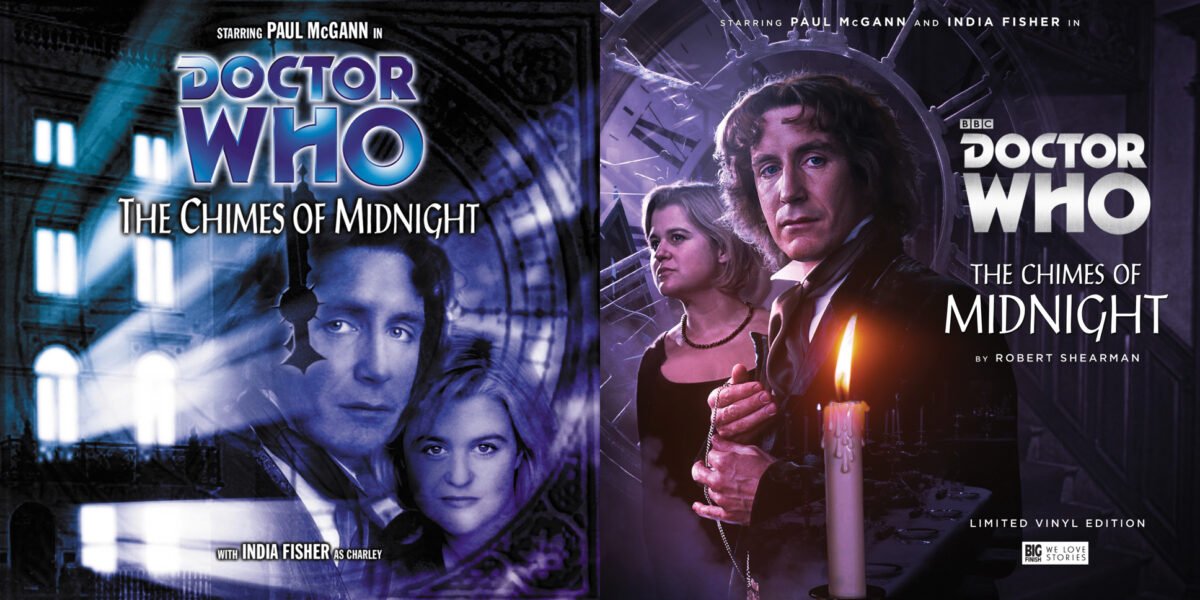
The Doctor and Charley Pollard find the TARDIS has arrived into an area of pitch blackness; an odd experience with what turns out to be a jar of jam is the first sign of something quite strange about this place, and the narrative splits between the two as they fumble around in the dark, and someplace else in an Edwardian kitchen setting where scullery maid and cook toil in their duties to prepare for the evening meal upstairs. As the narrative progresses and Charley and the Doctor discover that this is a dark, unlit kitchen area they have been carefully navigating, the reader now grasps that these two settings are one and the same. Two different timeframes, in the same kitchen. Intriguing.
“And that’s just the problem, Edith. I don’t want you thinking. It’s not your place to think. I just want one thought in your head. Do you remember what it is?”
Edith Thompson is 15 years old, a “lowly” scullery maid, and having arrived in the basement of what seems to be a 1906 large townhouse, Charley will go on to drop the fact that she too had an Edith, in her parents’ 1930 kitchen.
Edith’s simplicity is of a basic existence of life as a young maid, whose life is simple. And hard from the early hours into the late hours — consisting of dusting, pot washing, and whatever the butler or cook tells her to do. Her philosophy doesn’t rise much above that station, but it’s her firm equating dust with dead skin cells that then segues in with the cooks musing over a dead turkey that is a subtle thread being weaved into this opening narrative from Shearman. It’s used to build on the foundation of the opening pages of someone, or something, becoming self-aware, and reflecting on their own perceptions and memories of dying and then being reborn… These themes of death, life, rebirth, all form a running loop throughout the story to come. And while this point is all very interesting to contemplate, it is also something of a sideshow. The actual purpose of The Chimes of Midnight will be best remembered not as some grim pondering over the reality and the misery of life and death, but rather the journey in reading it ends up revealed to us as something far more affecting, and crucial: it is about being kind. Particularly to those who go unnoticed.
There are a good deal of memorable incidents and mystery before we get to the point, however; one in particular is a bizarre concept of the cooked turkey springing to life and Charley and cook having to chase the still-basting thing. Shearman’s framing and presentation of the scene is one of the eeriest and unique I have read in any Doctor Who novel. But as strong and well laid out as ideas like this — and his framing of a flattened chauffeur — is, it isn’t these events that are actually important: it’s all about Charley, and her special connection to one person in this house, and her own 1930 household. The crumbs are sown in a very subtle manner, and the satisfaction will come only as the story reaches the three-quarters mark as the various threads start to be drawn together.
It’s a lovely coda by the time you reach the revelations of the last 30 pages, then finally the last two, and understand finally just what it was all actually about. It’s about Charley, about what happened to that one person in the kitchen after she ‘died’ in the accident in 1930, and then what actually happened, thanks to the thoughtfulness and kindness of the time-travelling Doctor who doesn’t hesitate to bend another law of time by taking him and Charley back to her family’s house, on Christmas Eve in 1906, and giving much needed and valued assurances to the “lowly” scullery maid who will one day come to mean so much to Charley, and she herself to the maid in turn. “Everything will be alright; to all things, there is a time.”
This is a lovely story from Rob Shearman: beautifully judged and wonderfully presented. Strangely, it is not a lengthy novel. Despite being listed as 233 pages, the chaptering has blank pages separating one chapter from the next, meaning that there are between 40 and 42 blank wasted pages in this 233-page novel: was there perhaps some change in the intended format to make it this particular hardback edition?
I have tried not to bring in the original source here, as the 2002 Big Finish audio drama is a different medium, with different limitations imposed by the format. But I would like to just note that there are two common responses to that audio release. One is that it is an all-time classic and a fine example of just what the audio medium is capable of; the other has it that this is an overrated story whose style masks a lack of actual substance. And I think in terms of the audio release, both of these views are equally valid. For Shearman, the problem lay in the limited space and time an audio release offers, and the reliance on purely actors’ scripts and lines to get the story across. This meant that the actual mechanisms for the events occurring in the first place was rather lost in the Big Finish release. With a novelisation, however, he has freedom.
Not everything is spelled out, no, but nevertheless, I do grasp the story far better in this novel than I ever managed in the audio version. And that’s the power of prose: it allows for nuance and background to be given to characters and events; it usually betters audio and television because of this, and when written well, a novel is the best of any genre.
I do strongly feel that The Chimes of Midnight deserved a better design and marketing than what BBC Books has afforded it; a smart cover is not a lot to ask for — or expect — given the price of this. But taken on its own terms, this is still a fine example of what a modern-age Doctor Who story can aspire to be. It isn’t just down to the strange events occurring within; it’s due to its underlying heart, and addressing the really important things in life. Surely, this stands as a fine example of how the storytelling in Doctor Who evolved and matured throughout the 1990s… and how it fed into the 2005 television revival. No longer was a good, strong story idea necessarily tacked onto a Monster-of-the-week requirement. Instead, events could occasionally be initiated by the main characters themselves, and something quite remarkable could be brought forth on the page and screen to make you invest all the more in those central characters.
Such was the case with Charley Pollard, The Chimes of Midnight being written a good three years before Rose Tyler had a similar test with Father’s Day in 2005… with this 2025 novel, Rob Shearman adds more depth to events, and in particular succeeds in building an emotional connection between Charley Pollard and the audience, as well as exploring some of her life before meeting the Doctor. Which, as I say, is quite strange given this novel is an isolated one from the BBC, and featuring a Doctor and companion who belong to a whole other era. However, isn’t this just how fans like me first experienced Doctor Who novels back in the days of WH Allen and Target releases? With anything up to five different Doctors and companion combinations to work out, and then become invested in!
Here’s hoping the Doctor and Charley get to receive a follow-up novel outing to truly cement them in the audiences’ minds.
“If she could speak to the cook, she would have said thank you. For the love. For the pudding. For being her friend…”