It’s a time of great uncertainty and great change in the Doctor Who landscape. After 20 years of a guaranteed television series per year, we seem likely to be entering a hibernation period, where television is no longer an avenue for satiating our Doctor Who appetites, and so other options and areas will have to be found…
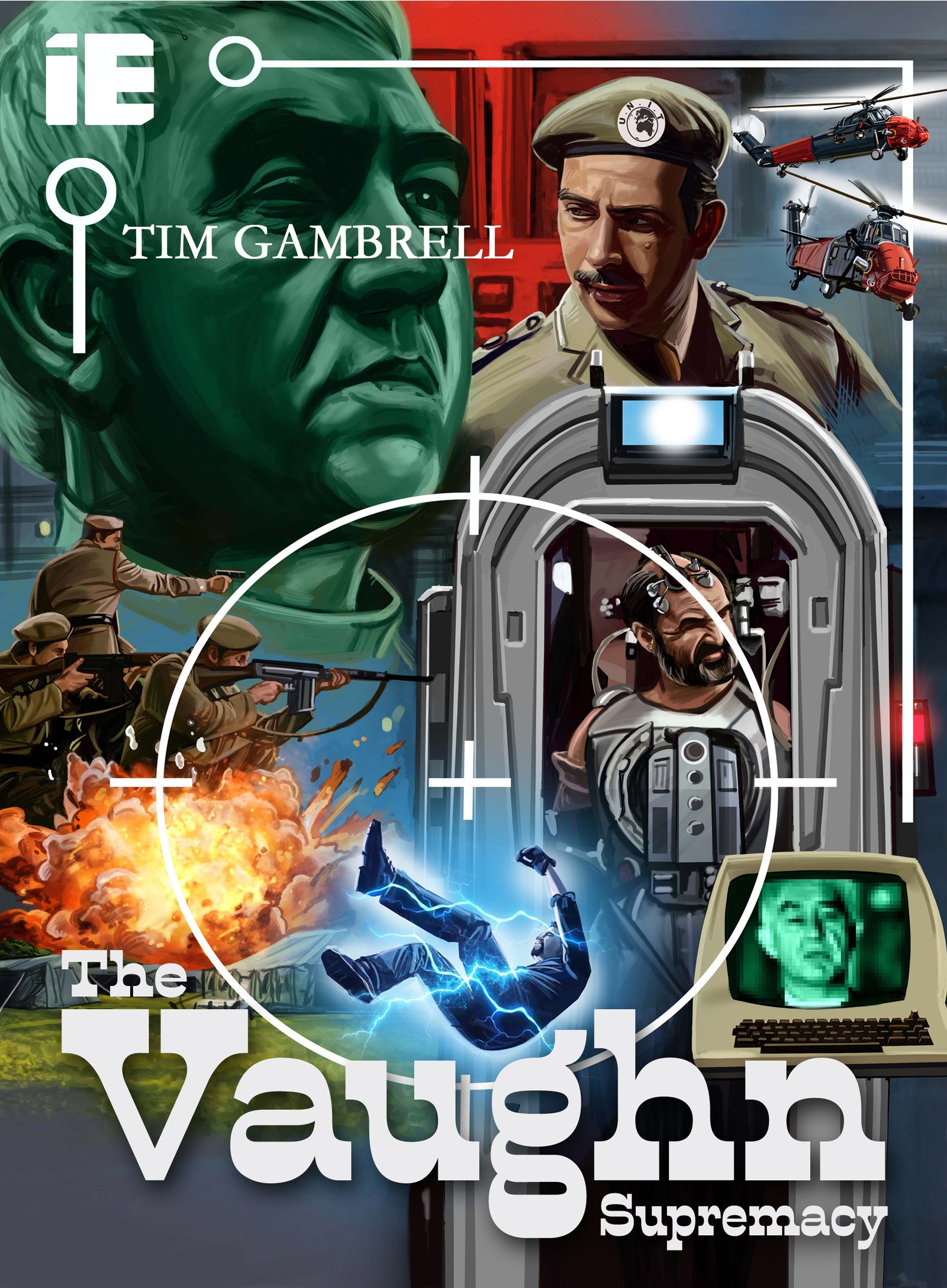
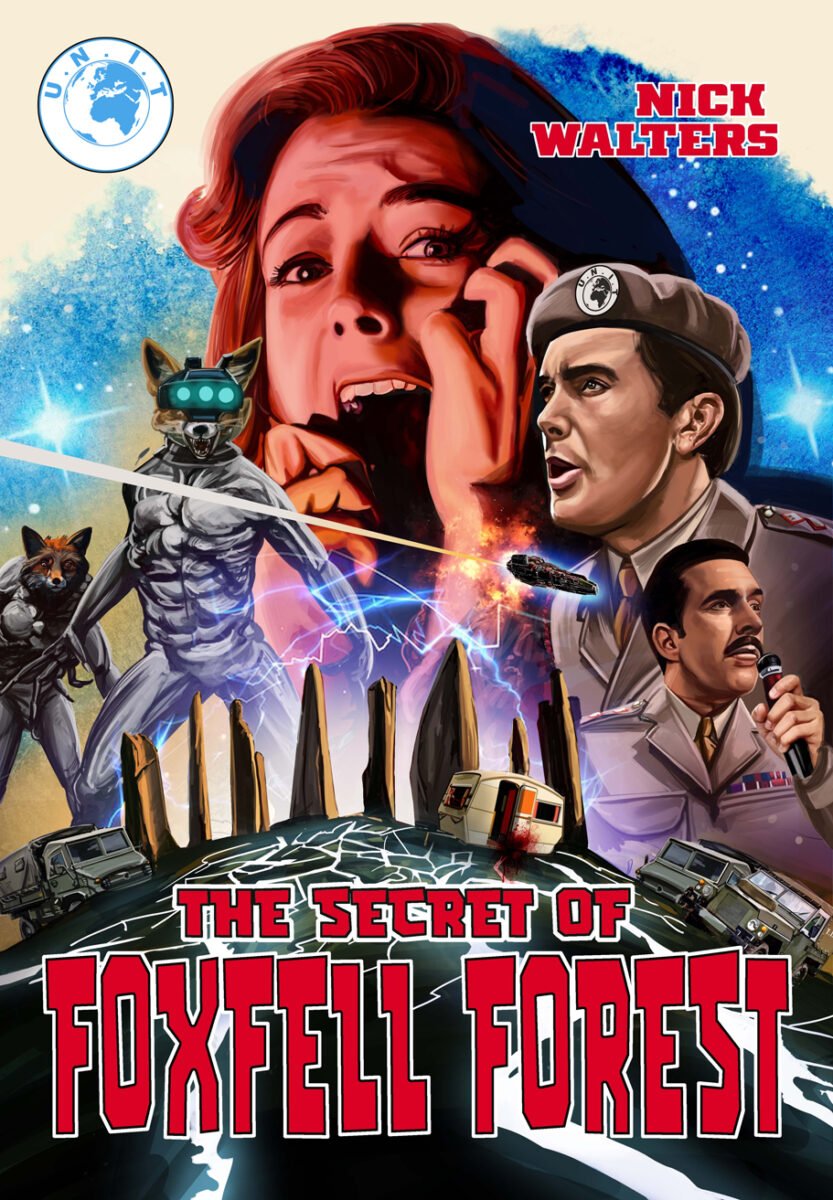
The Vaughn Identity is officially the first of Candy Jar Books’ new line of novels based on UNIT, continuing with The Catacombs of Seville, and The Secret of Foxfell Forest — although the publisher’s website lists at least two of the other novellas which actually sprang out of their long-running Lethbridge-Stewart line of books, not this new UNIT launch. It’s unnecessarily confusing, and urgently needs to be streamlined, to be made more user-friendly for shoppers to browse.
And that’s very unfortunate, as, for Doctor Who fans, it’s been a tough year on the whole in terms of finding high-quality material to invest in and enjoy. The TV series finally fizzled out of life, and Big Finish audio plods on… albeit with a price increase that will surely see many finally forced to cut some ties as their loyalty to the company is tested beyond their financial ability to even keep up anymore. When a hobby finally become so incredibly expensive to keep up with, it stops being fun. It morphs into a chronic burden rather than the escapist affordable entertainment it once was.
But because of these changing realities for a Doctor Who fan, might it be that without a television series, and with affordability becoming an increasing concern, that older and traditional mediums might see a renaissance… Is the era of the Doctor Who paperback novel due for a renaissance?
There is no official ongoing Doctor Who fiction line today. An incredible thing to think on, and yet what there is out there is Candy Jar Books: their position in terms of producing semi-official ongoing Doctor Who fiction is rather unique; competitors such as Telos Publishing, Ten Acre Publishing, Fantom Publishing, etc., don’t have ongoing fiction to offer the Doctor Who fan. And as the landscape adjusts to life without a television series, I see the very real potential for Candy Jar to start appealing to fans who are now looking for alternatives to get their fix of Doctor Who-related adventures.
And so this new UNIT series is perfect as an avenue to do just that.
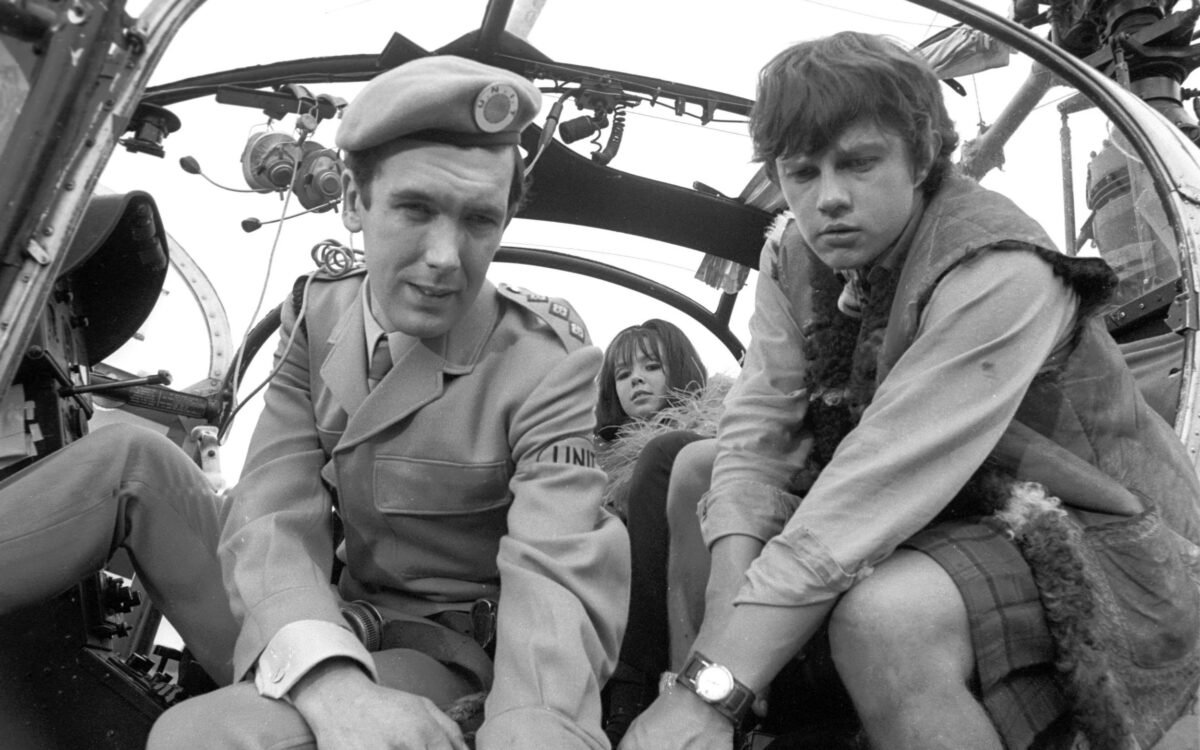
Candy Jar’s UNIT is set in the early days of the group’s existence, between the television stories, The Invasion and Spearhead from Space, and the year is set as 1973. You don’t need to know anything else really; even though the UNIT series leads off from the ongoing previous range of Lethbridge-Stewart novels, this fresh range is largely self-contained and aims to be accessible on a book-by-book basis, meaning you can pick up any one of these UNIT novels and not worry about any other previous installment.
Setting it in 1973 means that there is a potential three- to five-year span of time that is completely free to explore, in principle. And the more grounded and sober UNIT of 1968’s The Invasion is just the same as the equally grounded UNIT format seen again in 1970’s Spearhead from Space.
“It’s not a secret that we exist, but what we actually do is.“
– Benton, The Catacombs of Seville.
Key characters and points to note, as established from short story collection, Operation Fall-Out, onwards:
- UNIT HQ is quietly based under London’s Waterloo Station, going unnoticed by the public, and certainly not ever publicised! It’s nicknamed ‘The Warren’ due to its subterranean layout. It all makes for a grounded sense of reality for the Candy Jar line, and indeed televised Doctor Who at the time. You see The Warren in Spearhead from Space. There isn’t a main entrance into Waterloo HQ, as such, which also means no reception area; rather, there are a number of discrete entry points into the Warren that staff and guests are directed to use, plus the vehicular access seen in Spearhead from Space as scientist Liz Shaw is brought in for an interview with Brigadier Lethbridge-Stewart.
- One additional interesting point is that some of the space within used to be used as Waterloo rail workshops, dating back to the 1930s. And when first clearing this particular abandoned floor-space for its refitting, new arrival Corporal Benton and his fellows discovered there’s a manhole cover embedded in the floor, that leads down into the London sewer system (Operation: Wildcat)… In subsequent novels, this will go on to be a useful device on occasion when needing to get around London in a speedy and secretive manner.
- UNIT’s Storage Warehouse: A separate secure facility away from Waterloo, where recovered extraterrestrial technology, or confiscated items of interest, are taken to and stored away, pending study. We’ve seen such facilities in the Virgin book line (Who Killed Kennedy) and BBV’s Auton Trilogy, and again in Peter Capaldi’s era on television, but in this early stage of UNIT’s existence, it takes the form of a conventional (but secure) storage warehouse, with a skeleton crew shelving new deliveries and allowing visitors and scientists to inspect catalogued items when due authorisation is given. (Operation: Fall-Out)
So who are the personnel? Here’s our cast of characters…
- Captain James ‘Jimmy’ Turner played a key role in The Invasion, acting as the Brigadier’s trusted right-hand man, he would end the serial in a possible romance with budding photographer Isabel Watkins. Candy Jar has seized on this and has slowly developed and strengthened the relationship between the two. In Tim Gambrell’s hands, in particular, this is especially sparkling, and adds a very welcome fresh dynamic to the UNIT format.
- Mary Savage is named in passing in The Vaughn Identity – she’s UNIT’s communications officer, who is explored to great effect in Operation: Fall-Out, and hopefully we will see her return again as she comes out of that book as a very interesting character you can relate with.
- Sergeant Major Heather Nichols is a strong woman who acts as steward and disciplinarian to the Waterloo station personnel. Answerable to the Brigadier chiefly.
- Isobel Watkins‘ career as a photographer is showing signs of taking off. And with a new romance with the dashing Captain Turner, Isobel’s inquisitiveness and wanderlust feeds into the UNIT format very well. Operation: Fall-Out, in particular, makes good use of this dynamic.
- Professor Joseph Watkins: We meet him in The Invasion, as a scientist and uncle to (orphaned) Isobel. We learn he was one of Anne Travers’ teachers, that Tobias Vaughn had offered him Cyber-conversion, but he refused, and that his association with International Electromatics has led to him being shunned by universities and peers. Affable and eccentric on the surface, but scratch deeper and a more worrying figure emerges… Tim Gambrell takes the Professor’s devotion to science and the betterment of mankind to an extreme in The Vaughn Identity — arguably to the extent that it is out of character, but the way Gambrell makes him central to the unfolding plot is certainly logical.
- Major Branwell makes what I think is his first canonical appearance in The Vaughn Identity; assigned to UNIT from the Royal Air Force, he acts as support for the Brigadier and will go on to become a significant figure in Candy Jar’s UNIT series.
- Sylvie Lowe, NAAFI canteen manager and a reassuring shoulder works as a confidential and sympathetic lean-on for all in The Warren who have their worries. Even the Brigadier!
- Corporal Gwyn Wright: Cowardly Welshman, respected by no one in his squad. Seemingly a placeholder for Private Evans from The Web of Fear. But then, we get the reveal that he… No, that would be telling! As with most of the cast of characters, Gwyn gets his own distinct character arc to travel on through the course of The Vaughn Identity, forcing him to find some latent courage and put the well-being of his fellow soldiers ahead of his own immediate safety and comfort.
- Doctor Flynn is another name dropped in The Vaughn Identity as UNIT’s chief medical officer. We will get to spend time with him in Operation: Fall-Out. A very prickly figure, he’s assigned to UNIT with some amount of reluctance, has disdain for the military world, but gets on with his duties and respects Lethbridge-Stewart greatly.
- Corporal ‘Jack’ Tracy was seen in The Invasion as Benton’s partner as they track the Doctor and Jamie. He’s a ladies man and is frustrated at potentially having become pigeon-holed as a driver, rather than a field soldier.
- Anne Travers: Candy Jar has developed her character extensively in the span of the Lethbridge-Stewart series, but you don’t need to know any of that as Tim Gambrell makes her instantly accessible in The Vaughn Identity, and delightfully self-assured and professional. Her confrontation with the mad Professor Watkins is a high point in this story, but it is her scenes with the put-upon Lethbridge-Stewart himself that really stay in the memory. Such fine character work.
- Corporal Benton: John Benton’s father died when he was a boy, and he has a stepfather, both very influential to him. “You’ll never amount to anything, Johnny, if you keep comparing yourself to others. Be the best man you can be…” As with nearly every character in The Vaughn Identity, Benton has a character arc, one that sees him forced to face his own prejudices when dealing with the irritating Corporal Wright and accept that the man is still a human being, and is struggling to measure up to being in the army. Benton is put through the emotional wringer in this debut UNIT book, but ends up in a satisfying place by the book’s close. Further good work on Benton happens in the next novel, The Catacombs of Seville, but we won’t spoil too much.
- Packer is Vaughn’s deceased head of Security at International Electromatics. We get a reveal that Packer was, in fact, a partial Cyber-conversion. I only note the character here for this very point. The idea Packer was cyber-augmented, along with Vaughn himself, is certainly not there to see in The Invasion. Just the opposite. So this is a liberty taken by Tim Gambrell. And yet within Gambrell’s expanded story, it actually makes some sense: we saw augmented workers in Episode 2 of The Invasion, moving Cybermen coffins, so while it is a liberty with the original material, I can be philosophical and accept it. Not a problem. In hindsight, it would be a little odd if Packer wasn’t a recipient of partial conversion, given his devotion to Vaughn and his cause.
And then a few other bits to note if you’re jumping into The Vaughn Identity:
- UNIT Timeline: Candy Jar has made clear that the year this new range is set in is 1973, which seems to originate from the Brigadier’s comment in The Invasion, Episode 2, that the Yeti invasion of The Web of Fear was around four years ago. Paradoxically, the Lethbridge-Stewart books also had certain novels set in Mawdryn Undead‘s 1977 private school setting, but if we ignore that particular paradox then the timeline does make some sense — Sarah Jane Smith comes from 1980 in Pyramids of Mars and it surely has to be the case that, when he took over from Terrance Dicks, co-writer Robert Holmes was well aware of the previous production team’s view that the series was set a few years in the future, which means the Third Doctor came into UNIT sometime between 1975 and 1979. The effects of which mean Lethbridge-Stewart and UNIT’s timeline is left fairly pliable thanks to this quirk of the TV series.
- The London Incident: A coded media term for an event that occurred in the capitol which shut down the city (The Web Of Fear). In the days before social media, it was still possible to cover up and explain away the extraordinary events of the London siege and the Cybermen invasion as due to hallucinations caused by accidental releases of gas and the like; down to earth, comprehensible events. UNIT has a commitment and a responsibility to keep this balance, keeping the public at large not just safe, but also unaware of just how threatening the universe at large actually is. If the truth did get out, the world would become a different place…
- Afterthought: The Great Intelligence somehow oversaw the construction of the Yeti in The Web of Fear. In The Invasion, the Brigadier directly dates those events as taking place “four years ago”, and given the striking parallels between the use of London’s sewer system to move Yeti and Cybermen around the city, it is a good question as to where exactly Tobias Vaughn was during the Great Intelligence’s shutdown of the city… and did he take inspiration from the Intelligence’s strategy to advise the Cybermen of the tactical value of using the sewer system to replicate the Intelligence’s success in isolating the city?
Maybe the question has already been addressed by Candy Jar, but it’s a shame Tim Gambrell didn’t take it on as he by far has the best overall grasp of all of these characters, and the world they inhabit…
Check out Candy Jar’s UNIT books now and keep a lookout for more news and reviews of the range, right here, on the Doctor Who Companion!