Before I start… It was while I was halfway through reading this charity publication that, by chance, I learned of BBC Books releasing an all-new hardcover written by Alex Kingston, featuring her River Song character. Stormcage: A River Song Adventure is just the latest of what have now been a number of River Song publications released by the BBC, and join similar ventures from the likes of Sophie Aldred and Bonnie Langford. And if it weren’t for Pencil Tip Publishing having released this second collection of short stories and articles on the longstanding character of Sarah Jane Smith, it wouldn’t have occurred to me just how odd it is that BBC Books has avoided this prominent character since the passing of Elisabeth Sladen. It is as if the BBC have some problems in dealing with the fact that her passing led to the death of her actual character being made explicit by Russell T Davies, and so the BBC has (consciously?) placed a moratorium on the character’s use; with the exception of a short story in 2018’s The Day She Saved the Doctor, I cannot think of a single book in which they’ve revisited Sarah Jane in, not since her CBBC television series ended.
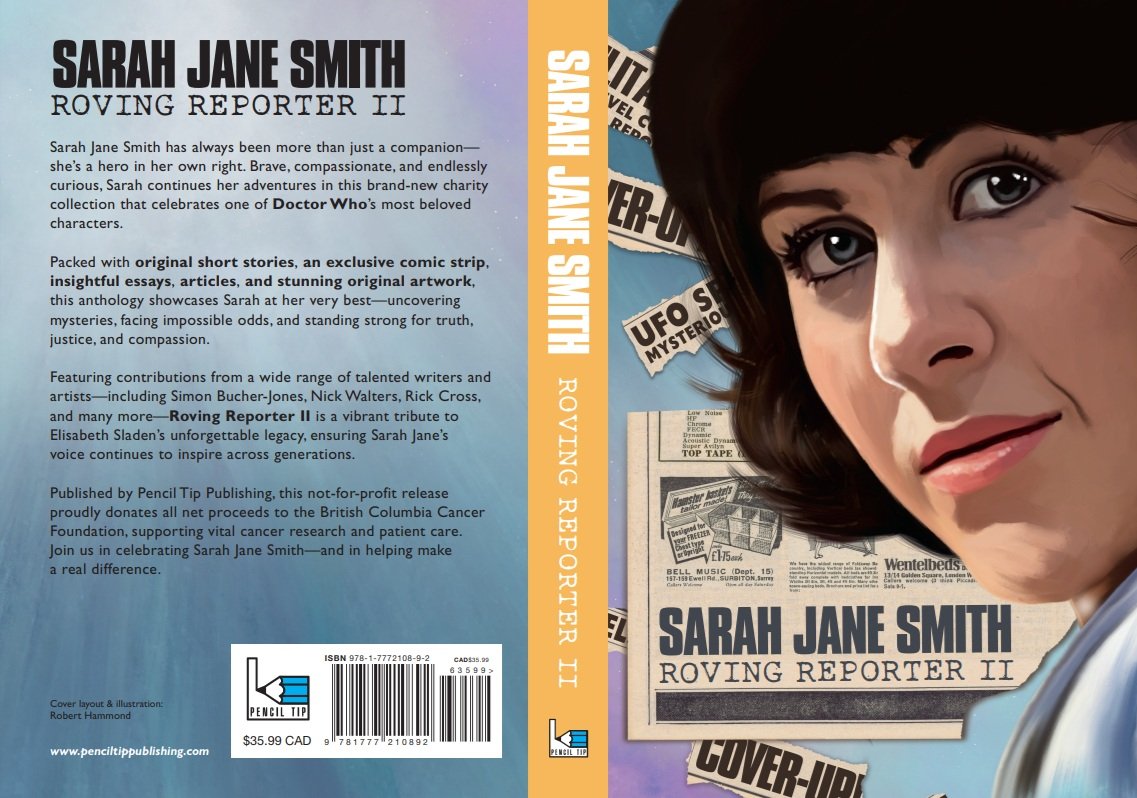
That observation is more a postscript. The subject at hand is actually the hefty 388-page Sarah Jane Smith: Roving Reporter II — a charity release of short stories interspersed with personal recollections and articles by people who either grew up watching the character, or have some personal fondness for the actress herself, edited by Bob Furnell, Hamish Crawford, and James Silvester.
Thanks to the short story nature of the book’s format, you can actually pick and choose where you step in, and what you want to read, so you might opt to try Ian Wheeler’s charming Lost Dog – a story set just after Sarah returns from being abducted in 1983’s The Five Doctors to discover K9 is missing from her home. Less charming is Russell McGee’s The Cocoon of Despair with its over-saturation of Doctor Who continuity and name-checking, married to a heavy-going confusing plot intent on breaking Sarah’s spirit.
But there are also articles in here, that are particularly worthy – one being Hamish Crawford’s look at ‘The Other Lives of Sarah Jane Smith’. This is a rundown and examination of Sarah’s appearances in other media, such as the BBC and Virgin books, and it stands as perhaps the best analysis of these appearances and their worth that I have ever seen.
This piece isn’t just a rundown, though: it’s also a critical and honest assessment of the character’s flaws, and the failures in her development over the years. And this candour makes it truly worthy, as what Crawford points out is applicable to other ex-companions we have seen return and who have reached middle to old age (like Ace, Mel Bush, and potentially Tegan, and can even include River Song). None of these women really moved on past being partnered with the Doctor, and for all the supposed development they have had since, none can be held as being fully rounded as none of them even has a known family of their own… Unmarried, still alone, and still essentially stuck where they were when they partnered with the Doctor a lifetime ago.
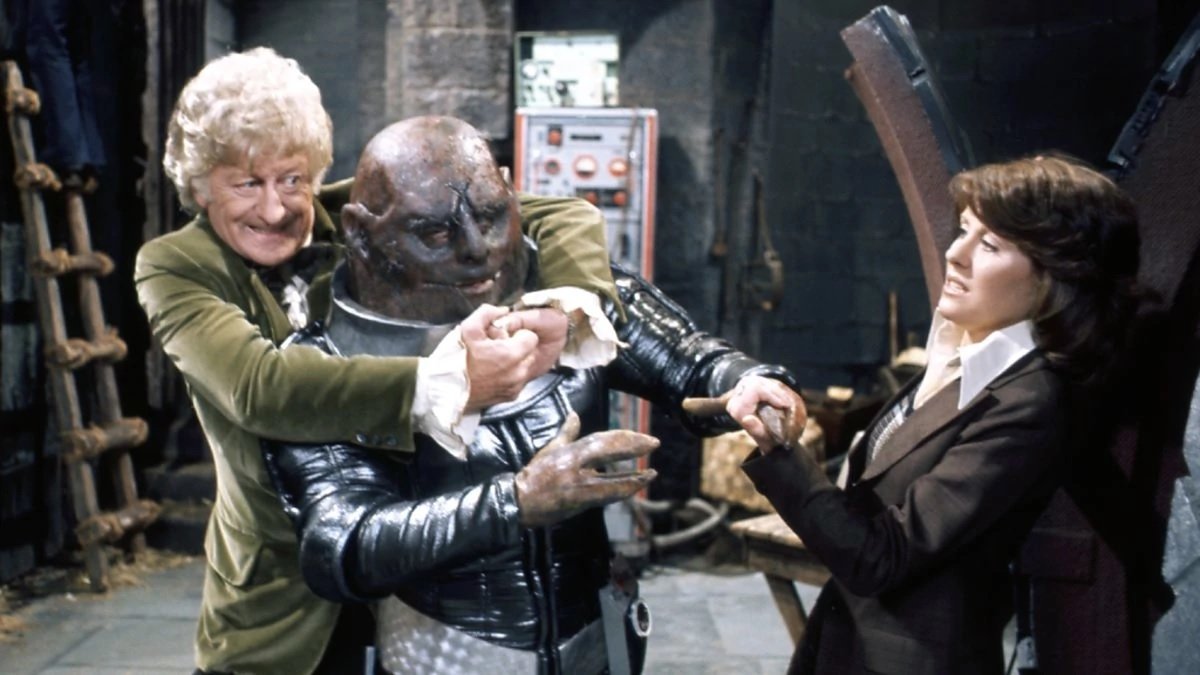
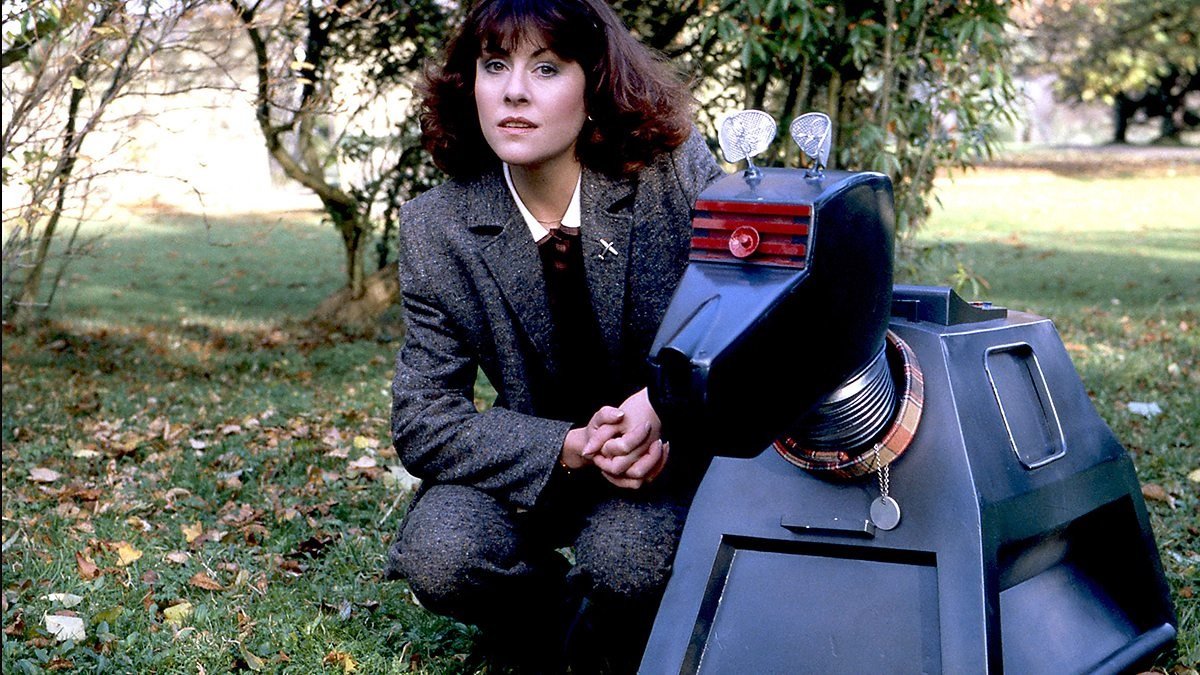
Such is the limitations of the fans who control their development, and such is the nature of fictional characters, frankly. Sarah embodies this shortcomings, as even by the time of her death, what family she had was bolted on and adopted, late towards the end of her life.
The line between Investigative Reporter and Private Investigator is a thin one in fiction. But it’s a key component to what drives characters like Sarah and makes them an ideal storytelling device.
In this book, the bulk of the short stories are focused on the time after Sarah is left behind by the Doctor the first time, and has to rebuild her career as jobbing reporter; it makes it quite particular in who it is aimed at, and, due to the period of time it is set in, works to set a unique tone and sensibility for the stories. Take, for example, the first three stories that launch the book…
Behind Bars By Phil Fenerty
It’s rarely a good idea to open a prose story and on your very first page try to recreate regional dialect – and this opening tale is a good example of why. Yet it’s also an opener that demonstrates what will be a recurring tic with this book, as the science-fiction or horror elements that drive a story are left largely unexplained. Here, we open the tale seeing two men scavenging a post-war dump on the Liverpool banks when they uncover a mysterious flashing object… This will turn out to be a familiar Sontaran device seen in Sarah’s debut Doctor Who story, The Time Warrior, but how did such a unique bit of Sontaran kit come to be discarded here, on Earth, in a long-neglected dump? We can only wonder. Does Phil Fenerty himself know? Such is the nature of this short story that supplying such a background perhaps takes up space that the author simply cannot spare.
And so we meet an undercover Sarah, working in a local pub. She’s here on UNIT’s behalf to find intelligence on a string of strange local break-ins and attempted robberies, and Fenerty’s ability to evoke a time and a place is impressive! This is set somewhere in the late 1970s, possibly as far as the early- to mid-1980s, and we sense this purely through the subtlety of Fenerty’s use of characters and the occasional references to things like wrestling tournaments and new developments in the local Liverpool geography.
Just when is this story set? It wouldn’t ordinarily concern me. But the writer himself makes a number of points and contradictions in his own text that beg the reader to ponder on this. There are some key hints – it is after Sarah’s travels with the Doctor, the Pound note is still in circulation, and most significantly, we learn Sarah completely missed the Watergate scandal that engulfed President Nixon and ended his time in office. (“She had missed Watergate and its catastrophic fallout when it had happened, and the film left her considering the irony: she was so busy travelling through time she missed a moment of history from her own lifetime.”) So it seems the writer is working from a very odd timeframe here, given Sarah’s time with the Doctor began with a broadcast story bridging 1973 into 1974, and Watergate was all but over at that point — and this isn’t even considering that the stories in that era of Doctor Who would go on to make clear this was a world set a good five or so years in the future from that.

Although he isn’t central to the story, Fenerty makes fine use of Harry Sullivan here. Acting as Sarah’s handler on behalf of UNIT, he keeps his distance, while Sarah slowly learns of a criminal gang plotting a prison break, but is in a way her reassurance that if things go wrong, he will be there for her. There is also a neat (and very intriguing) comment concerning the disgraced Mike Yates, where Harry reveals to Sarah that the Brigadier also uses Mike Yates for similar undercover reconnaissance investigations, presumably off the record and below the table. It’s a nice use of history, and while the Liverpool setting is a nod to Elisabeth Sladen’s roots, the author’s obvious familiarity with Liverpool and the North West in general is very evident. It was a neat discovery at the back of the book to learn that Phil Fenerty is indeed a Liverpudlian, and the use of accurate places and local past-times of the era is therefore very appreciated; it lends a great deal of authenticity to the story he creates. And with a suitable payoff at the end, this is a strong story to debut this collection. It never wavers.
A Murder of Gulls by Grace Haddon
Transitioning from a Liverpool setting to the coastal holiday mecca of Blackpool, this might be a quiet nod to Elisabeth Sladen’s appearances at the Doctor Who exhibition and the switching on of the lights in 1976. This is a very atmospheric story, with a strong emphasis on character. It begins with a fine ‘time-out’ between Sarah and Harry, and, we are told, is set one year after Sarah was abandoned by the Doctor.
It’s a recurring thread in these stories that the various invasions and strange events in recent years are still unrecognised by the general public. Before multimedia and instant communication, news travels far, far slower, and so without pictures and communication, these things are much easier to play down by the authorities. There is a neatly disposed recollection from Sarah on how the shadowy nature of UNIT, and its rumoured containment of strange events involving giant maggots and the like, was what brought her to examine the organisation in The Time Warrior. This is a clever observation from Grace Haddon, and as this story moves on to investigate gruesome seagull attacks, and ends up with a grim discovery at the top of Blackpool Tower. This world that Haddon creates feels and behaves in quite dark areas. Haddon delivers memorable and professional character work, but also memorable suspense, and, like Sarah, wisely leaves us pondering on just what it was that they discovered at the top of the tower. There are no clear answers as to its origins… but this just leaves the reader to wonder — long after finishing reading.
The Enfield Poltergeist by Matt Tovey
“A part of her was actually enjoying it. She hadn’t expected to feel like this ever again, had never imagined that after everything she’d seen, the horrors of home could inspire such fear.”
Sarah’s transition from ambitious, starting-out journalist, reporting on ordinary worldly things, to instead becoming attracted to the extraordinary, surely must be a result of having her horizons opened up by meeting UNIT and the Doctor. That she never actually joins UNIT, and instead prefers to keep her distance, points to her ambition and independence still being there, however.
Harold Chorley presents the six o’clock news on television, and Sarah is on his show as she broke the story of a corrupt solicitors’ firm. Sarah and Chorley refer to The Web of Fear as a ‘fungus attack’ that gave everyone hallucinations. Curiously, Sarah seems to have only ever watched black-and-white television as she is unprepared for the colours of a television studio… It’s another of those odd notes that writers are using in this book, in an effort to anchor it to that hazy late 1970s period that much of this book’s content is set in. Matt Tovey uses a real-life event to set his story against, and a central threat that tests Sarah’s resilience, while at the same time, has no explanation in and of itself as to how it can even exist! You just have to accept the fantastical nature of it and move on.
We shift from real-world investigative journalism to more paranormal territory, as an old acquaintance then approaches Sarah to ask for assistance. Maurice Grosse seems to be based on eccentric 1970s and ’80s presenter Wilf Lunn, considering the visual description that Matt Tovey gives, and the later retreat into his backyard shed and its content is so similar to Lunn and his public persona that I couldn’t shake the resemblance off. I would love to know if I’m right and this is Tovey’s affectionate wink to this now largely forgotten personality, who once entertained a generation!
And so, a possession story with lots of familiar horror motifs ensues (and not much explanation for where the source is originating), but in the end a nice character-piece nonetheless…
Other stand-out stories include The Fourth Wall by Rob Nisbett. It’s another example of good, competent writing, as Sarah encounters an old friend who apparently runs a very successful hi-tech computer effects company, but has dropped out of sight in recent years. This is a fine story, which again never flags, and, as with most of the authors in this collection, points to a high degree of professionalism. It seems from their bibliography at the back of the book that these are mostly experienced writers being used, familiar with short story discipline and knowing how to pace a narrative in the limited pages assigned. Writing (good) short stories is no easy thing — I appreciate the difficulties, and it may even have been an editorial dictat to the authors to keep the stories open-ended, and not waste time and space trying to explain the exact origins of the threats and oddness Sarah duly encounters. So while the writers deserve praise for delivering a degree of quality, and being so very readable, so too does the editorial team deserve full praise for making all of this happen in the first place!
This is a very solid book, in every sense of the word. Some of the stories are even illustrated. But while its basic setting, in the stark late ’70s/early ’80s era, is not something you would see from a modern BBC book on Sarah, it does allow for a much more sober and harder grounding to Sarah’s world than the cosiness and sunshine of Bannerman Road.
There are two volumes of Roving Reporter now; this latest is bigger than the first, more ambitious, and slightly more polished too as a result of the lessons learned with the first one.
Both are worthy of your time if you have an affection or interest in Sarah Jane Smith. If I had one criticism to offer, then it might be that this book is too big! But then this is the by-product of it being largely a labour of love, and that really shines throughout.
Sarah Jane Smith: Roving Reporter II is available now from Pencil Tip Publishing.