Ladies and Gentlemen, boys and girls! Welcome to this clash of the Time Lord titans that nobody expected (or, for that matter, wanted). Coming live from two quite different TARDIS interiors, we are now ready to bring you the main event!
Introducing first, fighting out of the 1960s corner, with his spectacles perched on his nose: we have the grandfatherly incarnation who loves getting out to explore the universe but is equally content to stay at home and suck on a Werther’s Original. With a grand total of two wins and no defeats against the Daleks, it’s…
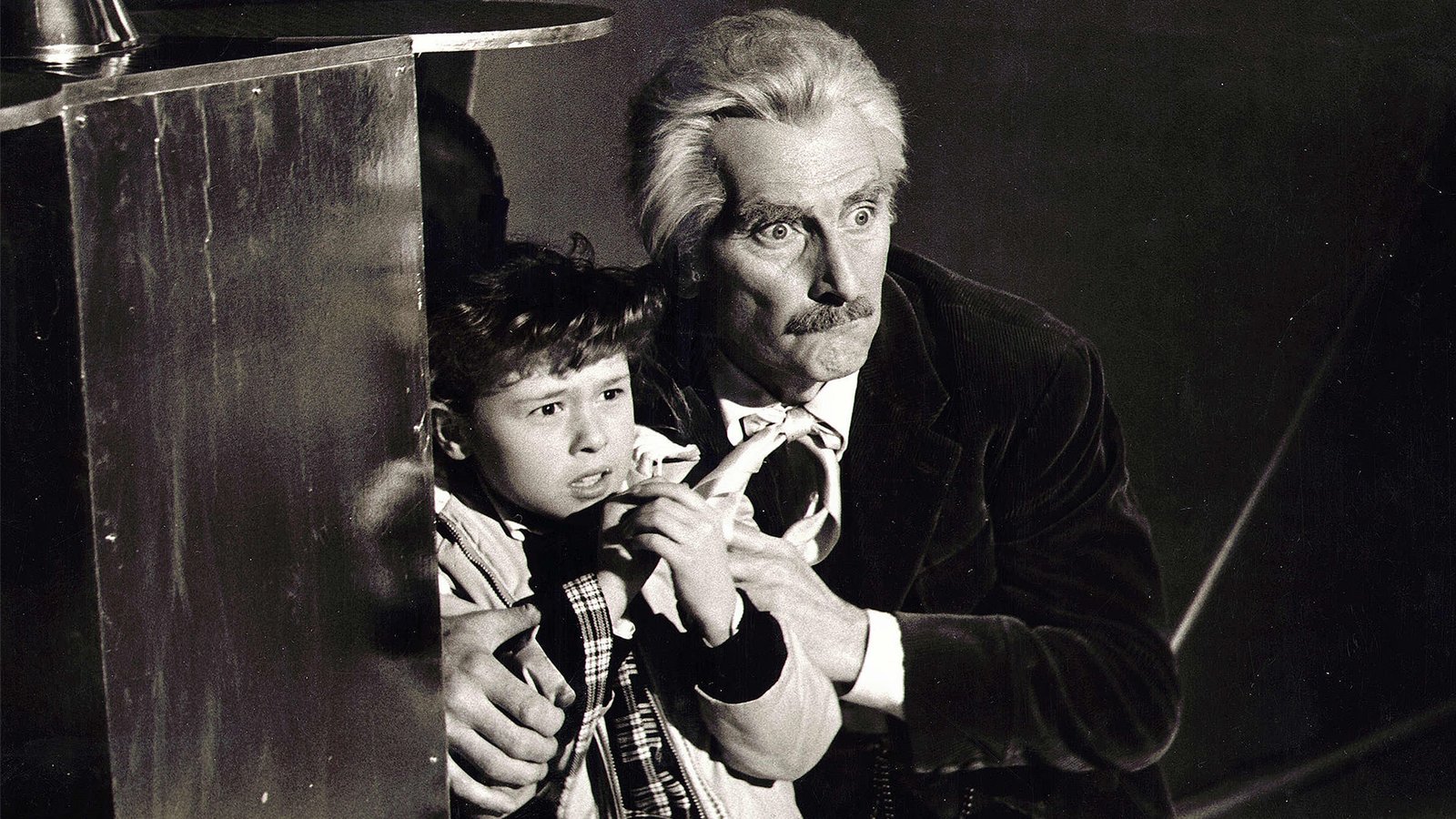
Peter Cushing’s Doctor Who!!!
And his opponent, fighting out of the 2020s corner, when he’s not too busy touching grass: we have the bundle of energy, high-kicking Gallifreyan who’s not afraid to shed a few tears as he goes about saving reality. With a record of straight knockout victories against Sutekh and Omega, it’s…
Ncuti Gatwa’s Doctor!!!
The time has come for you to prepare yourselves for a fight that consists of four rounds of the Doctor’s adventures. The referee in charge of tonight’s bout will be Mike Myrka.
Ladies and Gentlemen… LET’S GET READY TO RUUUUUUUMBLE!!!
Round One – Dr. Who and the Daleks (1965)
It could be possible that the fight is actually over before it has even begun, especially if you dismiss Peter Cushing’s Doctor Who for not being canonical. As things go, you might already wish that this particular performance had been fired out of a canon in the first place! It goes without saying that the rather gentle, dotty version of Doctor Who that we get in the film is a long way from the fiery crotchetiness of the William Hartnell interpretation that was seen on television.
Then again, you’ll still have the treat of watching someone in the title role who is arguably the biggest star to have ever taken on the part. As an actor, Peter Cushing is regarded by many as the man who gave us a definitive take on the characters of Van Helsing and Baron Frankenstein, as well as some very enjoyable performances as Sherlock Holmes. His portrayal of Doctor Who might not be up there with the very best of his work, but there are still a few moments where he shines and gets up to more than a little mischief. Take, for example, when he pretends that Tardis malfunctions. After their accidental take off and surprise arrival on an ‘unnamed’ alien planet, Doctor Who is desperate to investigate the mysterious city that they can see in the distance, so he tells an outright lie to his fellow travellers about the need to go to the city for some spare parts. Then, later in the film, there’s also the rather mean trick that Doctor Who plays on the Thals, when he orders Ian to choose someone from amongst their ranks, who will then be handed over and left to the mercy of the Daleks. This being, of course, a ruse to force the overly peaceful and downright indolent Thals to stand up for themselves against their enemies.
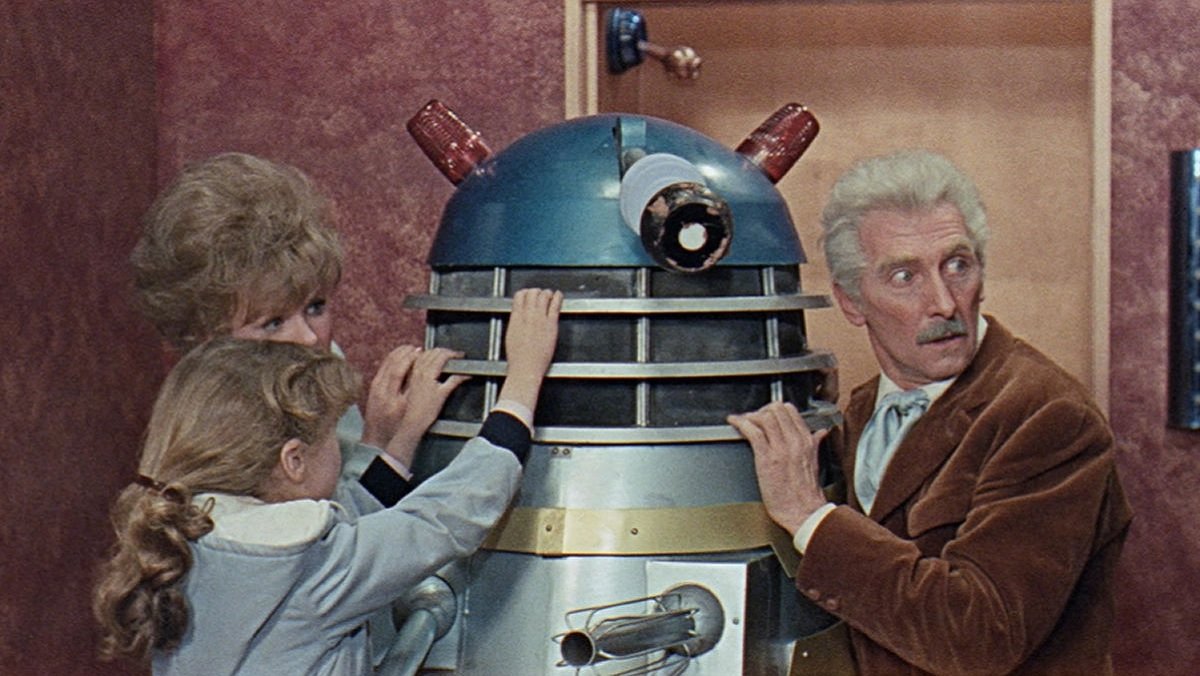
All of this is pretty much in line with the original story that was broadcast on television just two years before the remake was released. Hartnell’s Doctor, in both these instances, comes across as a compelling schemer who just might be someone that you can’t always trust, whereas Cushing’s Doctor Who is very much the inquisitive scientist who’s just being a bit naughty. The film still manages to have some differences to make it worth the effort of watching, but you’ll probably come away from the experience thinking that they haven’t really made anything better.
Barbara, Ian, and Susan are all present and on board Tardis for the adventure. But on this occasion, Barbara has joined Susan in the ‘family tree’ and become one of Doctor Who’s granddaughters, while Ian is along for the ride as nothing more than the boyfriend. Jennie Lind makes a good fist of taking on the role of Barbara, but she comes nowhere near the practically-minded and ever-curious interpretation of the character by the wonderful Jacqueline Hill. The Susan of these films, as played by Roberta Tovey, is about as far removed from the Unearthly Child who appeared on television screens as you can get. As a character, this much younger movie version of Susan is clearly intended to be someone who is a very clever but relatable peer to children who are watching in the audience. Roberta Tovey does this job with a good deal of success, but this choice of direction for the part consequently sacrifices all of the mystery and intrigue of Carole Ann Ford’s original performance. Then there’s Roy Castle’s take on Ian, which really isn’t his fault, as it comes across as being little more than a clown show. If nothing else, this only serves to make you realise how great William Russell was in the part. The Ian Chesterton that we see on television is the complete package — a thoughtful, action hero who is equally adept at using his wits or his fists — whereas the male companions in both films, who gamely step up with a terrier-like willingness to have a go at anything, are sadly blessed with all the brain power of an oven-baked potato.
In the previous paragraphs, you’ve already seen a few of the other changes, name wise, which are just irritating but not a deal breaker. Tardis, for some strange reason, is always referred to as just… Tardis, and never gives us the comfort of being ‘The TARDIS’ – it also is by far the worst ship interior, despite what must have been an improved movie budget, to ever appear on a screen of any kind. The same problem in naming is also extended to not being allowed to say ‘The Doctor’ because Cushing’s version of the character, if we’re using his title correctly, is always known as Doctor Who. This means, I believe, that his surname must be ‘Who’ so if we’re being really polite, especially in respect of that old-fashioned way of speaking to our elders, then Cushing could also be called Mr. Who. I’m glad that’s now sorted, but these things need to be clear, don’t they? Even if that comes at a deep and very personal cost. I think I just need to get out more, have a walk, and take some air…
Oh, that’s reminded me that there are no Time Lords in any of this; they are not mentioned at all, which means that the opening few lines of my article are messed up, but I’m not going back to correct it, so there! And when you really think about it, this now makes Peter Cushing’s take on Doctor Who a fully paid-up, single-hearted member of the human race, while Tardis and all its space- and time-travelling wonders have been invented by nothing more than a decidedly nutty professor.
Hmmm.
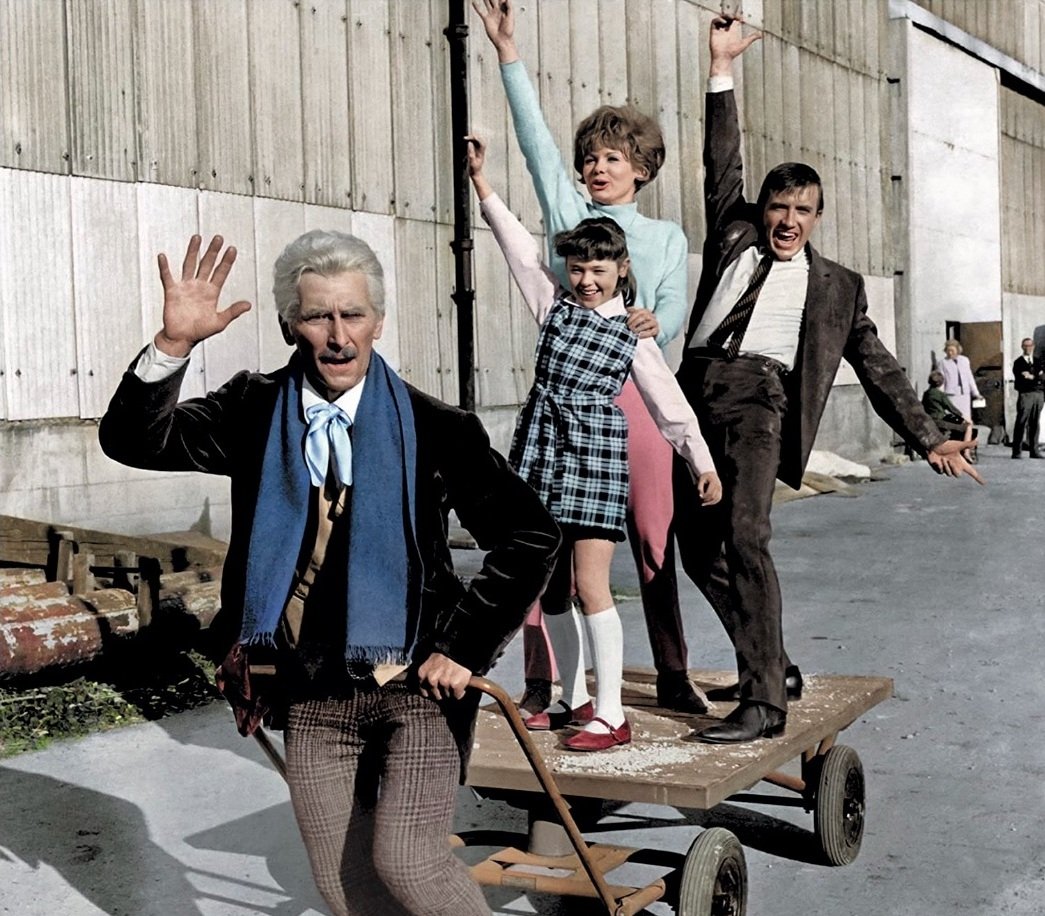
(If I’m allowed a small aside, I need to mention that there is a much more successful pairing up of Peter Cushing and Roy Castle that came just before the filming of this Dalek adventure. The rather wonderful Amicus films production of Dr. Terror’s House of Horrors had Cushing play a card-dealing teller of fortunes, who may just be death in disguise. It also put Castle in the role of a musician who falls foul of the vengeful powers of voodoo. This was just one of the stories from a portmanteau anthology of tales that were popular with the cinema viewing public of the time. If you should get the chance, Dr. Terror’s House of Horrors, is well worth a watch, though the name still confuses me to this day, because all of Cushing’s card-dealing shenanigans are set on a train.)
There are times, admittedly, when the pace of the storytelling can feel a little glacial, especially when you compare it with the modern version of the show, which goes at the rate of hyperactive squirrel in a Formula 1 racing car. On several occasions, the viewer is forced to sit through lines of exposition that the Daleks bark at each other during the film’s running time. Something which I can only compare, in terms of listening alone, to being as great a test of endurance as the unrelenting torture of hearing a single minute of spoken dialogue from an episode of The Real Housewives of Beverly Hills. Actually, getting the Daleks to deliver some of that would be really interesting. Would anyone even notice, I wonder, that the wives had been replaced by our friends from Skaro?
For all of its faults, there are still a few things that you can really love about Dr. Who and the Daleks. The 4K restoration of the film has given us some of the most colourful representations of the Daleks that we have ever had the chance to see, though they are still not quite as dazzling as the eye make up the Thals wear. The red and gold Dalek redesign, with a chunkier base and claw instead of a plunger, is undeniably a thing of beauty. But I’m still not a fan of the decision to turn the joys of Dalek ‘Extermination’ into death-by-fire-extinguisher. Overall, the film is a thoroughly enjoyable romp and a nice bit of nostalgia. It presents the story on a scale that the television series could never match, but lacks the depth and scares of the original show.
Round Two – The Legend of Ruby Sunday/ Empire of Death (2024)
If you’re thinking in fighting terms, as far as climaxes go, there’s never been more on the line than what you see in these two episodes. All life across time and space is under threat, and the mystery of the pointing hooded figure, who may or may not be Ruby’s mother, is soon to be answered. And for once, thanks to some considerable funding from Disney Studios, there’s an unprecedented amount of cash to get all of these things on screen in the best possible way.
This all happens, eventually, over two episodes with some excellent visuals, but it’s fair to say that the overall story itself, after weeks of building up to what promised to be an exciting climax, fails to stick the landing. In fact, you could say that it doesn’t land at all, and that if you happen to look up, it’s still floating somewhere in the heavens, or stuck in a tree.
I wonder if the cause of this, and may God forgive me for even saying such things, is Mavity?
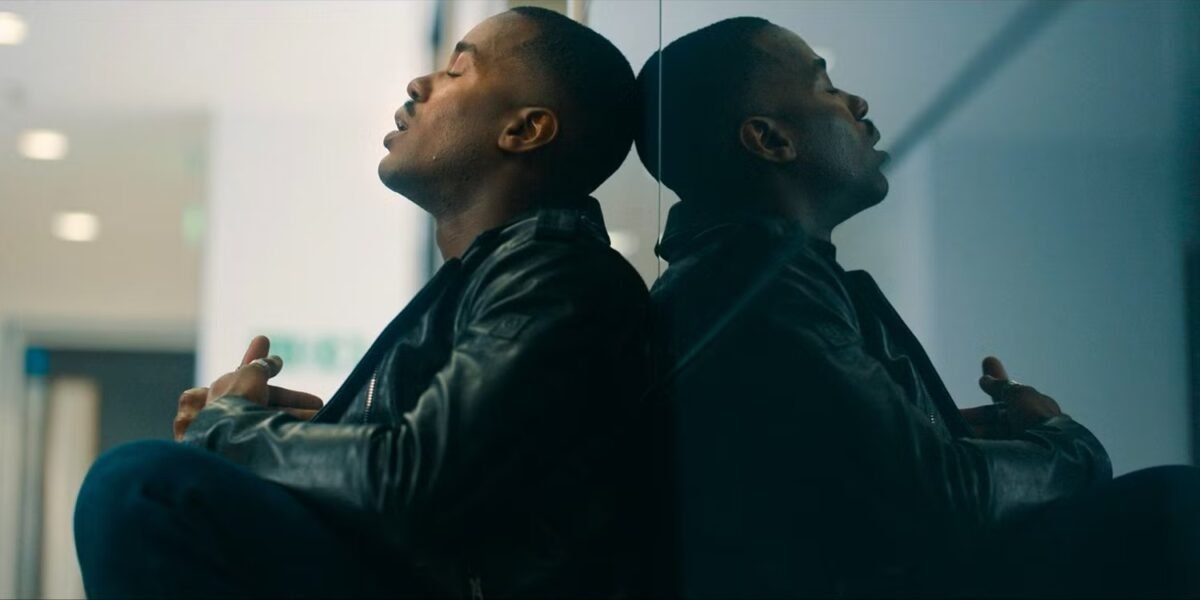
If we were to compare Peter Cushing’s Doctor Who with Ncuti Gatwa’s Fifteenth Doctor, I’m pretty sure that you’d notice one or two ‘slight’ differences. If, for some reason, you haven’t, might I suggest that using the nearest available defibrillator should be fairly high on your list of ongoing priorities? Regardless of this nonsense, Ncuti Gatwa became the leading man of Doctor Who after the huge success and acclaim that he received from playing Eric Effiong in Netflix’s comedy Sex Education. His star then continued to rise after he secured a role in the mega hit Barbie movie, and he was quite rightly in high demand on both stage and screen before the role of the Doctor was added to his credits. His performance as our favourite Time Lord, which comes with heaps of unbridled exuberance, huge amounts of charm, lots of ‘Babes’ familiarity, and questionable kilt-based costume changes, is more than a little polarising for some fans. There’s an emotional side to Gatwa’s take on the Doctor and a vulnerability that we haven’t seen before. For some, this is a refreshing and much-welcome change that gives the audience a modern interpretation of the role, but for others, it goes too far away from the character that has been established over so many years.
What’s impossible to deny is that Ncuti Gatwa makes the most of what he’s given and that his performance as the Doctor rarely fails to be interesting and hold our attention. His dramatic range, which is there for all to see, is truly impressive. Just watch the scene in Empire of Death, where the Time Lord stands at the open doors of the Memory TARDIS as it hangs in space, and try not to be impressed by the quiet despair and sudden raging anguish that Gatwa brings to the moment, as he watches Sutekh’s dust of death slowly remove each point of light and life. It’s a truly powerful scene that only makes you wish that the Fifteenth Doctor had been given the chance to show this amount of gravitas and grit more often.
All of the sets in this two-part adventure are done on a scale that would have once been the stuff of dreams for Doctor Who fans of, ahem, more mature vintages. Just about everything looks as if it could have been in a film. Apart from UNIT Headquarters, which looks like a Holiday Inn version of the Avengers’ Tower. The modern TARDIS console room is amongst the best that we have ever seen. Huge in scale, compared to the classic era, it has an almost antiseptic whiteness that hints at some of the interiors that were used in Ridley Scott’s original Alien movie. There are no shadows in this version of the TARDIS; everything is right in front of you and in plain sight, which might be why it’s a bit lacking when it comes to any mystery or character.
As far as script and plot go, for Cushing’s Dalek films, you had stories that were based on Terry Nation’s broadcast television episodes. But in the case of both The Legend of Ruby Sunday and Empire of Death, we are presented with a totally original storyline from the typewriter of the incredibly talented Russell T Davies. The season-ending climax that takes place over these two episodes is an often thrilling and emotional rollercoaster that delivers on many levels in terms of what is now viewed as ‘event’ television, but it ultimately ends up being a disappointment.
After all those years of waiting for Sutekh the Destroyer to return and challenge the Doctor, the long-term fans were rewarded by the underwhelming sight of the ‘Pooch With The Most Mange’ winner of Crufts. What made this worse was that this ‘all powerful’ Osirian was then defeated by the fairly straightforward means of… taking him for a walk on a stretchy lead. In dramatic terms, this ended up having all the impact of a feather on a hard hat, but at least we got to listen to the wonderfully menacing tones of Gabriel Woolf, who returned after nearly 50 years to reprise his role as Sutekh.
Then there was the big reveal of Ruby’s origins, which all centred on the hooded figure who was ominously pointing at something that could not be seen. Was the mystery tied in with the return of Susan Foreman? Was it connected with the enigmatic, fourth-wall breaking Mrs Flood? Or was it a glimpse of a new, unstoppable member of the pantheon who would challenge the Doctor like never before?
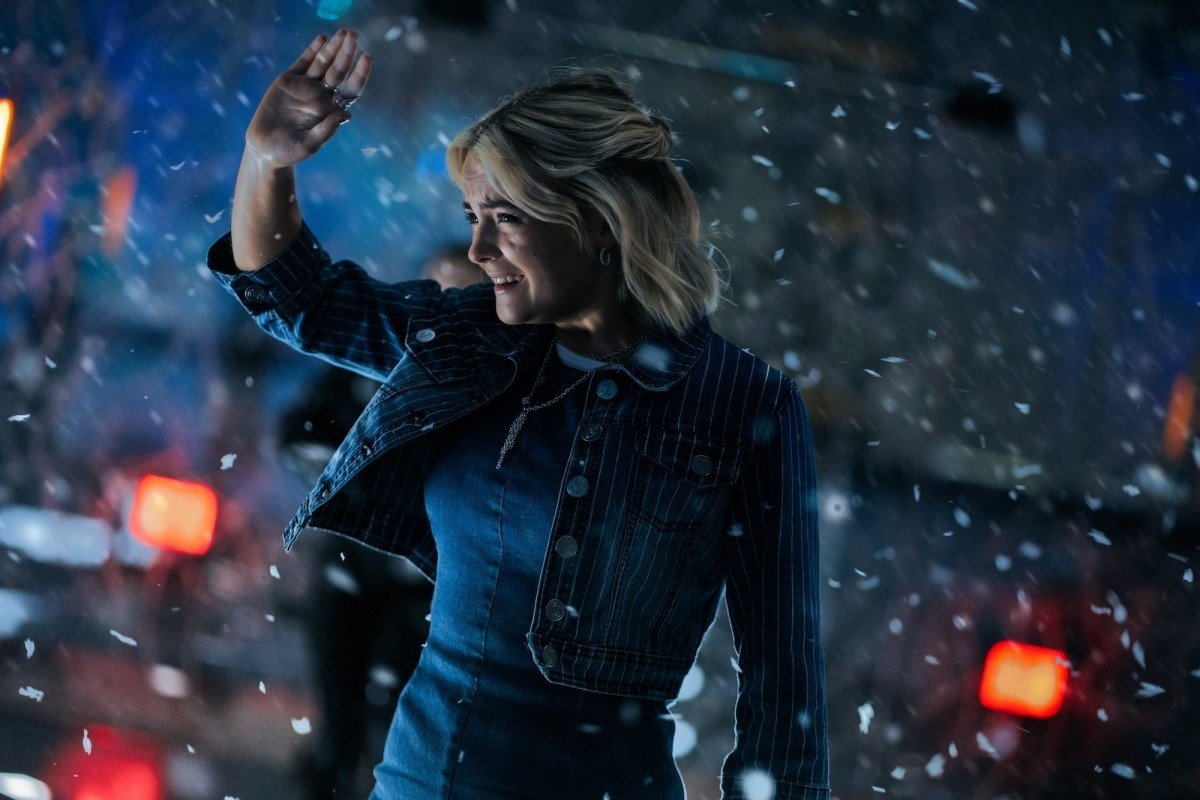
Er… no! It was Ruby’s Mum and she was pointing at a signpost.
Anyway, the season ended and the fireworks all went up, yet they didn’t go off with a particularly loud bang. The story, for all its shortcomings, had heart and a message about the real meaning of family. If you can look beyond the lacklustre dispatch of a much-loved classic monster and the failure to reach a conclusion that weaved all the threads back together in a satisfying way, you’ll find an undeniably grand and surprising tale that should be praised for its attempt at teaching us that the most important adventures always begin at home.
Round Three – Daleks’ Invasion Earth 2150 A.D. (1966)
The very first thing that you might notice here is that Peter Cushing’s poor old Doctor Who doesn’t even get a name check in the title of this follow up to the previous year’s adventure. So, right from the off, it’s pretty clear that the Daleks are the real draw to getting bums on seats. Amicus Productions gave Terry Nation the princely sum of £500 to secure the option for two of his previously broadcast television stories about the popular pepperpots. Amicus hoped that the deal would lead to an eventual trilogy of films, but this wasn’t to be the case. A combination of ‘Dalekmania’ beginning to wane and the subsequently underwhelming performance of Daleks’ Invasion Earth at the box office was enough to ensure that the next film never went into production. Peter Cushing’s last chance to take on the role, which from the few scant notes that still exist, would have seen the Daleks sidelined and have Doctor Who facing a rather intriguing Night of the Crabs (presumably based on The Macra Terror) was subsequently lost amongst on the rocks with only blinking lighthouse to keep it company.
Susan, as played by Roberta Tovey, is the only one of the companions to make a return in Daleks’ Invasion Earth. She is joined in Tardis by Louise, who turns out to be Doctor Who’s niece, and Special Constable Tom. These new characters would seem to have been added as like-for-like replacements, who act and behave in almost exactly the same manner as the Barbara and Ian of the first film. Rumour has it, though you can never be really sure with these things, that Babs and Ian ended up going off and finding themselves some work at a little-known coastal resort of Moonbase Alpha. But when it comes to their present whereabouts, things have been more than a little cloudy since just before the millennium.
Jill Curzon’s portrayal of Louise comes across as being suitably feisty and brave from the limited screentime and dialogue that she is given, while Bernard Cribbins, who was just starting on his journey to becoming a national treasure, goes full throttle into the slapstick and action scenes in a way that would make some of the Three Stooges’ performances look undercooked. It’s now hard to imagine, so far after both events, the difference in terms of love and appreciation that Cribbins would receive from his later appearances in the Doctor Who television series. After donning the woolly hat of Wilfred Mott, he would go on to become an intrinsic part of the programme, who is fondly remembered by some but a little too sentimental for others. Whatever side of the Mott debate you might stand, the important point is that he is remembered, which is darned sight better than (sorry, I just had to go back and check the name because it’s already gone out of my head) the character of Special Constable Tom.
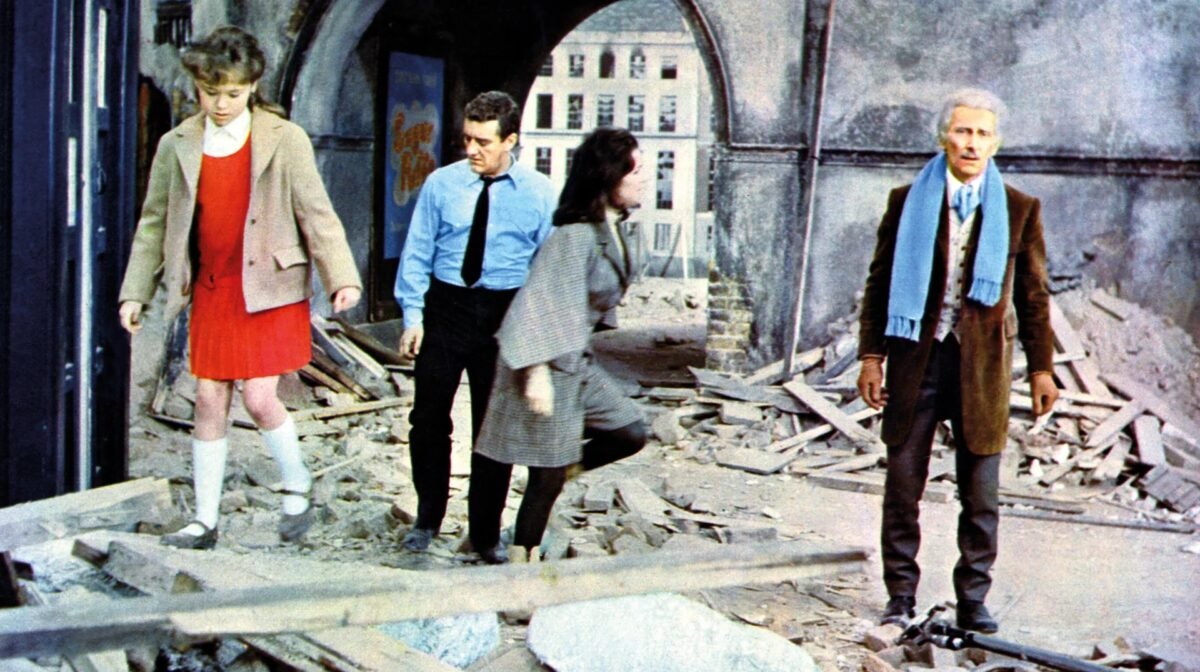
Other notable members of the cast include Doctor Who regular, Philip Madoc, who appears in the film as the treacherous Brockley. In later years, Madoc was given a greater chance to shine in the television series as other villains in adventures such as The Krotons, The War Games, and The Power of Kroll. But it is his portrayal as Solon, a scientist of the ‘Frankenstein bonkers’ variety, in the Fourth Doctor classic, The Brain of Morbius, for which he is the most fondly remembered. The always dependable Andrew Keir adds a suitable amount of gravitas to the role of Wyler. His gruff freedom fighter is a particularly sharp thorn in the sides of the Daleks, though you would expect nothing less from the star of the film version of Quatermass and the Pit. An honourable mention must also go to Ray Brooks, who plays David, the hip young member of the resistance with the knack! In the years that followed, Brooks went on to be a familiar face and even more familiar voice on British television, as he voiced the character of Drax for Big Finish and was also considered for the role of the assassin, Orcini, in the Sixth Doctor story, Revelation of the Daleks.
On the plus side of the production, it has an atmosphere that occasionally puts you in mind of Terry Nation’s post-apocalyptic Survivors. The deserted broken streets that are littered with rubble help to set up the vibe rather nicely. But if I’m being completely honest, it’s only a small fraction of a vibe that you can just about see if you use a microscope to look really, really closely. Notwithstanding this, the filming itself is well done, and there are a few shots that show off the thriving heartland of Bedfordshire to good effect. There’s also a considerable amount of joy to be taken from hearing the Daleks using ‘rels’ to describe a measurement of time. It was the first occasion that the word was spoken on screen, and it has been subsequently used for Dalek countdowns and ultimatums since that point.
Just knowing this should make you inordinately happy.
Another definite improvement comes in the form of the Dalek Saucer, which looks fantastic, and is arguably not bettered until we get to the first season of the modern era. The movie version of the Robomen should also be considered to be cool to the point of freezing. They are so much better than the television originals, which had the poor victims wearing some really clunky ‘prototype’ Dr Dre’s on their heads. As far as these new designs go, it would be fair to say that the helmets, mirrored glasses, and super shiny suits all add up to being something that wouldn’t look out of place in a Daft Punk video, where they would be guaranteed to Get Lucky.
Could someone get this up and running for me in AI?
The most glaring error that occurs in both films is the use of an original orchestral score. The brilliant opening theme tune of the television series was jettisoned for something that just doesn’t sound like it’s anything to do with Doctor Who. Imagine some of the Irwin Allen shows of the 1960s — series like Land of the Giants or Voyage to the Bottom of the Sea — and you’ll have a much better match for the score that’s supposed to accompany the trials and tribulations of Doctor Who and his Dalek foes. On top of this, especially during the antics of both Castle and Cribbins, there are a few moments when the soundtrack even strays into a jaunty comedy mode that reminds me of sitcoms like Holiday on the Buses – where Blakey would try and chase the ever-chirpy Stan after enduring a trouser-based wardrobe malfunction.
This still doesn’t stop Daleks’ Invasion Earth 2160 A.D. from being an enjoyable popcorn adventure that can be consumed by anyone who is happy to give their brain the night off. All you’d have to do is keep your eyes open. There’s still no getting away from the fact that Cushing’s Doctor Who is a little bland and unmemorable. He ‘steps up’ when you need him to be the hero, but I suspect that he’d be equally content with just sitting in his garden shed with only a cup of Horlicks for company.

Both of Peter Cushing’s films have many things to like, but their scale and big budget set pieces can’t match the magic of the black and white TV originals. The really special moments, that we still talk about to this day — like the horror that you see on Barbara’s face from the ‘eye stalk’ viewpoint of the Dalek, or the Doctor’s speech to Susan, as he leaves her behind to start a new life — are sadly lacking from the efforts that audiences watched on the silver screen.
But were the films ever really designed to be this way in the first place? If we just base the evidence on these two Peter Cushing films, that have now been around for 60 years, it’s fairer to say that their true remit was to deliver nothing more than frantic, noisy, and, most importantly, colourful adventures. And in this, if nothing else, Dr. Who and the Daleks and Daleks’ Invasion Earth 2150 A.D. both put up a very good fight.
Round Four – Wish World/ The Reality War (2025)
The second season of the new era begins its final episodes with high expectations as many storylines were set to come together in a payoff that had everyone crossing their fingers. Would this ending be able to use the word ‘great’ as part of its description? Or would it at least be an improvement on the last one? Big promises had been made about this season-ending conclusion, and so the public prepared to be dazzled.
As far as the score goes, there can be no major complaints. Murray Gold’s music has been an intrinsic part of the show since its revival. His version of the Doctor Who theme never fails to give the programme a suitably thunderous start, while his other arrangements have helped to make scenes even more memorable and moving. For all these undoubtable hits, after so long, it’s inevitable that a little fatigue begins to set in. Sometimes, the mix of Gold’s soundtracks becomes too loud and overbearing, until it reaches the point of nearly drowning out the dialogue that’s being spoken on screen. For some viewers, it has now got to a point where a little silence would be welcome. Setting just about everything to music is very cinematic, but there’s no denying that it can become grating. By all means, carry on having ominous themes that signal the impending arrival of characters such as Omega, but perhaps take a break from orchestrating the consumption of a cheese and ham toastie.
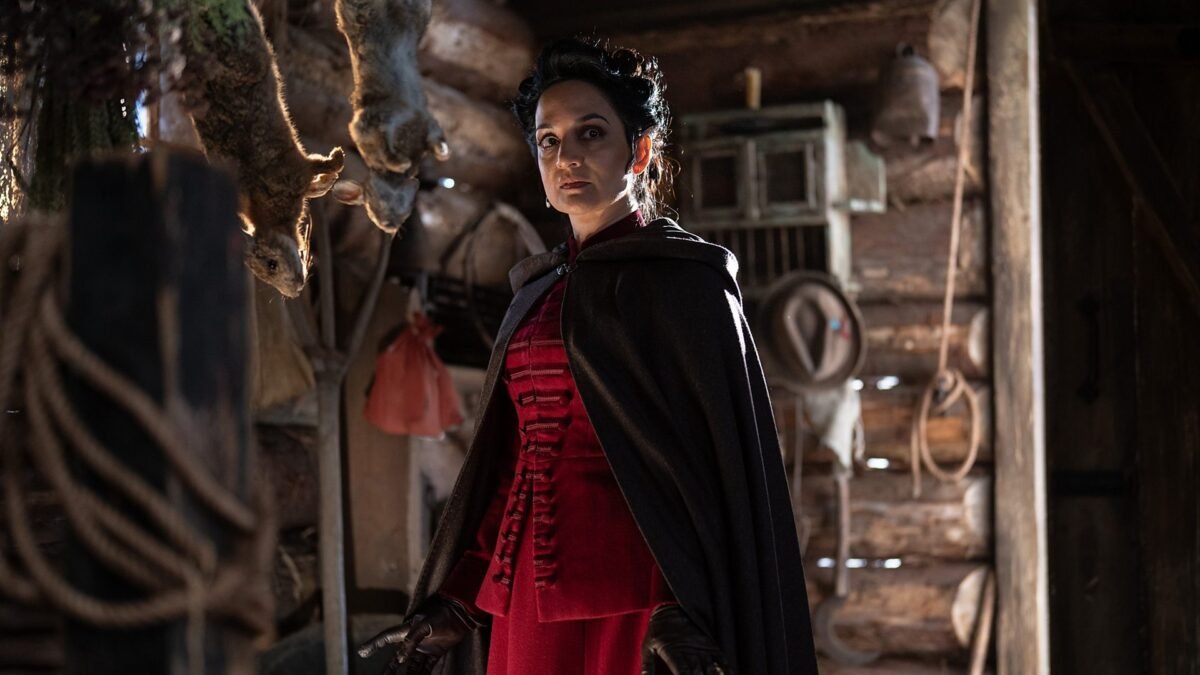
Getting back to the story, fourth-wall-breaking Mrs Flood has turned out to be an incarnation of the Rani, a pitiless Time Lord scientist from the classic era. She has a plan to shape and change reality, while bringing back a foe from the Doctor’s past. Over the course of these two episodes, there’s a whole bucket-load of intriguing ideas that set up lots of questions and possible outcomes.
In a surprising opening, we find that the Doctor has become unknowingly trapped in the life of a family man. He happily goes through his days, with a doting wife and cute daughter, as a content and very conforming bowler-hatted office worker. But he knows something isn’t right with the world and that nagging doubt just won’t leave him alone. As the mystery deepens, the increasingly confused Time Lord fights to hold onto the life that makes him truly happy.
Is it the family that he loves in this reality or something from the past that he has forgotten?
The main cast all rise to this challenging concept and play their roles with conviction. Ncuti Gatwa’s Fifteenth Doctor moves from one crisis of self-doubt to the next, until he gradually becomes the only sane man in a world of madness. Belinda Chandra, the new ‘travelling’ companion who was introduced this season, also plays her part in sharing this journey. Varada Sethu gives a measured and thoughtful performance as a character who knows her own mind. Belinda is the companion who refuses to be dismissed or brushed off with a glib explanation. She’s the one who can be relied upon to always call the Doctor to account.
We also need to mention Ruby Sunday and her part in all of this. Her story might have been told, but it was far from over. As to the reasons for Ruby no longer being front and centre in the second season of adventures, your guess is as good as mine. After reuniting with her mother, this thoroughly modern companion should have just been getting on with the business of her daily life, but it turns out that there are greater plans afoot, and her presence is needed to save the day. Millie Gibson does a great job of playing a character who was — shock, horror — actually likeable! She certainly comes across as being more relatable and down-to-earth than many of the other companions to have jumped on board the TARDIS in recent years. And let’s not forget, when it comes to 73 Yards, the brooding ‘Doctor lite’ tale of the first season, it was Millie who took the leading role in what is easily the best episode of this era.
All of this adds up to Wish World being a very solid start for the finale that has some pleasing references to the virtual reality-based existence of The Matrix and the controlling ‘big brother is always watching’ state overtones of George Orwell’s 1984. So, as things stand, everything was shaping up nicely and building up to a conclusion that would up there among the greats!
And then The Reality War came along.
The episode takes less than 20 minutes to see off Archie Panjabi’s deliciously testy incarnation of the Rani. After building her character up over two seasons, she becomes a ‘Scooby snack’ and is seen off with no fanfare other than an accompanying belch. On top of this, Omega, one of the all-time greats when it comes to conflicted villains, is completely ruined by a fleeting ‘why bother’ appearance. His reimagined CGI form is an abomination, but only in the sense that it’s completely wrong for the character. Rather than representing a fallen hero, twisted by misfortune, whose sacrifice gave his people the power over time and space, we have something that would be more suited to being used as Castle Grayskull in the new He-Man and the Masters of the Universe movie.
But these are only small smudges in one great big mess.
There’s poor old Belinda, the independent ‘grown up’ character who seemed to be at the heart of the season, who spends most of her time this episode inside a locked chamber. She consequently doesn’t play any part in the on-screen heroics and emerges from her time in captivity as a fully committed and doting mother. Which she forgets for a time, thanks to yet another shift in reality, but then remembers after a combination of reminders from Ruby and the Doctor travelling back and forth to put things right. Is that even vaguely correct? I don’t have a clue! Needless to say, this was something of a major (and very confusing) change to the character that we met in the opening episode of the season.
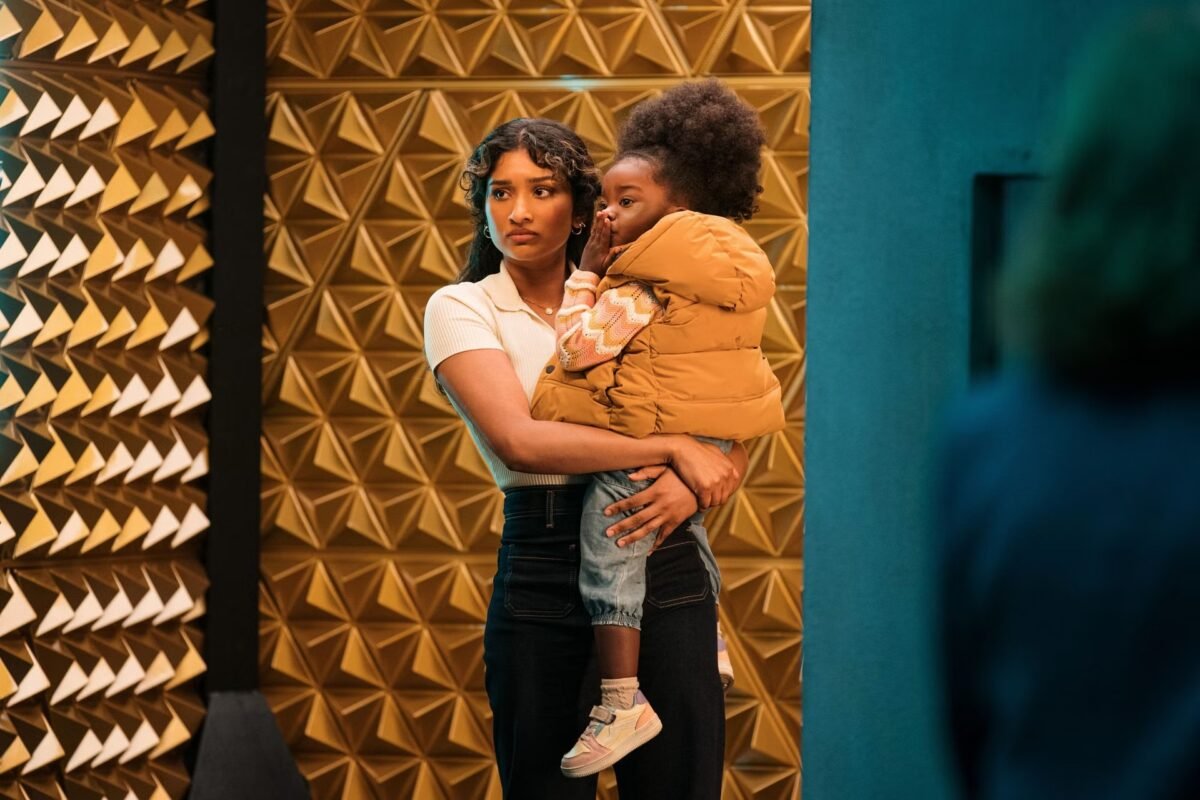
Poppy, the infant in question, who disappears and then returns as frequently as money from my bank account, had already made some fairly enigmatic appearances in other episodes, namely Space Babies (sorry to remind you). In all honesty, her addition, which is perfectly nice and lovely, caused me some wonder, but not a whole lot of interest. So that when the latter half of the episode twists to make Poppy’s survival the main dramatic reason for the Doctor’s regeneration, I couldn’t really see the point, in terms of logic or any sense. Perhaps more worryingly for me, at least on a personal level which makes me sound heartless, I’m still not convinced that I particularly cared.
But the biggest crime is the regeneration itself. What’s meant to be one of the most unforgettable moments in any incarnation, drawing a poignant line under that Doctor’s tenure, is nothing but an underwhelming let down. I’m guessing that the Doctor’s sacrifice for little Poppy is supposed to make some kind of point about nothing being more important than the love that you have for your nearest and dearest.
But that’s it? Honestly? That’s all we get?
Then again, you can’t argue that many fans were suitably emotional about Gatwa moving on from the role. For many people, this was the heartfelt send-off that this quirky and distinctive incarnation of the Doctor had earned. Was this just bold and brave storytelling? A different approach that embraced change and fresh ideas? Or was it just a load of tosh that was cobbled together at the last moment after Disney and the main actor withdrew their services?
And I haven’t forgotten about the surprise appearance that everyone knew about…
Billie Piper saying, “Oh, hello!”
Make of that, for good or bad, what you will, and I’ll retire to bedlam.
Regardless of any of these faults, both of these season climaxes are still brimming with a mind-boggling number of ideas and potential. Ncuti Gatwa’s fresh take on the Doctor might be too different for some, but it’s constantly interesting and fun to watch. His adventures can never be accused of lacking ambition, and they are steadfast in keeping to the vision of a showrunner, Russell T Davies, who wanted to both entertain and give clear messages about current issues to the watching public.
As things turned out, this version of Doctor Who was not to be as successful as everyone hoped. But the considerable effort and love that was put into the attempted revolution, which on so many levels was the biggest and boldest in the show’s history, should be acknowledged and in many respects commended. Over the past 60 or so years, Doctor Who has survived and continued to be relevant because it has been courageous in its choices. The two seasons of Ncuti Gatwa’s Doctor should be seen as carrying on with this tradition. This type of commitment will always involve taking a good deal of risk and the potential for failure. But it’s what keeps our show alive and in the hearts of so many generations.
Then suddenly, just before the bell rings to end the fight…
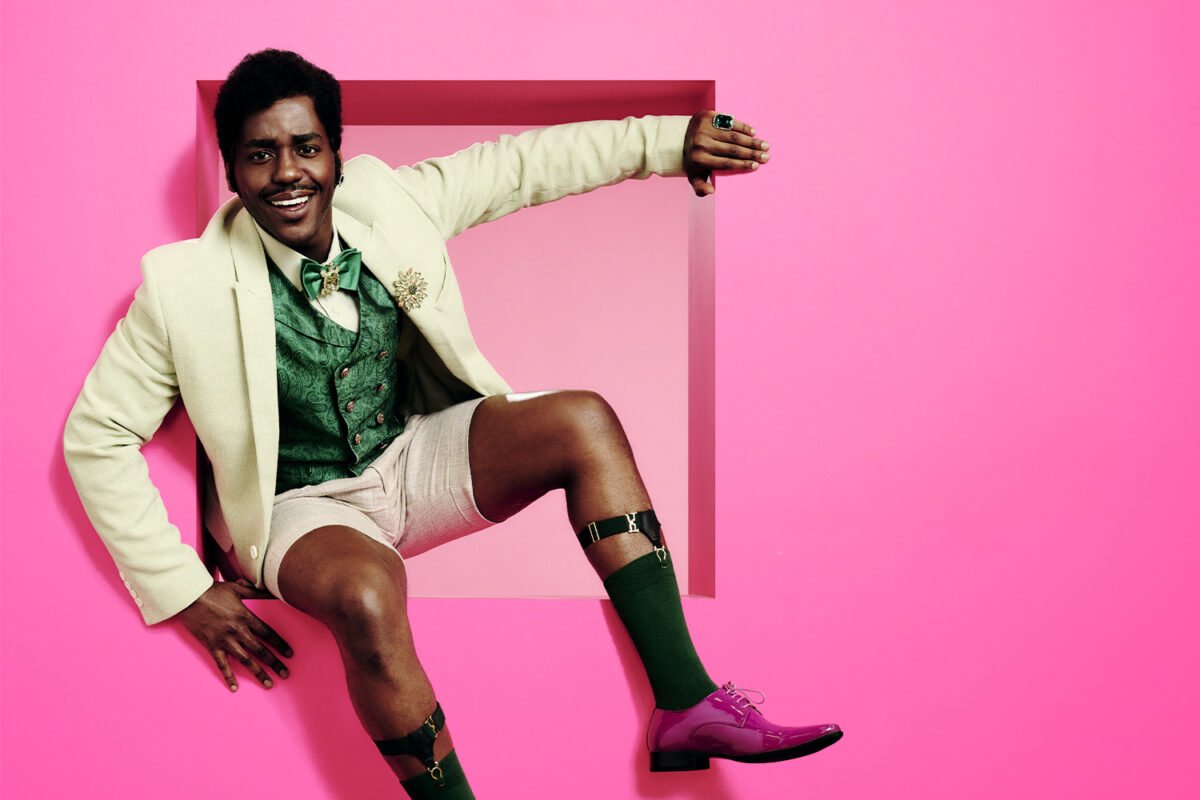
In a last second moment of blistering action, both Cushing and Gatwa land blows that send each other tumbling to the canvas. As the referee begins his count, the elderly Cushing attempts to get back on his feet by using the ropes to pull himself up, while Gatwa tries to stand on increasingly painful and wobbly knees.
Which of them will manage to beat the count?
It’s a comparison of two very different beasts, which you could argue had no right to be started in the first place. Have the adventures from the 1960s become a pleasant bit of nostalgia that have stood the test of time or are they best consigned to the past? Are the conclusions to The Empire of Death and The Reality War modern and bold attempts at storytelling or moments that you’d like to use a Memory Worm to wipe from your mind?
When all’s said and done, it just comes down to your own personal choice. There are no right or wrong answers here. Something really small about either production might tip the balance or it could just be a feeling that brings a much need smile to your face.
Just choose, dear reader, the winner that works best for you.
Or call it a draw and we’ll start getting things in place for a rematch!