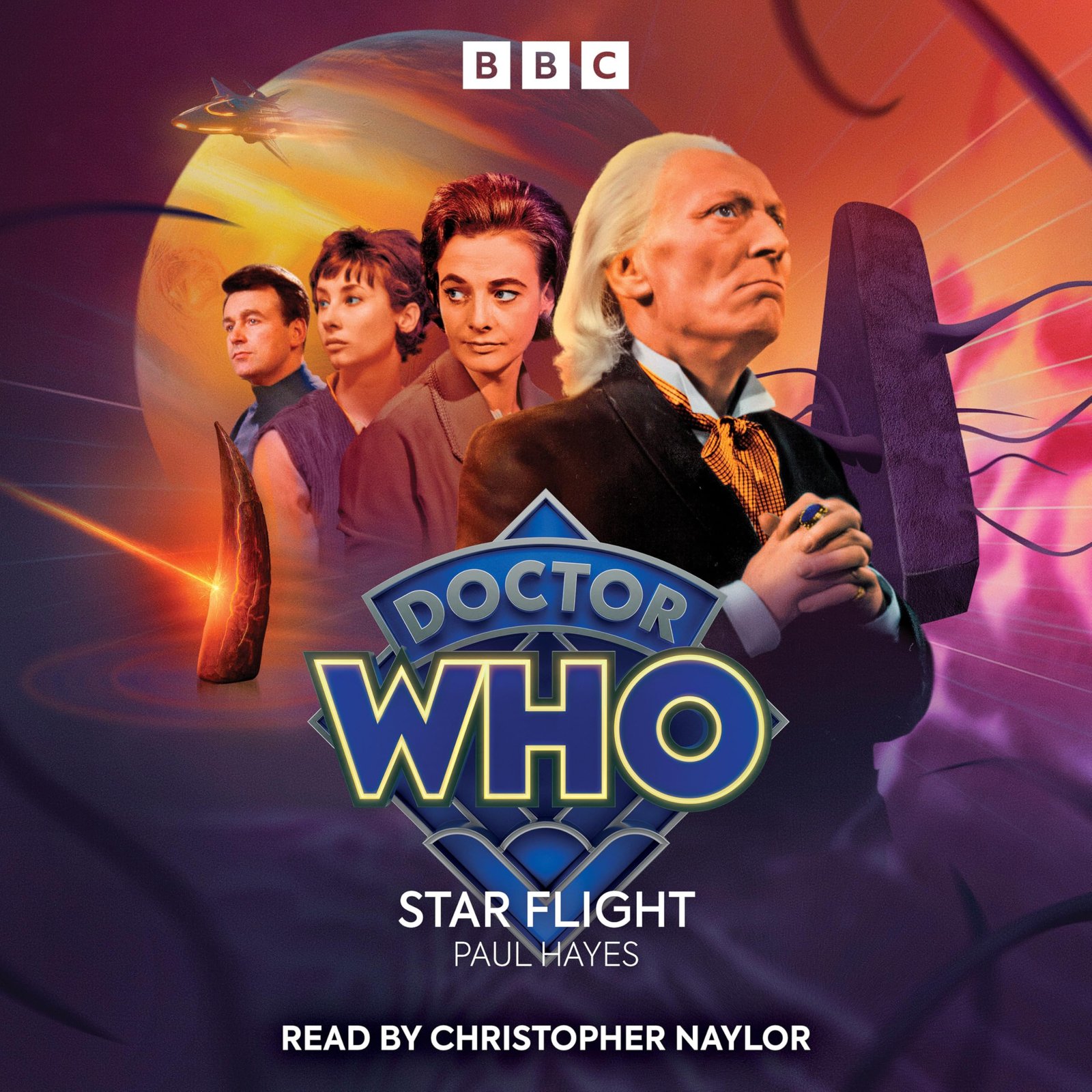
“I’m bringing four stowaways, or pirates, up from the hold.”
A passenger ship adrift in space, something trying to enter it in order to retrieve an item hidden aboard, and one or two people with a secret, or agenda, of their own… The plot to Star Flight is a really very simple fare: the synopsis for the story, though, makes it seem a good deal more complex. Indeed, it possibly gives a viewer reading it the wrong impression of what this story is actually like, and how it might surprise you if you were to actually give it a chance and listen to Christopher Naylor’s reading.
At just over an hour in length, this story turns out to be a pleasant surprise, as it features the original four-man TARDIS team. It becomes increasingly noticeable that Christopher Naylor has carefully read his script beforehand, and has put a good deal of thought into how he will be reading this on the recording. As a result, his narration is very well judged; the characters are given different emphasis in how they are each put over, and Naylor understands both what the story is doing and, in particular, where the main cast sit in relation to each other. This might sound a minor thing for me to be pointing out, but in the shadow of other recent BBC Audio Originals, the point is actually very important — not all of the narrators of recent releases have put this amount of effort into the finished piece. Naylor, therefore, impressed me, and on more than one level. He shows us how these readings need to be done…
The attention writer Paul Hayes puts into the character dynamics between Barbara, the Doctor, Susan, and Ian are another standout element here: the character gestures like Barbara asking Susan to explain the commander’s terminology sees Susan duly responding, quietly telling her teacher how Star Flight is a method of space travel that came after the science of reaching light-speed had been met, but before the ultimate ideal of Warp Drive travel was perfected. “All rather primitive,” the Doctor adds dismissively as the ship’s commander goes on to explain the actual science underpinning the Star Flight principle. It’s an example of how Paul Hayes skilfully puts over the unique relationship between post-war Ian and Barbara’s grounding in the 1950s and very early 1960s, and the Doctor and Susan’s superior grasp and understanding of both history and future developments in science.
This is later counter-balanced as Barbara then acts as the Doctor’s conscience as he is preparing to leave the passenger ship to deal with its own problems — though, as Barbara knows this attitude from the Doctor is a partial test for her, the teacher teaching the Doctor, and the Doctor subtly drawing out the teachers innate principles, it does all demonstrate the reasons these four worked so incredibly well together. They come from very different worlds, but have something to teach the other.
It’s all lovely writing, on a par with last year’s BBC First Doctor and Steven release Agent of the Daleks by Steve Lyons. The First Doctor does seem to bring out the best in writers by and large.
A surprisingly intelligent take on the ship’s artificial Intelligence, and its final operational decision, is complemented by what I see as this story’s main underlying objective and point of principle: the power of solidarity. The TARDIS team demonstrate their own solidarity with one another; the ship’s passengers and crew have to find their own solidarity; and the ship’s AI ultimately demonstrates its own allegiance and loyalty by the story’s end.
It’s all showing off a good solid theme, and while this audio range is a disposable and cheap one by nature, it’s releases like this one that show how you can make something throwaway turn out to be something you want to keep and return to in the future.
Lovely little release, this — certainly worth your time!