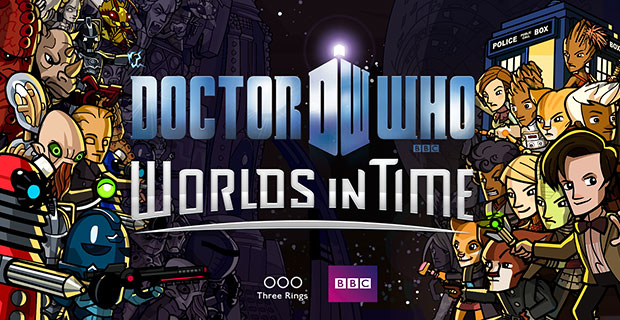
In 2012, an online video game was added to the sadly modest library of Doctor Who digital diversions. Conceived as a browser-based MMO (that’s massively multiplayer, online) game, Doctor Who: Worlds in Time is the only official title to offer fans the chance to work together and collaborate, socialise, and, well, emote.
As is the way with Doctor Who video games, it went largely unnoticed. Honestly, these days it would be lapped up, but back in 2012, things were different. For an article on Doctor Who video games set to be published elsewhere, Philip Bates chatted with Ben Badgett, Creative Director at BBC Worldwide and the person in charge of delivering Worlds in Time.
At a time when online fans are exploring every opportunity to engage with a show that is currently off air, online video games seem particularly apt. So, here is Philip’s feature on Doctor Who: Worlds in Time.
London is deserted and there are weird glowing orbs occupying the world. You’re in your pyjamas.
There’s a cry from down the street, and you, good citizen, rush off to help. You’re confronted with shop window dummies – but their wrists unhinge and they start gunning down shoppers!
Now, this might seem like a fusion of Rose (2005) and 2012’s The Power of Three, but it is, in fact, the very first online Doctor Who multi-player game, Worlds in Time, which went live in March 2012, and, sadly, closed after two years.
That’s not a reflection of the immense amount of work put in to make the MMO (Massively Multi-player Online) as good as it could possibly be; to stay current and relevant to a show that’s consistently regenerating, particularly after the 50 anniversary.
Terror of the Video Games
Doctor Who has the massive task of catering for all sorts of people. The show’s remit includes all of time and space and this can be translated into novels and audios perfectly, in order to accommodate a large proportion of the audience. But the most dissatisfied niche market is that of gamers.
There have been plenty of attempts, of course: the TARDIS’ long voyage into computer games started officially in 1983, with Doctor Who: The First Adventure. The packaging was emblazoned with the Fifth Doctor, Peter Davison, and promised an exciting, and almost psychedelic journey around the Solar System, past Saturn and into a colourful explosion, rather than the remakes of contemporary video gaming classics that we actually got.
Through Doctor Who and the Warlord past 1992’s Dalek Attack and 1997’s Destiny of the Doctors (below) to 2010’s The Adventure Games, various developers tried to cement the show’s gaming reputation, but none of them actually delivered.
After five journeys, The Adventure Games came to a premature ending. But they proved that there was still a massive market for such an experience.
“We didn’t take any specific direction from previous Doctor Who games, but we’re inspired by many of the incredible casual MMOs and ‘freemium’ games in the market,” Ben Badgett, Creative Director of BBC Worldwide Digital Entertainment & Games tells me. “We tried to learn and pull inspiration from what is successful in the space to create the best experience possible for Doctor Who fans.”
Worlds in Time built on this interconnectedness more than any other game, with a forum and the chance to meet Whovians worldwide online. The MMO was about a sense of community above anything else and the reaction was favourable.
“We really wanted to create a casual game that’s accessible to players that may not be used to playing multiplayer games, but like playing games socially on platforms like Facebook.”
“The Doctor is a natural instigator for this type of cooperative gameplay,” Badgett says. “I’ve been really pleased to find that many times when I enter the game as a ‘newbie’ character to test new features, higher level players will lend me guidance, or offer to whisk me away to planets or adventures I don’t have access to.”
Time and Space and Pixels
“It’s always an interesting challenge, developing games for beloved brands because you’re taking a narrative full of characters that have their own established lives, and adding the dynamic of a new player,” Ben explains.
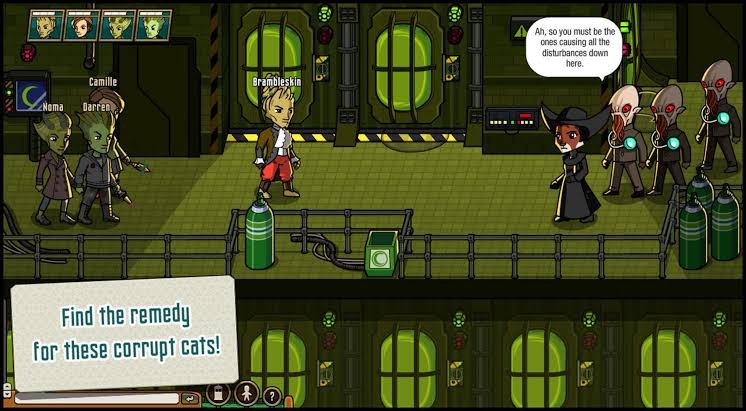
“Since Doctor Who: Worlds in Time is an MMO, we’re actually adding millions of new characters to the universe, so we had to find a storyline that would work for players and stay true to the brand. What’s different about Doctor Who from other science fiction series is that a single character (the Doctor) is essential to every story, so we knew we wanted to incorporate that into the game. We’ve tried to incorporate recurring themes that make Doctor Who special, using them as devices to explore broader concepts.”
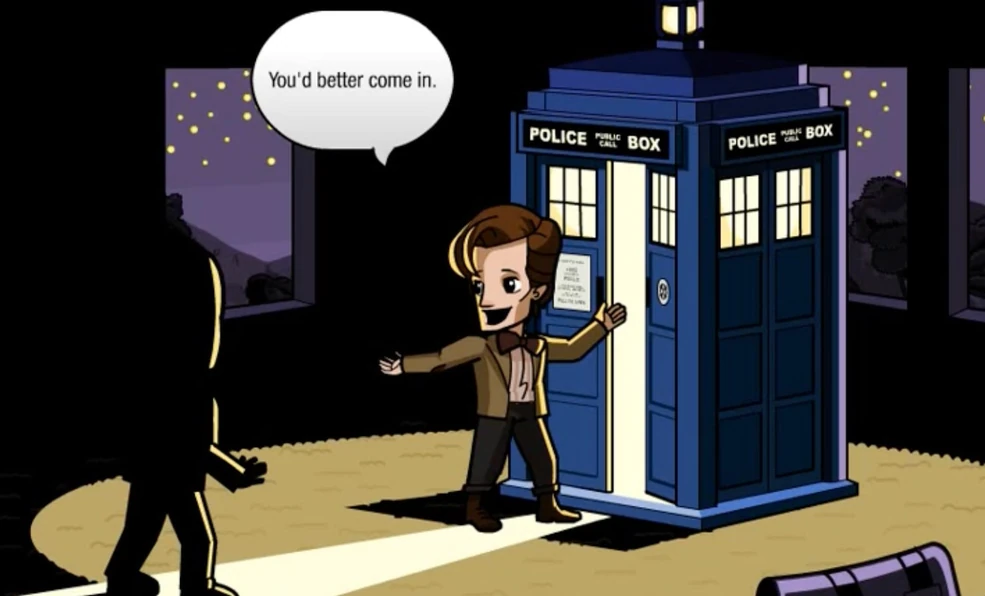
The notion of getting in the TARDIS and flying off into time and space is what’s, arguably, maintained the nation’s fascination with Doctor Who for over 50 years. Sure enough, it’s not long before you meet the Doctor in Worlds in Time.
You’re soon given a sonic screwdriver-like gadget, and flung into a world of Daleks, Clockwork Droids, Zygons, Silurians and an argumentative couple called Sylvia and Bernard.
“We really wanted to fulfil the fantasy of having the Doctor choose the player to take them on adventures through space and time. I think that’s a huge part of the appeal of the companions, and part of staying true to the show,” Badgett enthuses. “Throughout the development process, we stayed aligned with the Doctor Who team in the UK.
“For instance, in December [2012] we released an update that allows players to specialize in one of three gameplay based categories, or be a generalist. It’s a system fairly analogous to the class system in most MMOs, but in crafting the classes, we lined them up with the common traits of the Doctor’s companions. We feel like that even though it is a subtle touch, it’s the kind of thing that kept the game tied into the larger brand.”
Reactionary Worlds
The LA-based team worked hand-in-hand with their true counterparts in Wales to stay true to Doctor Who’s unique brand. “Of course, we’re telling stories through word balloons in the midst of multi-player gameplay, rather than an hour-long drama format, so dialogue and narrative have to be considerably compressed,” Ben continues.
“Even with those limitations, the game writers have tried to capture the voice of the current Doctor and the show as a whole. It also doesn’t hurt that both the BBC Games team and the team at [co-developers] Three Rings are full of long-time Doctor Who fans; I’ve personally been watching the show since the Jon Pertwee years!”
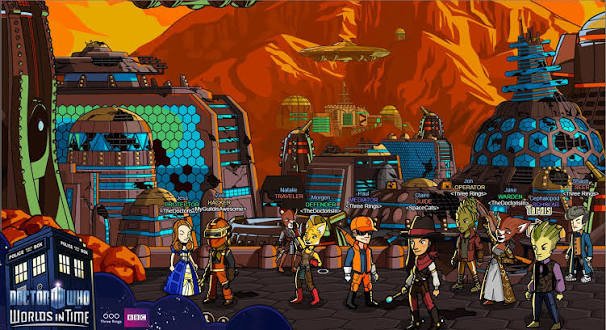
Of course, the show’s rich history gave the Worlds in Time crew a lot of ideas to mine, as Ben explains. “With 50 years of material, there is just so much great stuff to explore in the existing Doctor Who universe that we haven’t even felt the need to introduce new villains.”
Time is frozen, shattered, and it’s your job to complete games (which come in six different categories, including Lockpick, Defence and Repair) and get customisation freebies for your troubles. Admittedly, some of these additions to your character are a bit weird – knee-padded trousers, anyone? How about a newspaper rack? – and some of the games aren’t ideal for those with colour-deficiencies, but many reviews welcomed Worlds in Time into the Doctor Who fold with open arms. In particular, it received praise for its light-heartedness, fun atmosphere and unique graphics.
Still, niggles persisted: speech bubbles covered faces now and then; a couple of the games were, essentially, sci-fi versions of Tetris and Bejeweled; and at the start, the question, ‘what do I actually have to do’ cropped up a few times.
Sound of the Underground
Its scope was certainly impressive. Though you started off on Earth, you would soon be adventuring on the Dalek homeworld, Skaro; New New York; Silence in the Library/Forest of the Dead’s The Library; Starship UK from The Beast Below; The Time of Angels/Flesh and Stone’s Alfava Metraxi – and the makers were always keen to develop more!
“We worked really closely with the creative teams across the brand to incorporate aspects of the TV show,” Ben tells me. “We included the evil snowmen from the Doctor Who Christmas Special in the game [soon after its broadcast]!”
In fact, the game was so extensive, it spawned its own Wikia, advising people on in-game problems, technical issues, and account and billing details. Chronons were the game’s currency, and while you earned them through completing tasks, there was also the option to buy additional Chronon (pricing ranging from $3 – just under £2 – to $60, which works out to about £38). While some customisations seemed pointless, others certainly appealed to dedicated Whovians.
There’s the Eleventh Doctor’s Fez, the Second Doctor’s stovepipe hat, a UNIT uniform, and a particular favourite of mine, the head of a dandelion-selling mannequin from Terror of the Autons (1971).
Despite the immense amount of thought behind Worlds in Time, it never really hit the ground running. Maybe this is due to it being quite a low-key affair, lost in the swathe of further Doctor Who merchandise. Or perhaps this type of game doesn’t attract a mass audience? Worlds in Time, however, didn’t slow down, frequently expanding and developing a sort of ‘underground’ community (whose love for Doctor Who games will no doubt draw them to the successful iOS game, Legacy).
It looks like this is the end, but could the success of Legacy hint at a possible future on other devices? “We don’t have any current plans to bring WiT to additional platforms,” Badgett says, “but I do think the gameplay is a natural fit for tablets, so you never know.”
Without gaining mass publicity, how could such a movement justify the continued financial support of the BBC? It never set the world alight; everyone working on it seemed so enthusiastic, however, I can’t help but feel any Doctor Who game that lasted two years was a success, and will be missed.
Worlds in Time may have been the first Doctor Who MMO, but very much doubt it will be the last…