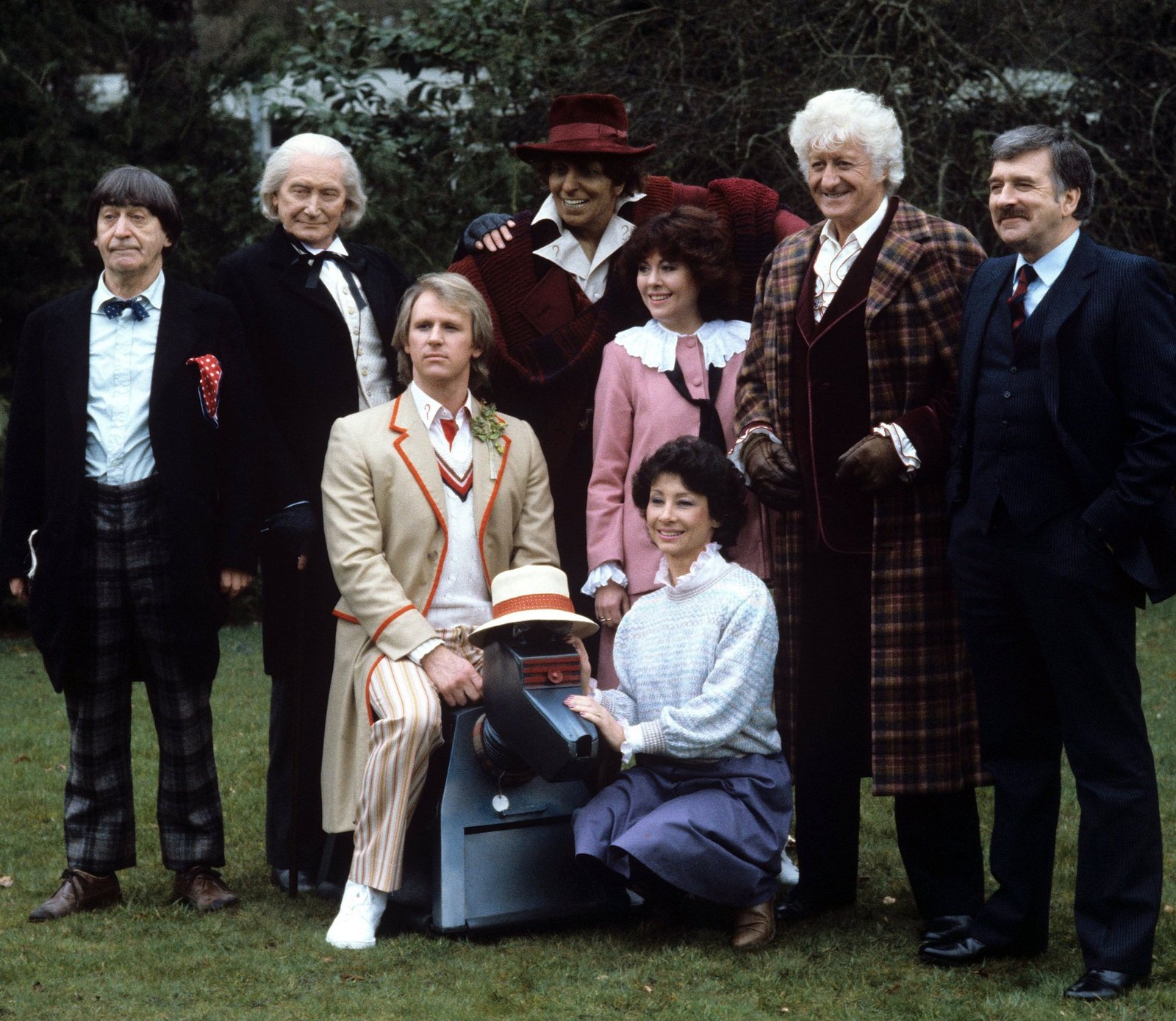
Let’s time travel back to 1980: Tom Baker’s last season of Doctor Who was showing on BBC1, a new producer (John Nathan-Turner) had taken charge, and big changes were afoot.
Here are some contemporary view of the first three stories of Tom Baker’s final series as the Fourth Doctor. They are culled from Fendahl, the fanzine which my brother Simon and I edited from 1978 to 1981. I hope these extracts give a flavour of the fan scene of 45 years ago and that I’ve been fair to the original writers in editing some of their contributions. A further article will cover the final four stories of the season.
Back in August 1980, Fendahl’s letter writers were mulling over Season 17 (from Destiny of the Daleks to The Horns of Nimon) and looking forward to Season 18 (beginning with The Leisure Hive)…
Season 17, Heading Into Season 18
Letter from David McGarva, Worcestershire
Tom Baker’s humour is not subtle! The humour of the early Baker stories was that of the writers, not of the actor himself. In the last couple of years, Baker has had full reign over the programme and so his blatant, foolish buffoonery has taken over the show completely.
The Leisure Hive
Review of The Leisure Hive from October 1980 (by Frank Danes, aged 15 and a month)
I was fairly pleased with this story. The new titles, though a rather cheap cash-in on the typical SF show title sequences (Star Trek, Blake’s 7) were refreshing after sixteen-odd years of the time tunnel. The pan of Brighton beach was a very good way of starting the season off with a more “homely” look before whizzing off to the planet Argolis. I mean, those beach huts. Now, one of them just had to be the TARDIS, and the viewer reeled back with shock as the pan continued for nigh on a minute!
It’s nice to have John Leeson back as K9. I suppose it’s not too hot as a point of continuity, but then everyone thinks of K9 as the chirpy “Master!” Leeson version.
The first episode was intriguing and the suspense and pacing was heightened by Peter Howell’s superb incidental music. It was certainly an improvement on last season’s 100 laughs a minute in Horns of Nimon. The whole concept of a sterile race living in a galactic university was brilliant, and the concept of a nuclear war lasting twenty minutes both amusing and thought-provoking.
Pangol was an interesting character: a youthful megalomaniac. He was believable, too, which is more than you can say for other Doctor Who villains. The Argolin costumes were something of a let down as they so closely resembled the Draconians. It makes me think, had this truly Pertweean story been made six years ago, the Argolins would have been proper aliens, masks and all. This is one of my pet hates at the moment: the BBC’s notion that humanoids will do.
The model work sadly hasn’t improved but you can’t have everything. The whole notion of tachyonics is brilliant and (of course) solves the problem at the end of the story. I did think that the scientific chat would be extremely difficult for young children to understand (I barely understood it: no wonder I chucked Physics at school) and must have left them with many unanswered questions. The Leisure Hive seemed stooped towards adult viewers: an example is not revealing the monster until episode three.

Tom Baker has started to act again but I was slightly galled to see that he hasn’t mellowed enough. I find myself in agreement with the ex-DWAS president: the show will always seem utterly stale unless he leaves. I am utterly bored with Tom, much as I used to like his portrayal, and I am afraid that unless he goes next season, he’s going to kill Doctor Who: he will become so completely inseparable from the part that the public just won’t accept the new actor.
I also think that there are so many studio bound, videotaped Doctor Whos now that the show is looking visually dull. I would love it if there were more location work and, above all, more Earth stories.
I have three gripes about this excellent story. First, the ageing of the Doctor in the Tachyon Recreation Generator. The Doctor ages 500 years but, instead of regenerating, looked merely like an old man, although he didn’t move or sound like one. As for continuity: William Hartnell’s old body, when completely worn out, was aged about 350. Now, The Leisure Hive’s ageing means that Baker’s Doctor’s body will last, if allowed to continue naturally, another 500 years. I find this a bit hard to believe but understand why the BBC decided not to have him regenerate in the Recreation Generator and bring in another actor for just one episode as the Doctor. The BBC seemed to want to remind us that Time Lords are long lived. If we assume, with Robert Holmes, that Time Lords have twelve regenerations and that the Doctor has had three, his natural life span would end up as about 3800 years!
My second gripe is the humorous appearance of the Foamasi. Yet another Roger Oldhamstead creation (he designed the Mandrells and the Nimon). I understand from reading Continuum [another fanzine] that the actual skin was made by a different department, out of fabric, which might be why the costumes didn’t quite work. Klout and Brock were revealed as Foamasi and one wonders how you could stuff a pot-bellied lizard into a human form. As with Scaroth [from City of Death], the external appearance would have to have been a very sophisticated illusion.
Finally, why were the episodes cut to twenty minutes in length? I am appalled. I was also concerned about the lack of publicity given to the new season, amounting, in all, to two ten-second clips, which must have meant a lot of floating viewers switching over to Buck Rogers in the 25th Century on ITV.
Letter from Tim Munro, Huddersfield
By now, I’ve seen two episodes of The Leisure Hive. The new opening titles really woke me up on 30th August. The new theme is, in my view, a great improvement on the old one, which was getting a bit wearing. The Doctor has improved and Tom Baker is back to the standard of acting that vanished after Fang Rock. It’s also great to have John Leeson back: I realise how much K9 suffered in his absence. Adrienne Corri displayed great flair and style as Mena; the sets are a stroke of genius and the Argolin costumes really suit their surroundings well.
It makes a nice change to reach the end of part two without seeing the monsters, and the return of suspense is one of the things that makes me think Barry Letts is exerting his influence [as executive producer of the season].
Meglos

Big news followed in December 1980: Tom Baker and Lalla Ward got married and, days later, BBC News announced that Tom Baker would be replaced by Peter Davison in the nineteenth season.
Letter from Lenore Dunlop, New York
I very much appreciate Fendahl. It is difficult to get news of the many aspects of Doctor Who when one lives in the States. Outside Starlog, NADWAS [North American Doctor Who Appreciation Society], and the Gallifreyan Irregulars [a fan club information network], Doctor Who news is non-existent here. It is hard to imagine that the Doctor has been a way of life for you: here, it’s just an odd show tucked away on some tiny television station that cuts it to pieces to insert adverts. People give me strange looks when I mention the show. So, needless to say, I am always glad to get Fendahl.
I must say, however, that it is somewhat difficult to follow the new episode reviews, because they are geared to your main readership. The reviews are not summaries but instead deal with production and story values. This is as it should be but it does make it difficult for non-resident fans to understand all the references.
This brings me to a point: the rather constant complaining about Tom Baker’s humour. Keep in mind that here in the States, we only have Robot to The Invasion of Time and cannot really imagine what is going on with the later stories. But I do find it rather negative to read constant criticism of Tom’s efforts. It may be that Mr Baker has gone overboard in the handling of humour but I find it rather hard to believe that there has been that much of a deterioration in the show since The Invasion of Time.
Perhaps it is time for everyone to take a step back from the anger and the criticism and try to take, for instance, the perspective of the outsider looking in: to reach a more balanced critical view, one where the positive aspects are more appreciated. Everyone deserves a pat on the back once in a while, even Tom Baker!
Full Circle
Review of Full Circle from December, 1980 by Frank Danes
Full Circle was the exact opposite of Meglos. It had good characters, a thoughtful plot, and – continuity! Andrew Smith, as a DWAS member, was obviously better acquainted with the Doctor Who legend than many of the freelance writers – hence the reference to Leela and Andred.
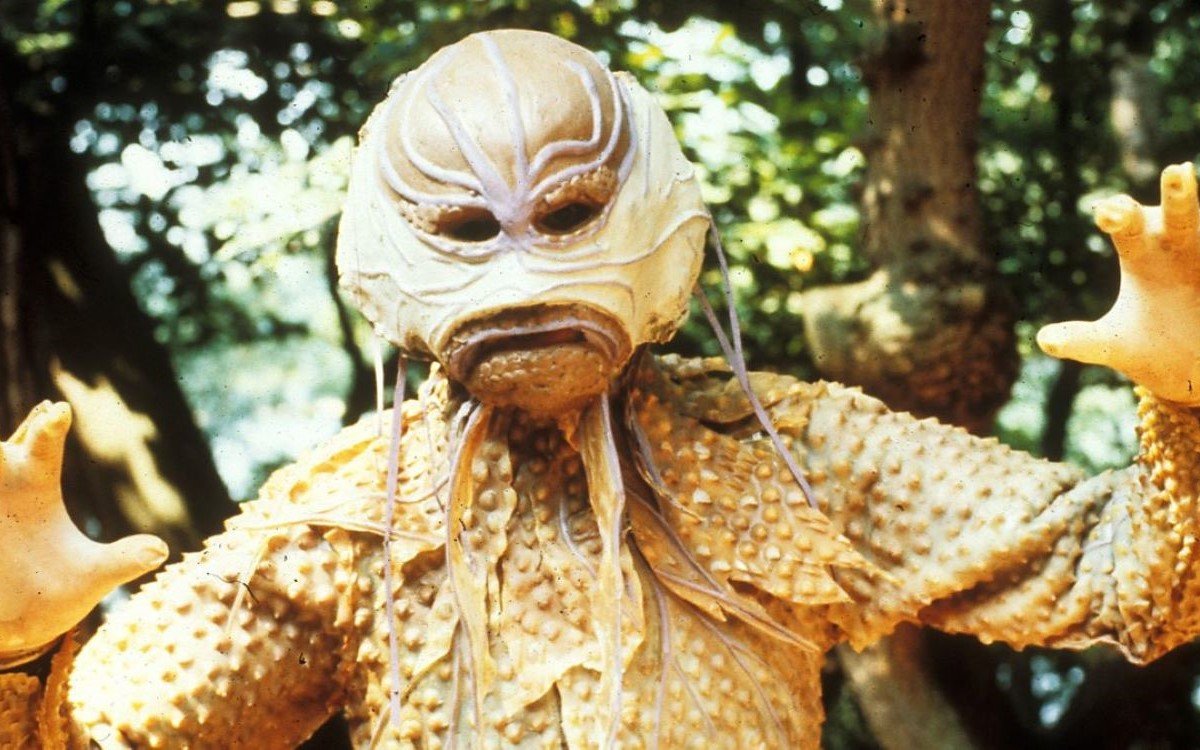
All too often, good scripts are ruined by bad production or acting. Luckily, Full Circle triumphed with some excellent location work and beautiful studio scenes. The origins of the Marshmen lay rather too obviously in the Creature from the Black Lagoon, however.
Special effects failed in the creation of the spiders. Legs pedalling furiously, glowing eyes, long white fangs reminded me of a toy from Woolworth’s rather than a Doctor Who monster. Six years ago, we had excellent spiders in Planet of the Spiders; it seems standards have fallen.
Adric was interesting. He was introduced very effectively, as a misfit in his brother’s Outlers, and he blended into the story well. Matthew Waterhouse isn’t the best of young actors but he’s by no means the worst, and he gave a fairly pleasing performance. The death of his brother showed Matthew at his best.
Humour was, thankfully, kept in the background. What humour there was, was necessary, such as the Doctor’s flippancy as the Deciders soberly introduced themselves. We do need humour in Doctor Who but it must come from the Doctor’s witty cracks, rather than Tom Baker mucking around. Thank heavens Tom is going. Let’s hope Peter Davison lives up to expectations.
As a whole, Full Circle was interesting and entertaining to a fan watching it carefully and intelligently. However, with this, and other stories from this season, I can’t really see the floating viewer latching on to many of the points made. Someone told me that he missed episode two and was therefore unable to follow the rest of the story. Many of my friends have temporarily deserted the programme, saying it’s too difficult to understand. This might be a plus in that we are able to watch intelligent, thoughtful science fiction stories, but it’s a minus if the floating viewer – turning away for a quick chat – loses important plot points.
Letter from Tim Robins, Cardiff
It’s a pity that Full Circle was cursed with the most boring title since The Chase, since it was the best Doctor Who story for several years. The erroneous policies of first Hinchcliffe and then Williams in dispensing with traditional monsters has made Baker’s era one of the most drab, boring times the show has ever seen. Full Circle provided the viewer with a simple story that was fun to watch. The plot, while intriguing, was not so complex that it gave one the usual brain damage trying to work out what was going on. My greatest pleasure was in the new companion. To be honest, the idea of this kid Adric filled me with horror, but Matthew Waterhouse pulled the part off well and won me over completely. I hope he stays round longer than two seasons.
Coming soon to the DWC: What did viewers in the 1980s think of Tom Baker’s last stories?