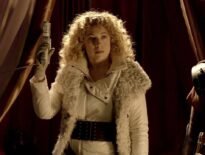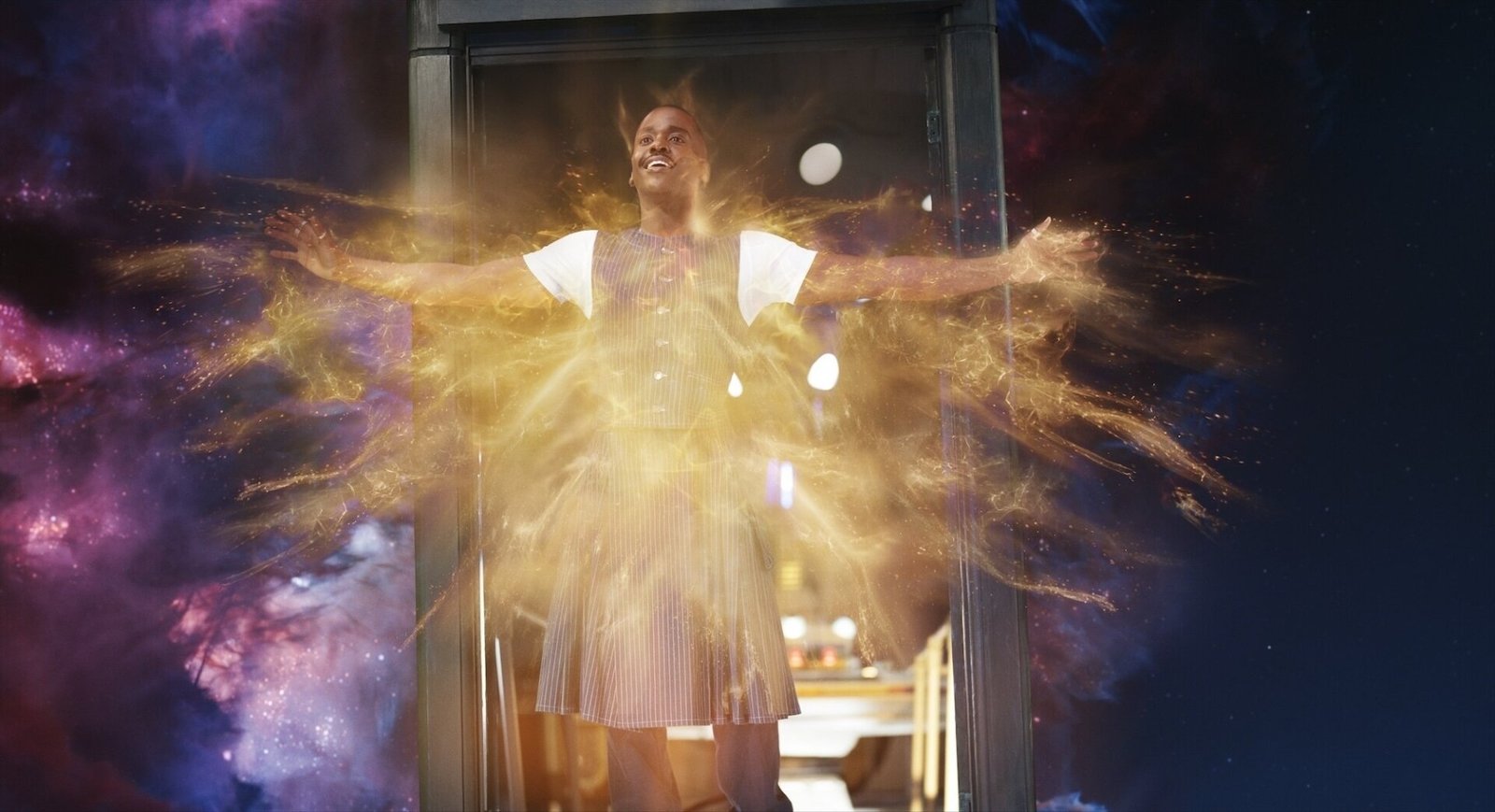
This week, the UK podcast The Rest is Entertainment dedicated a good half hour to discussing the future of Doctor Who. It’s hosted by Marina Hyde, a Guardian journalist, and Richard Osman. You know who he is: he’s Ingrid Oliver’s husband and he’s that chap off of Pointless. More importantly for our purposes, he’s an industry professional and a producer.
The episode is worth listening to; you can find it easily via Google.
It was actually quite a serious analysis of the situation, including the reasons for Disney’s pulling out, and the problems with Russell T Davies’ recent era. What became clear to me as I listened is that “put out for tender” doesn’t mean the same as it did post-1989, when it seems to have been a euphemism for cancellation.
Richard O explained that lots of programmes these days are put out for tender, including flagship programmes like Mastermind and Songs of Praise. It’s a bona fide process: the BBC don’t do it unless they’re actually committed to the particular show; and it’s now standard for the industry. Most interestingly, the Beeb expects it to be a multi-year contract for a number of seasons (not just one to keep people happy and then cancel it).
Here’s how it works:
The BBC asks companies to bid for a series. They usually get some 80 applications. This is then whittled down to a short list of four or so, who are invited in for detailed talks – and they usually include BBC Studios, and BBC Studios usually gets the contract. In other words, one arm of the BBC is commissioned by another.
In the case of Who, factors which might contribute to a company’s being given more favourable consideration include:
- Whether they can access money from overseas – though this isn’t a tiebreaker
- If they’ve got a major actor (and it’d have to be a big one!) lined up to play the Doctor, and he’d only work with that production company, and he’d bring in high viewing figures, then that would play well with the BBC. (Wonder if someone will ask Hugh Grant?)
It’s going to take a few years before any series hits our screens, according to Richard and Marina. Oh, and the reason for cancelling the Christmas special? They don’t want to tie the new production company down by introducing new plot elements that they might have to resolve. They need the freedom to start afresh (rather as RTD did with Christopher Eccleston). Extrapolation: don’t expect the Sixteenth Doctor to be Billie Piper.
Marina made some interesting comments about nuWho as a whole, and especially about the Ncuti Gatwa era. Have a listen to the podcast to find out more.
It’s likely, to this writer, that Marina and Richard are correct; it’s certainly the best analysis of the situation I’ve read. Or heard, as in this case.
So, in sum, according to the podcast:
1. Doctor Who will return: certain.
2. There will be a gap of two or three years before it does: certain.
3. The Doctor will be played by a name and not by an unknown: likely.
4. Billie Piper will be the new Doctor: nope.
5. The series will be made by BBC Studios: likely.
6. The series will still be made in Cardiff because of nuWho’s links there: likely.
7. Alan Bennett will play the Doctor: not going to happen but I wish it would.
Good news overall, then, if The Rest is Entertainment is right.
I propose that the DWC should put a bid in to make the series. I reckon we could raise a few quid through crowdfunding and I don’t mind putting in the first tenner.
Bagsie script editor.