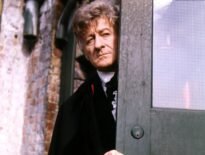
The Doctor Who Companion is celebrating its 10th anniversary this year, so we’re looking back at every single Doctor Who serial from the show’s TV history. How? With a series of one-sentence reviews, of course!
And we’ve reached the longest-serving TV Doctor, Tom Baker…
Robot
This is basically a Pertwee UNIT story with a new Doctor, but Tom Baker excels and Lis Sladen shines, as does Nick Courtney as the Brigadier, and Michael Kilgarrif as the humane Robot, driven to madness by its fascist exploiters in the Scientific Reform Society.
The Ark in Space
Possession, mutation, and body horror announce the pairing of Robert Holmes and Philip Hinchcliffe, and the advent of the show’s three-year golden age; there is beautiful design here by Roger Murray Leach.
The Sontaran Experiment
Kevin Lindsay is splendid as Styre, whose experiments on human beings serve to test their resilience to invasion and to gratify Styre’s sadism; imaginative use is made of Dartmoor as an abandoned Earth in the far future.
Genesis of the Daleks
One of the best Doctor Who stories in over 60 years, with superb performances from Ian Marter and Lis Sladen; Michael Wisher’s Davros is a foe worthy of Tom Baker’s incomparable Doctor — it doesn’t get better than this.
Revenge of the Cybermen
It’s a shame that Kevin Stoney (previously cast as Mavic Chen and Tobias Vaughn) is hidden under the make up of Tryam, leader of the Vogans, but the Cybermen are fun and it’s good to have them back, even if the plot is a bit thin.
Terror of the Zygons
John Woodnutt gives it all he’s got as Broton, and Ian Marter bows out as plucky and confused Surgeon Lieutenant Harry Sullivan, RN, on secondment to UNIT; the Zygon designs are first class and much more convincing than their rubbery red replacements in the post-2005 show.
Planet of Evil
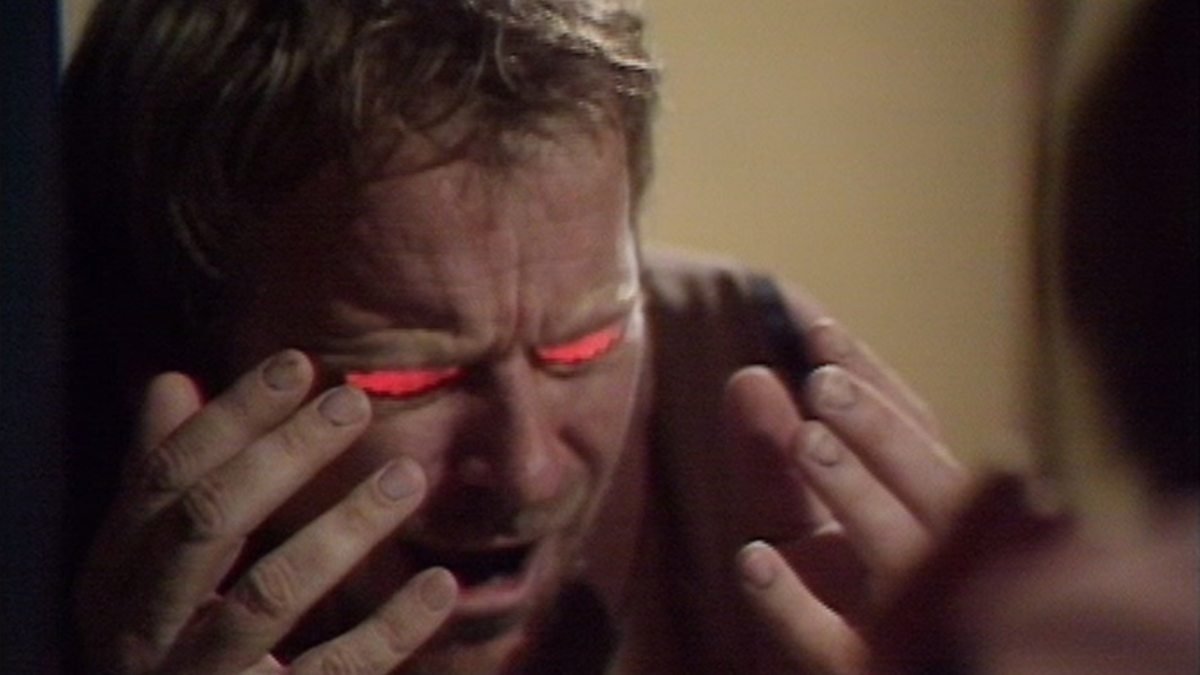
As blundering humanoids interfere with the forces of nature, Hinchcliffe, Holmes, and Louis Marks gleefully deliver gothic horror in spades; this viewer slept with the light on for a week after the first broadcast of each episode back in 1975.
Pyramids of Mars
The Scarman brothers are splendid, the Hammer horror a delight, and we have another match for Baker’s definitive Doctor in Sutekh, voiced with silky malevolence by Gabriel Woolf – now, Horus, we’ll see who rules the cosmos!
The Android Invasion
Terry Nation shows he can write a good yarn even without Daleks; the first episode is intriguing but, as with The Seeds of Doom, we feel the absence of the Brigadier, who was in the first draft of the script – Patrick Newell’s Colonel Faraday isn’t a patch on the Brig or Nicholas Courtney.
The Brain of Morbius
A lunatic scientist keeps the brain of a Time Lord war criminal in a tank, a nutty cult sisterhood worships the flame of life, a hulking brute falls in love with Sarah, a mind-bending contest ensues between Morbius and the Doctor: what’s not to love?
The Seeds of Doom
Excellent horror with the convincingly realised Krynoid, wonderfully counterbalanced by Tony Beckley as demented botanist (those last two words could only be paired for describing Doctor Who) Harrison Chase, this splendid and exciting story is played with gusto and conviction by the whole cast.
The Masque of Mandragora
14th Century Italy is convincingly realised in the studio and in Portmeirion, and we can rejoice in the understated gay couple Marco and Guiliano, and the excellent science fiction theme of the Mandragora Helix plan to stop humanity’s development at the dark ages.
The Hand of Fear
Eldrad must live and Judith Paris is wonderful as Eldrad in female form – Stephen Thorne is perhaps a little less convincing as Eldrad in Part Four, but Lis Sladen steals the show and only the most stony-hearted (like a Kastrian – geddit?) would fail to wipe away a tear at Sarah’s parting from the Doctor after over three years of adventures.
The Deadly Assassin
Time Lord society is convincingly re-imagined by Robert Holmes, Tom Baker is superb and the battle in the Matrix, in which the Doctor and Goth seem intent at one point on beating each other to death, is a visual and intellectual tour de force – and the Master, now a disintegrating corpse, is back!
The Face of Evil

Chris Boucher bursts onto the scene as a fine science fiction writer, Louise Jameson is wonderful as Leela, and the theme of eugenics is brilliantly handled.
The Robots of Death
The design is first class, the performances are excellent, and the suspense is cranked up to bursting point in this second story from the talented Boucher.
The Talons of Weng-Chiang
Sadly controversial now because of the casting of John Bennett – who is wonderful as the sympathetic dupe Li H’sen Chang – and because of the Chinese tropes, but, if you can put these to one side, this is still one of the best stories of Doctor Who’s run, and my favourite story of all time, so there.
Horror of Fang Rock
Graham Williams arrives and his brief, to cut down on the violence, is evident in this rather good historical tale with a bit of sci-fi tacked on; it all works fine, but is hardly the most effective way of hooking an audience at the start of a new season.
The Invisible Enemy
Lots of fun and lots of mess, with Thunderbirds style model work, terrible continuity (Leela operates the TARDIS?), and the introduction of K9 – who, aged 11, I liked very much on first broadcast and still like very much, aged 60.
Image of the Fendahl
The last gasp of gothic horror left over from the previous season, Fendahl suffers a little from a drop in budget but the plot is superb and it is a shame that there were to be no more stories from Chris Boucher, who jumped ship to become script editor of Blake’s 7.
The Sun Makers
Excellent political satire; Louise Jameson shines as Leela, carrying much of the plot on her own – Robert Holmes is at the height of his powers and the story is also very, very funny.
Underworld
And how we miss Holmes’ guiding hand as Anthony Reed takes over as script editor and the quality nosedives: Part One is good and imaginative, but the budget and direction collapse in the final three episodes, with some frankly embarrassing moments and performances from the guest cast.
The Invasion of Time

The Vardans are dreadful but we do at least get to see the first female Time Lord in Rodan; the Sontarans stomp around the TARDIS, which is revealed to be made of brick, the Doctor goes bad, and the viewers give up.
The Ribos Operation
No idea why Graham Williams thought a running theme was necessary to unify the season, as the Key to Time makes no sense at all (what exactly is it supposed to do?), but this is a great script from Robert Holmes with Garron, Unstoffe, Binro, Sholakh, and the Graff Vynda K all memorable characters.
The Pirate Planet
Enter Douglas Adams with a fine and witty science fiction script; sadly, Tom Baker starts to send things up as humour replaces horror, and Mary Tamm gives the impression that playing Romana is rather beneath her.
The Stones of Blood
With frankly nasty scenes of stones draining the blood of the campers, and the Ogri realised as stone pillars on castors, we do at least have the third wonderful old lady in three seasons, Professor Rumford, a worthy successor to Miss Amelia Ducat (The Seeds of Doom) and Martha Tyler (Image of the Fendahl).
The Androids of Tara
Count Grendell (Peter Jeffrey) is splendid but Mary Tamm is equally wooden as Romana and her android doubles – why didn’t Williams cast Lalla Ward as Romana in Ribos, as she would have played the ingenue with so much more charm and conviction?
The Power of Kroll
Lots of good things here, with the satire on Native Americans and corporate greed, but even Robert Holmes can’t fulfil Anthony Reed’s daft request to include the biggest monster ever seen on Doctor Who – something the story tries valiantly to achieve in Kroll but just can’t manage on its budget.
The Armageddon Factor
John Woodvine as the Marshall and William Squire as the Shadow are superb villains, but the end of the Key to Time season makes no sense – what was it supposed to do anyway and of what was it supposed to restore the balance? – and Doctor Who becomes infected with Douglas Adams’ trademark silliness in the final episode, which he helped to script edit.
Destiny of the Daleks
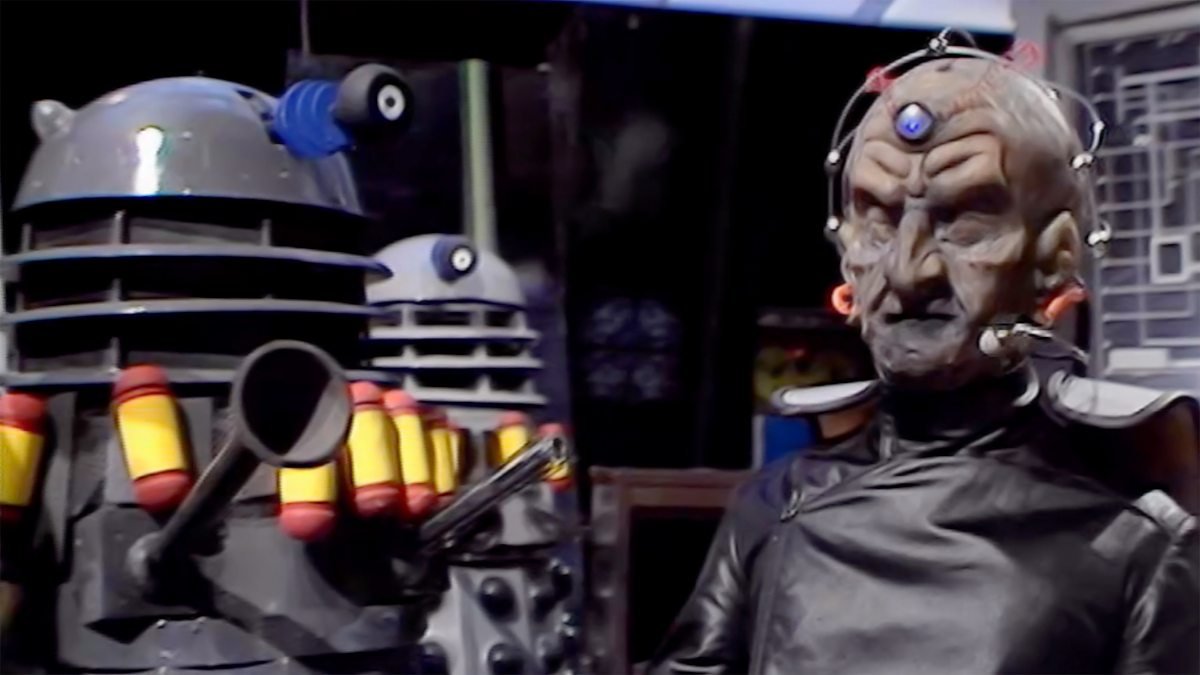
Oh dear: production values collapse under high inflation, David Gooderson’s Davros isn’t a patch on Michael Wisher’s, and the plot stretches credulity as much as Tom Baker’s performance (now almost wholly inflected towards comedy) tests the viewer’s patience.
City of Death
Lots of good ideas and good moments but Tom Baker is almost uncontrollable as the Doctor, plays almost every scene for laughs, and undermines both the performance of other actors, who are doing their best to make it work, and such drama as there is, as Adams rewrites Doctor Who into The Hitchhiker’s Guide to the Galaxy.
The Creature from the Pit
A green blob lurks in a pit – that’s about it, and does anyone like K9’s new voice?
Nightmare of Eden
A very intelligent script about drug running and addiction but the money has run out, the Mandrels look like Sweetums from The Muppet Show, and Tom Baker’s infamous ad-lib “Oh my arms! My legs! My everything!” is horribly self-indulgent.
The Horns of Nimon
A good script but the cast, with the honourable exceptions of Lalla Ward and John Bailey as Sezom, send the whole thing up.
Shada
Eventually completed with animation and revoiced by the original cast, this is pretty thin stuff and Douglas Adams turns in more silly ideas with a meandering script and (supposedly) deeply hilarious irreverence.
The Leisure Hive
John Nathan-Turner succeeds in getting Tom Baker’s performance under control, and his brooding Doctor of Season 18 is splendid, as is this tale of nuclear war, with the intelligent themes of entertainment and education promoting reconciliation and peace.
Meglos

This is like a televised tale from a Doctor Who annual in that it makes us wonder whether John Flanagan and Andrew McCullogh had ever watched the show before scribbling this drivel about a giant cactus bent on universal domination.
Full Circle
Good stuff: the Marshmen are convincingly realised, as are the strong science fiction themes of evolution and myth; but why didn’t Nathan-Turner swap the casting of Varsh and Adric, as Richard Willis is great as Varsh and Matthew Waterhouse is… rather less good as Adric.
State of Decay
The medievalism and the vampires are splendid.
Warrior’s Gate
Crammed to the gills with wonderful science fiction ideas; Clifford Rose is superb as Captain Rorvik as he attempts to motivate his crew of slave-trading incompetents; visuals are a tour de force — a treat!
The Keeper of Traken
Nathan-Turner convincingly puts the money on the screen by confining this story, like Warriors’ Gate, to the studio; Geoffrey Beevers is splendid as Melkur/the Master and Anthony Ainley excels as Tremas; Nyssa is a promising new companion.
Logopolis
Lots of good moments, and the Watcher is a good addition, brooding over the tale by the bypass, but the mathematical stuff (intoning numbers keeps the universe from disintegrating – huh?) is incomprehensible and Anthony Ainley’s silky Master is not to everyone’s taste.
NEXT: Brave hearts, DWC readers.