The history of Doctor Who is well-documented; yet there seems to be a lot still to uncover. Tom Dexter’s superb book, When I Say Run, Run!: The Patrick Troughton Years, is a good example of this. It breaks things down, year by year, like a production diary, but also takes into account the TV landscape as a whole, including how things were really made in general.
I know Doctor Who. I even write for a Doctor Who website — can you believe it? Nonetheless, I learned a lot from Dexter’s book. So here’s a small selection of facts more fans should know. Cards on the table: I proofed When I Say Run, Run for Candy Jar Books, but this isn’t sponsored or anything; I was paid for that work alone, and I get no financial reward for writing this. I’m only doing this because I think DWC readers will love to find out more about one of the most beloved eras of the show…
1. Patrick Troughton Was Almost Cast in The Gunfighters
In March 1966, Rex Tucker, director of The Gunfighters, mooted the idea of casting Patrick Troughton in the role of Johnny Ringo. Fortunately, Troughton was unavailable, instead working on another project. Ringo was then played by Laurence Payne.
If Patrick had played Ringo, you have to wonder whether he’d still be up for the part of the Second Doctor, and if so, whether we’d have the modern-day furore over casting actors who have previously been in Doctor Who as the Doctor — Peter Capaldi being the most recent example, of course. Or arguably David Tennant. Or I suppose Billie Piper…
2. Illness Meant The Tenth Planet Almost Didn’t Happen (and the Cybermen Might Never Have Been Created)

Kit Pedler was commissioned to write what was then called ‘Doctor Who and The Tenth Planet’ on 17th May 1966, and he set to work on the first two scripts. Just a month later, Pedler was hospitalised with an ulceritive colitis, and surgery was scheduled in for August. That meant Gerry Davis had to come in and work on the final two scripts, and the pair agreed to split the money for those latter episodes 50/50.
Davis was exceptionally busy, however, with scripts falling through and coming into difficulties. If he hadn’t have made time, the First Doctor might’ve regenerated in another story — and the Cybermen may never have existed!
3. Anneke Wills and Michael Craze Were Announced as Companions Two Days Before The War Machines Aired
Modern audiences will find it mad that schedules were so tight in the 1960s. Nowadays, filming requirements mean we know who is cast in regular roles early on. It’s a rare case that actors are kept secret, though they managed it with, for instance, John Hurt and John Simm, who respectively played the War Doctor in The Name of the Doctor (and subsequent episodes) and the Master in World Enough and Time/ The Doctor Falls.
So it’s a massive shock to learn that Anneke Wills and Michael Craze were announced to the press as the Doctor’s new companions, Polly and Ben, on 23rd June 1966, two days before they first appeared on screen in the first episode of The War Machines. The turnaround times back then were insane… and only got worse during this period!
4. A Fault Gave Us The First Regeneration Special Effect
I love the very first regeneration. It’s eerie and brilliantly achieved. It was also a result of a fault.
This was filmed on 8th October 1966, the day that episode one of The Tenth Planet came out — another example of production turnarounds being incredibly tight. Either way, the regeneration was the first part of the fourth episode to be filmed. But that wonderful regeneration effect came about by crossfading between two mixing desks, one of which is faulty, causing the white-out effect that morphs William Hartnell’s features into Patrick Troughton’s!
5. The First Episode of Terry Nation’s Dalek Series Would’ve Cost The Equivalent of £1 Million
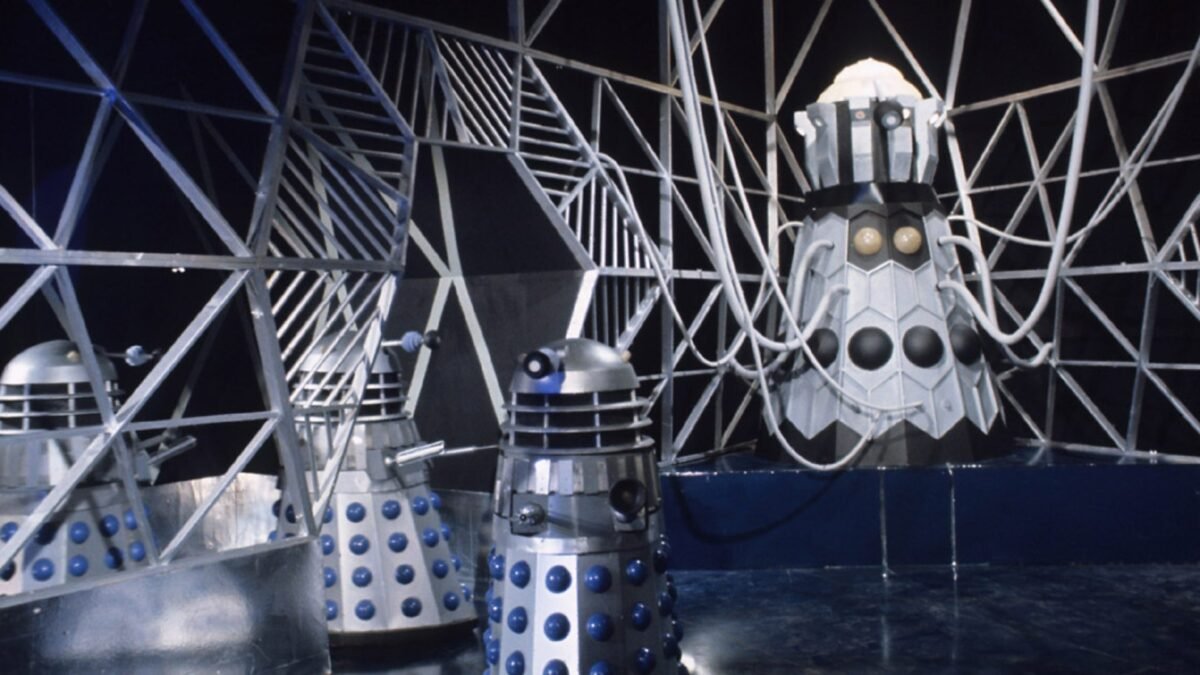
Most fans know that The Evil of the Daleks was going to be the Daleks’ swansong in Doctor Who, with their co-creator, Terry Nation, intending to spin them off into their own series. What most don’t know, however, is that, once Nation had written the pilot episode, named The Destructors and running at just half an hour, it had a projected estimated budget of £42,000. In today’s money, adjusted for inflation, that’s well over £1 million. For one episode. It’s also around the same amount of money allocated for 14 episodes of Doctor Who at that time.
Around the end of November 1966, BBC Enterprises officially pulled support from the Daleks TV series… and it’s little wonder why.
6. The Macra Terror Began Life as Doctor Who and the Spidermen
On 11th November 1966, Gerry Davis formally commissioned Ian Stuart Black to start work on ‘Doctor Who and the Spidermen’ — a story set at a holiday camp where mysterious creatures are pulling the strings. Sound familiar? Yes, it’s The Macra Terror!
Now, I love Spider-Man, but these ‘Spidermen’ seem a nasty sort, and I reckon that’s something to do with the hyphen missing from their names.
So by 10th January, the title had been changed to ‘Doctor Who and the Insect Men’ and then to ‘Doctor Who and the Macras’. It’s interesting, I think, that the show moved from having arachnids to insects to giant crustaceans — nearly a decade before Jon Pertwee’s Third Doctor faced giant spiders in Planet of the Spiders. Gridlock, too, would’ve been a much creepier affair…
7. Patrick Troughton Was Too Nervous to Watch The Power of the Daleks Episode One Live
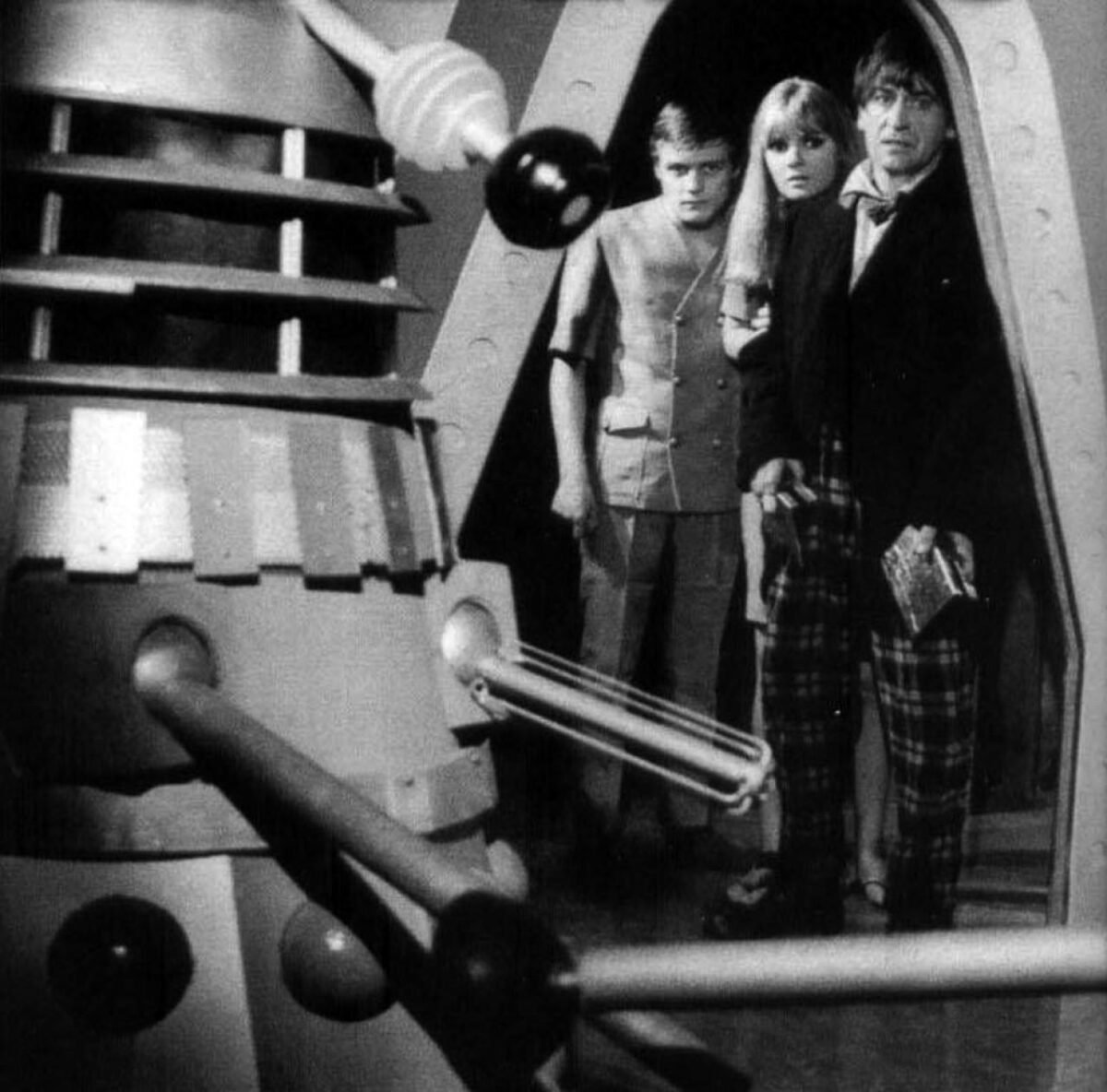
It’s fair to say Troughton felt the weight of responsibility, and worried about failing in his job of taking over from Hartnell. Without Patrick, the show wouldn’t still be going. It would be a niche thing, largely forgotten, especially considering the number of missing episodes from the 1960s.
The first episode of The Power of the Daleks aired on 5th November 1966, but Patrick couldn’t watch it live. He sat in the canteen alone, too nervous to face the music and his peers.
It’s a sad fact and a dark image, this giant in Who history, pondering whether he’d sunk the ship soon after it had set sail.
We know what actually happened. The era, and the Second Doctor, was a massive success, and once the episode ended on TV, the cast and crew met him with a huge round of applause. Deservedly so!
As you might’ve noticed, these bits of trivia all come from 1966, so they’re sourced from just one chapter of When I Say Run, Run!: The Patrick Troughton Years. This was just a small selection of facts to give you a taster.
When I Say Run, Run!: The Patrick Troughton Years is available now from Candy Jar Books.